Actual Japanese Quotes About the War

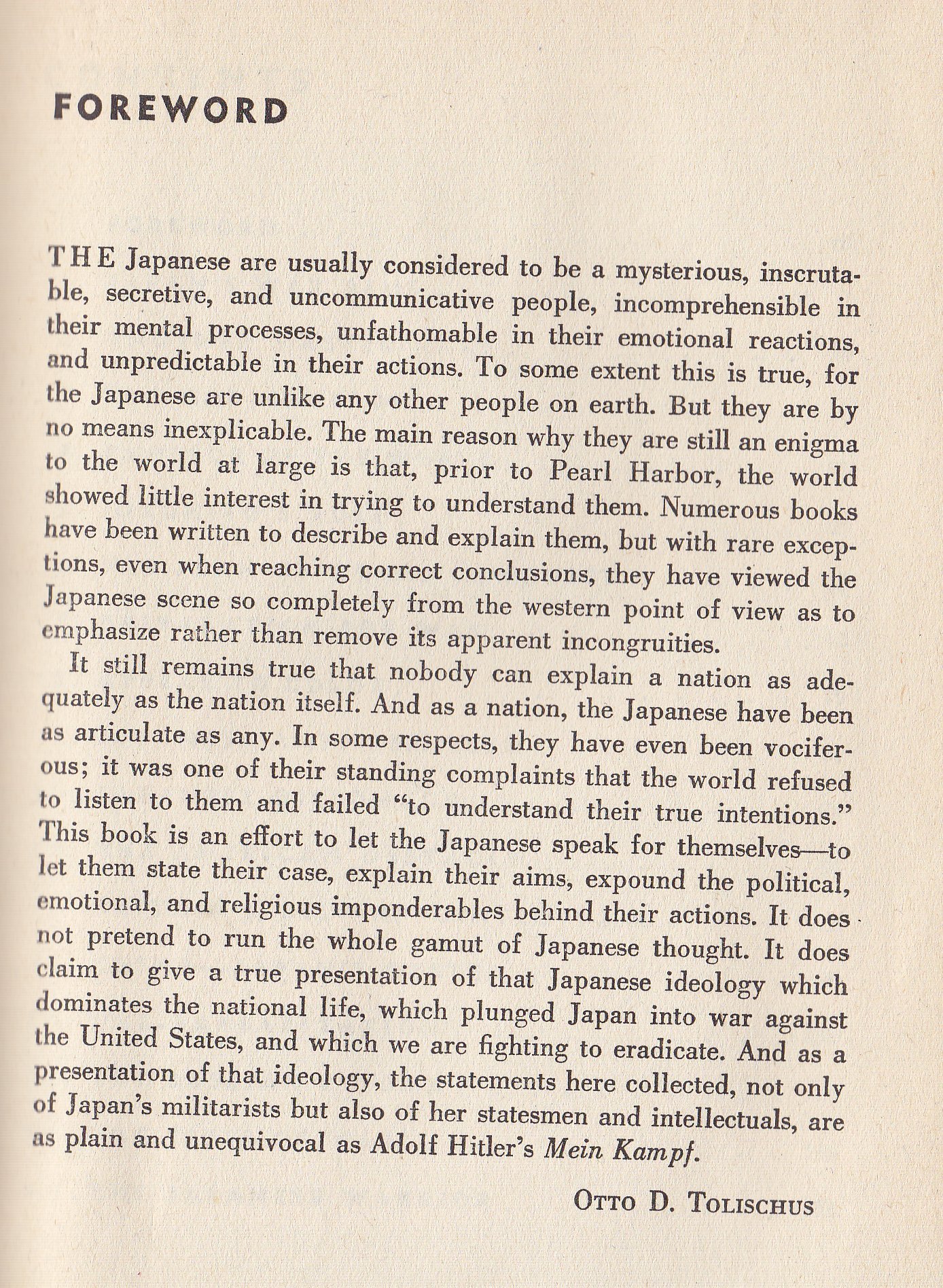
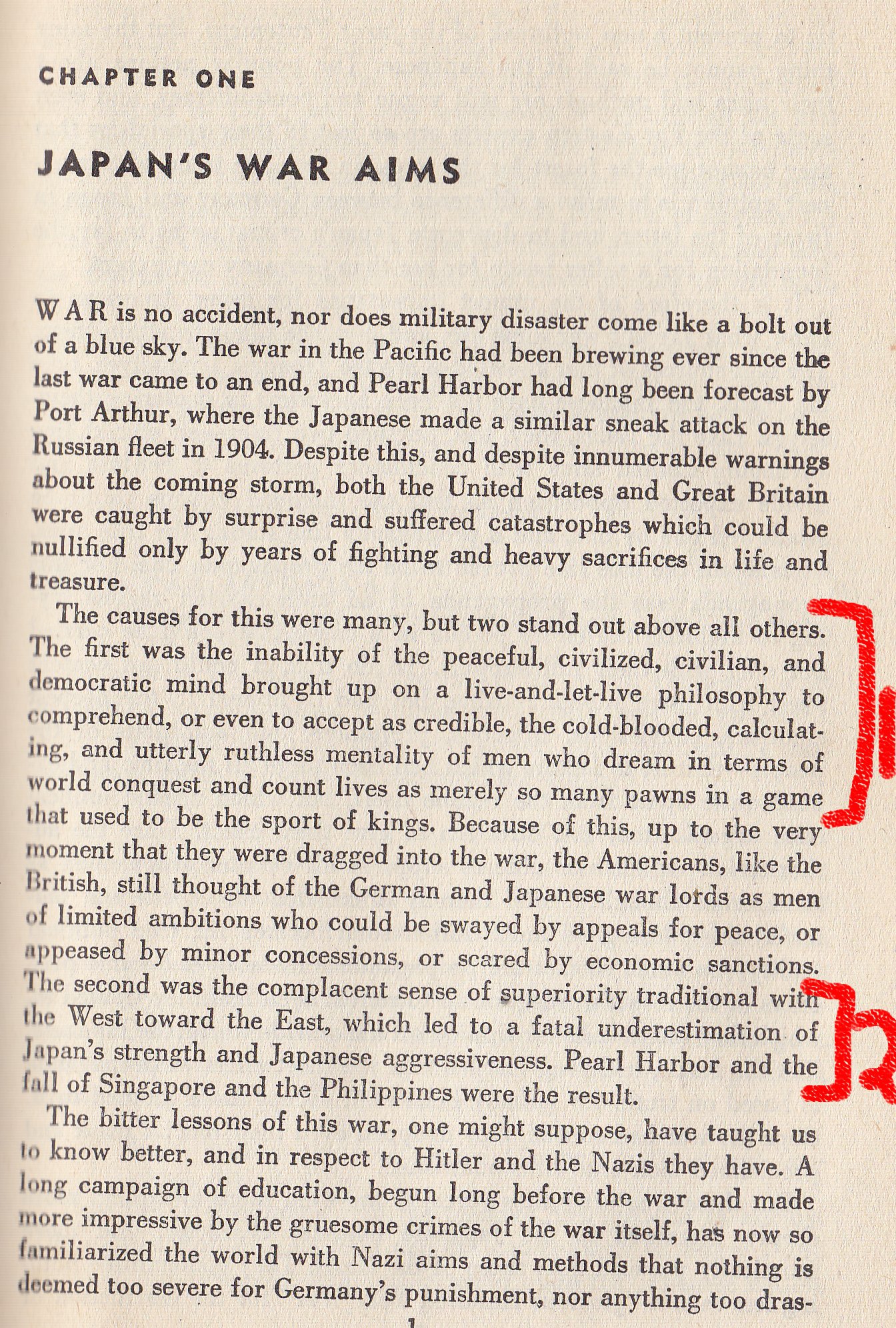
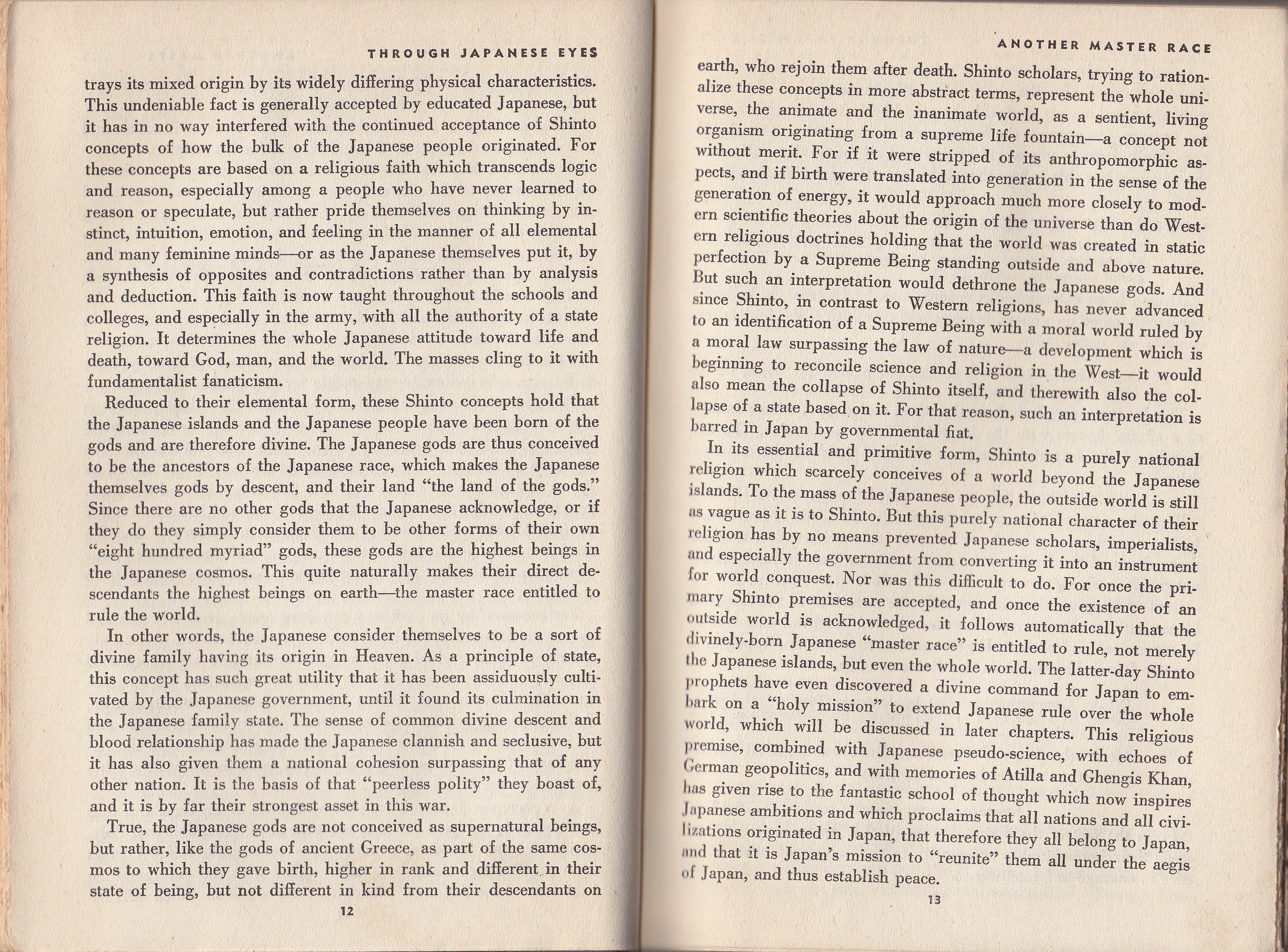
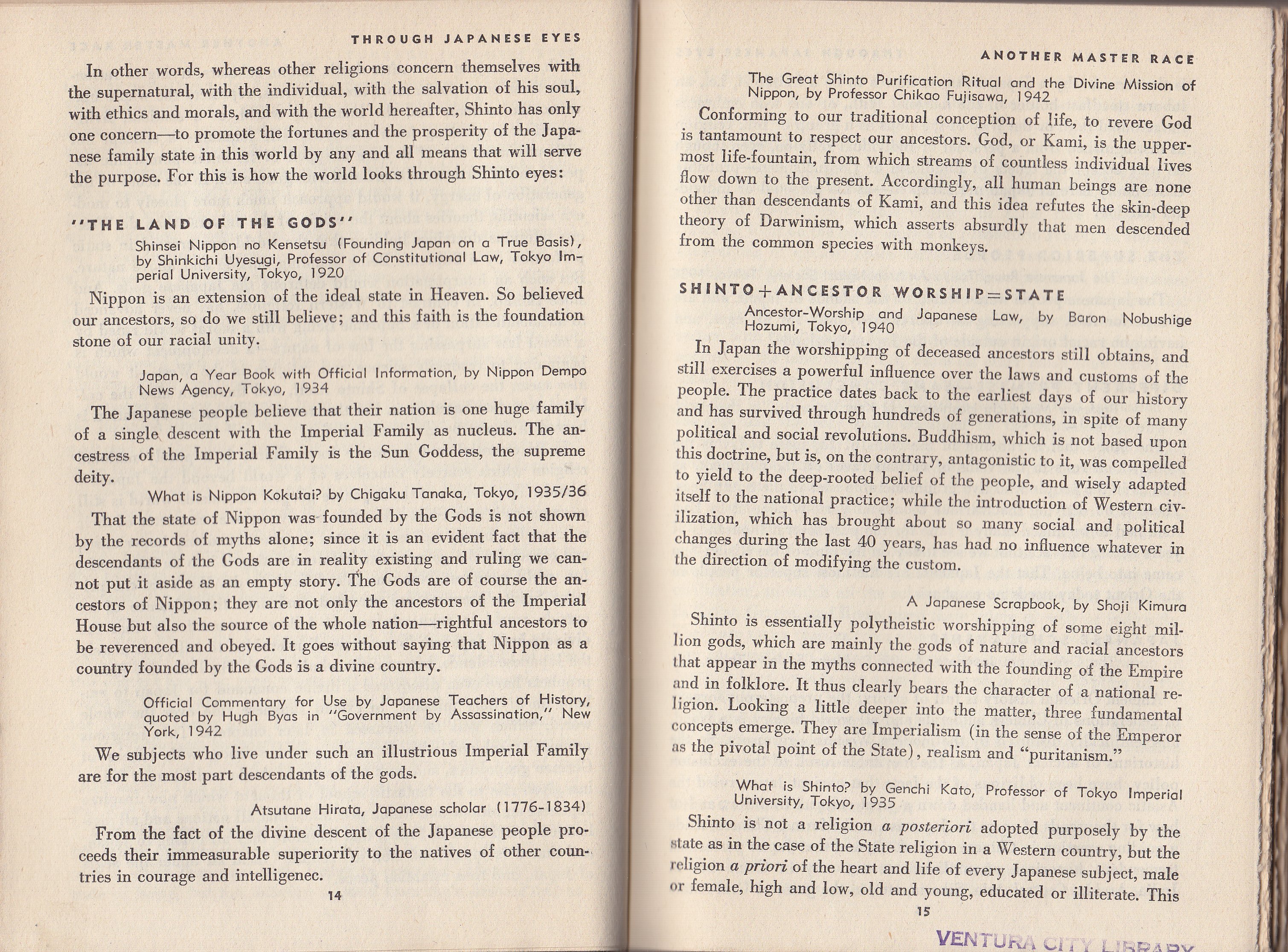
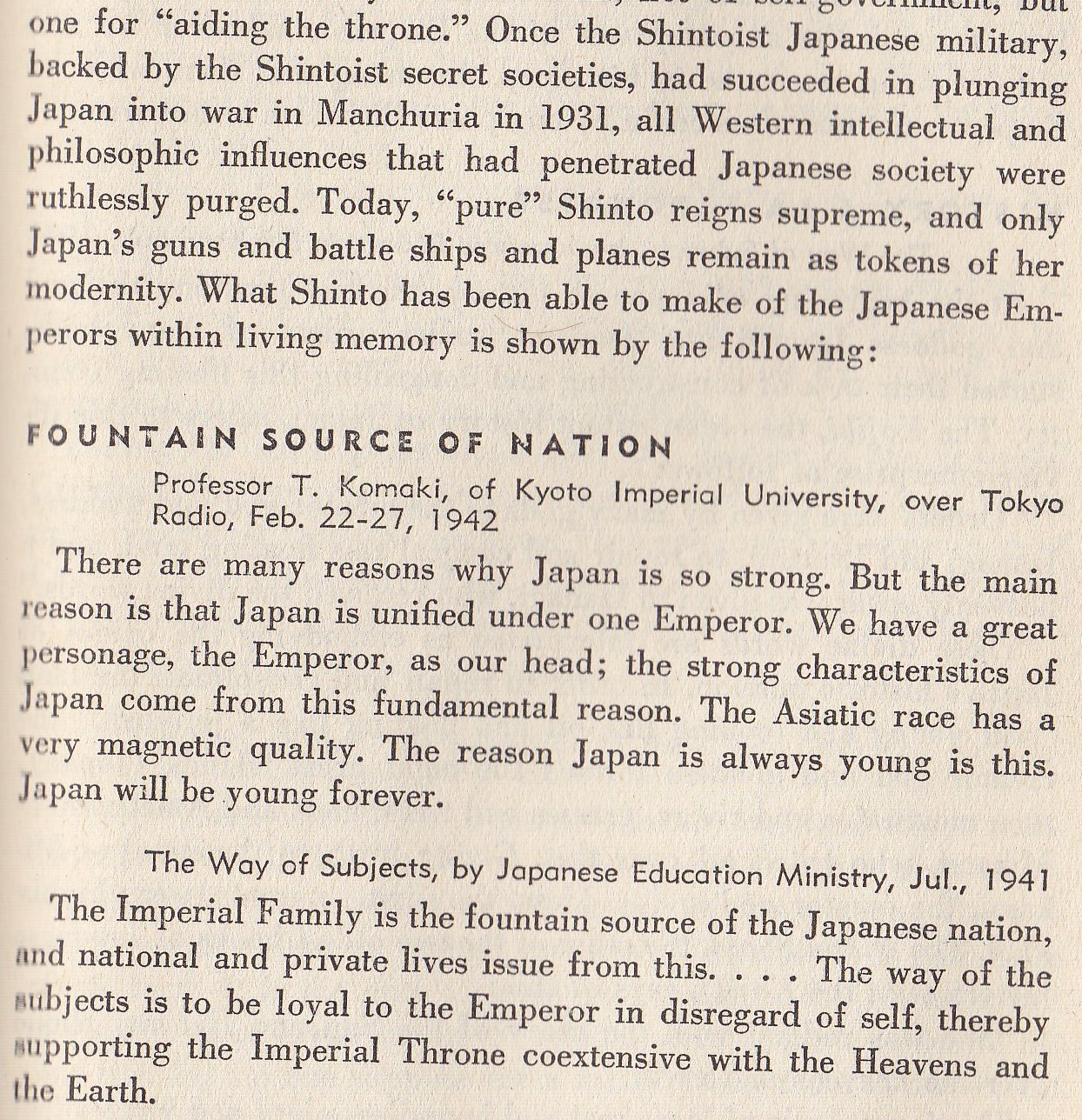
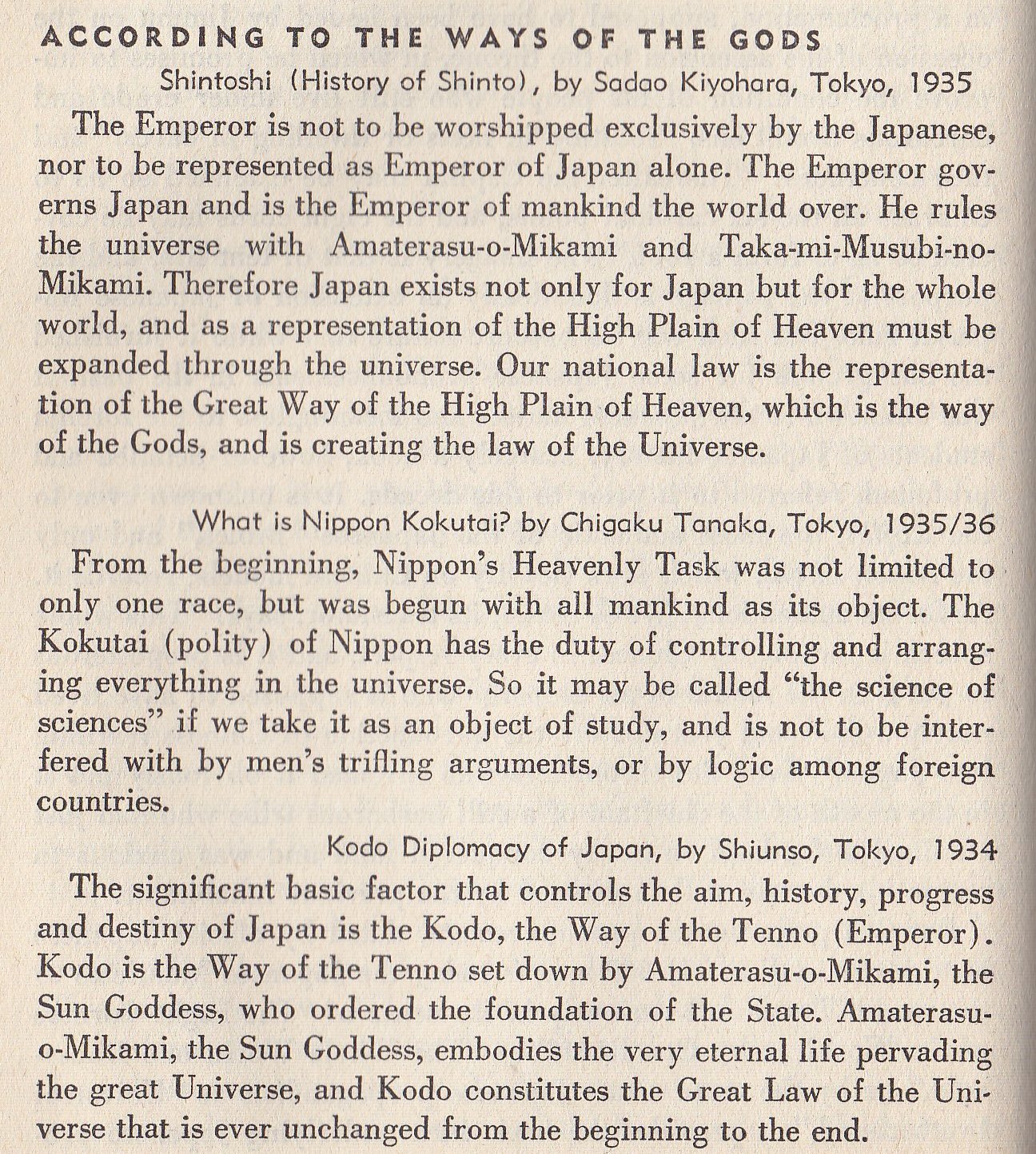
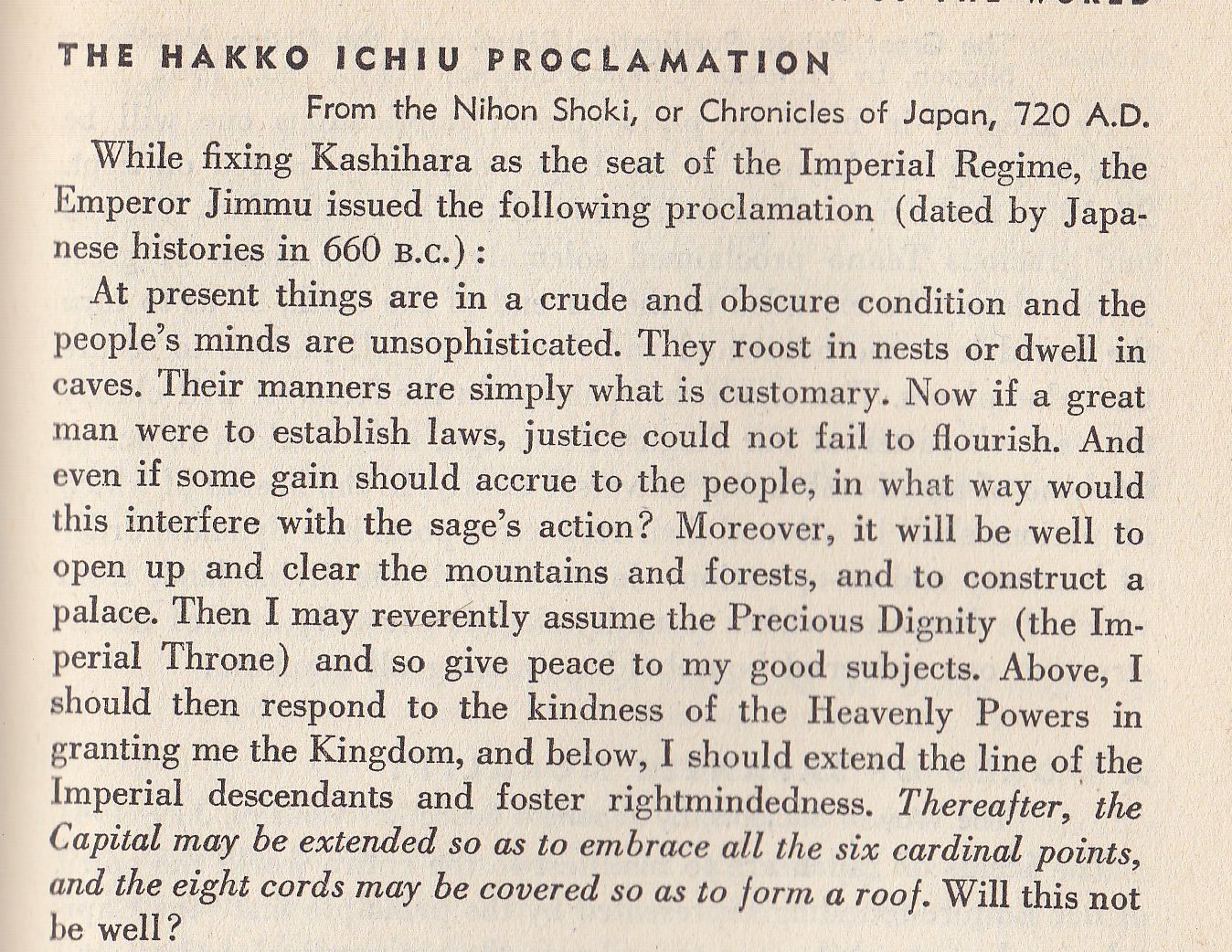
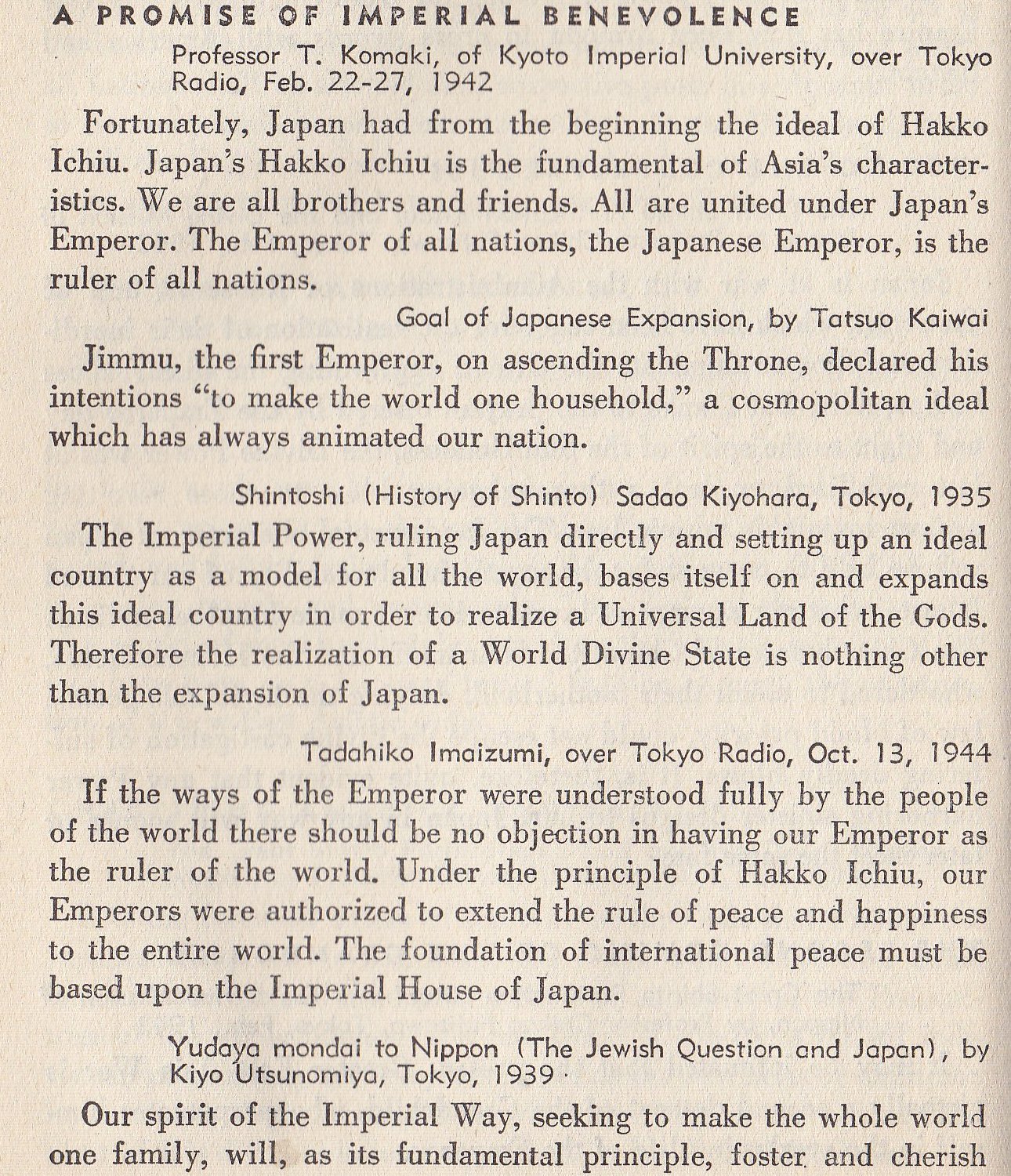
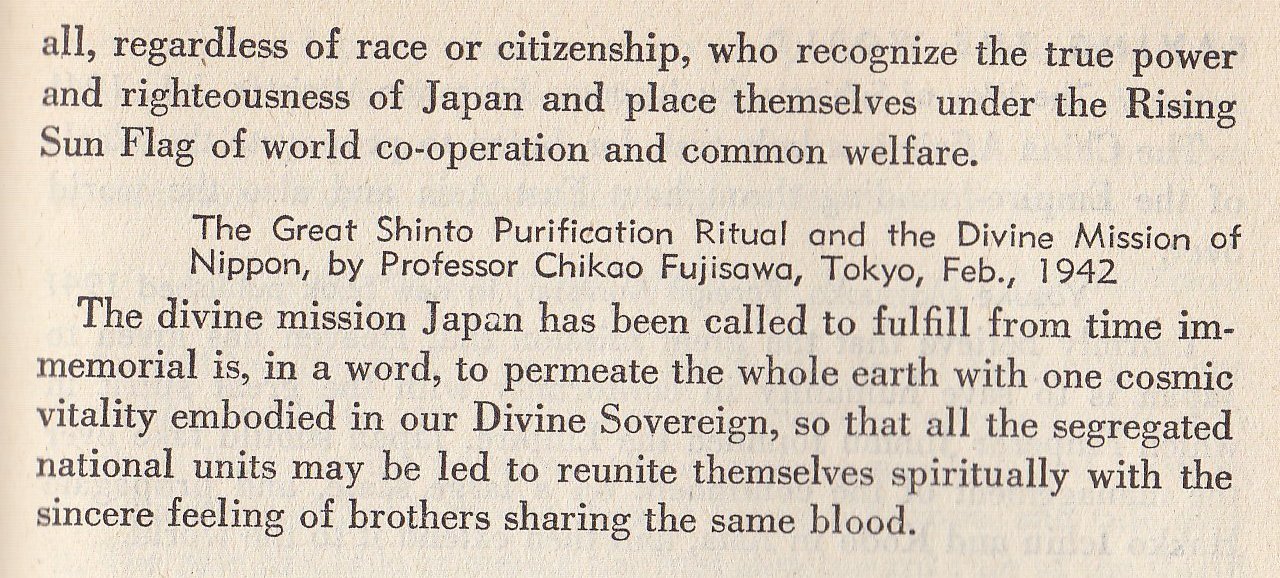
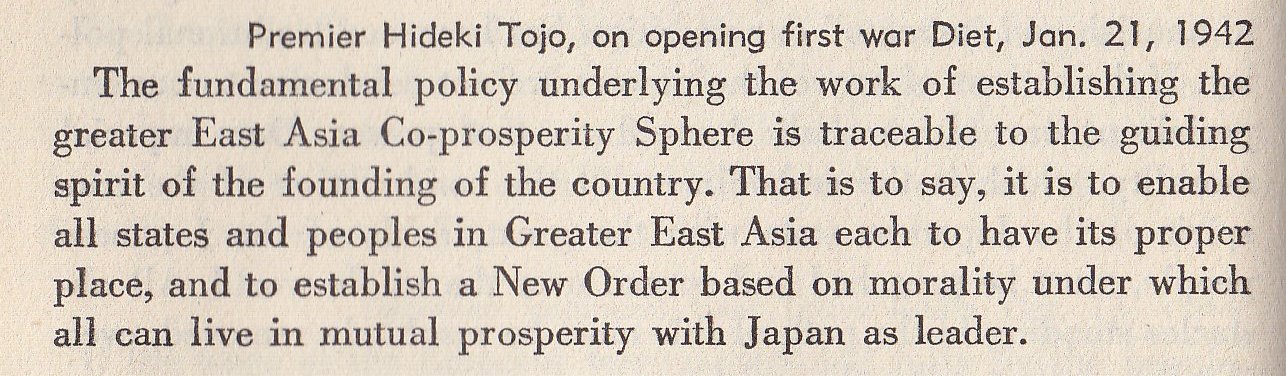
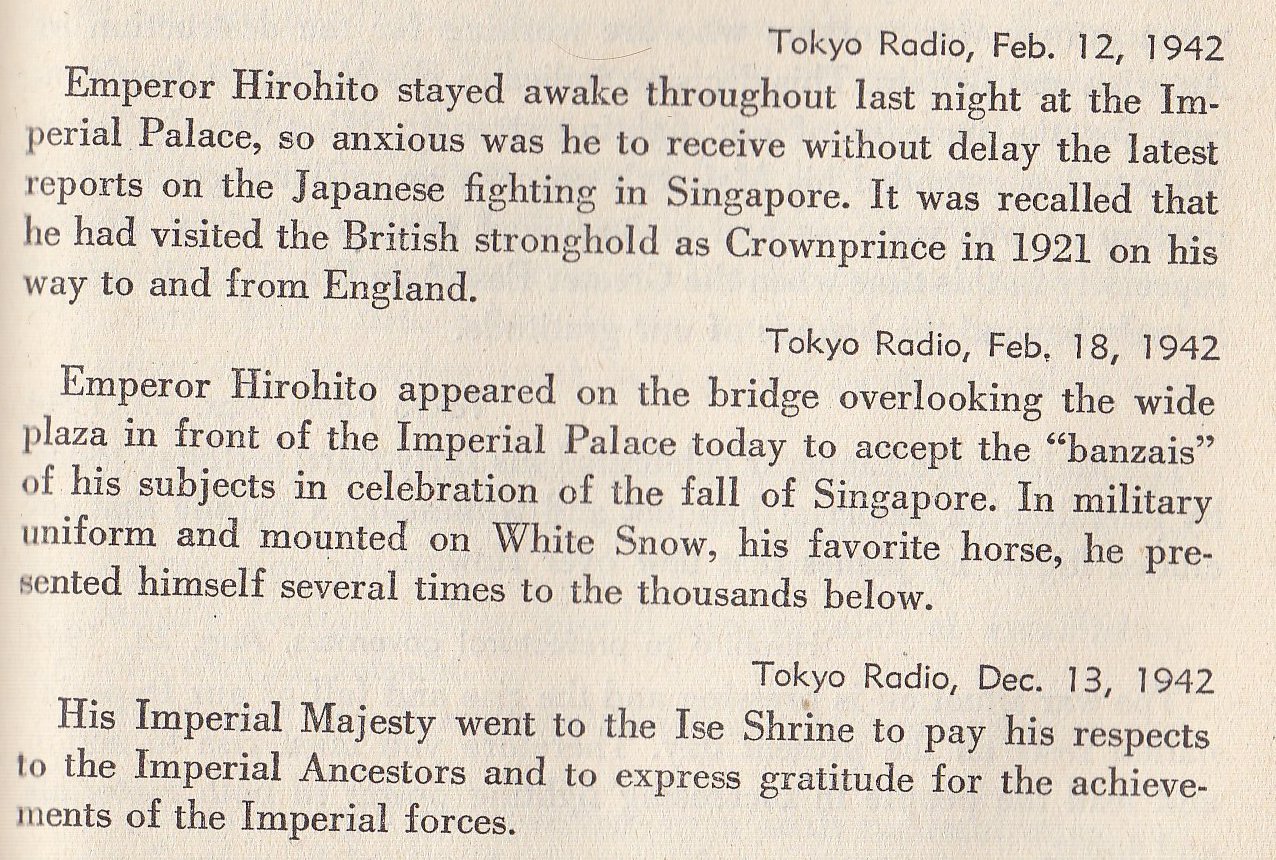
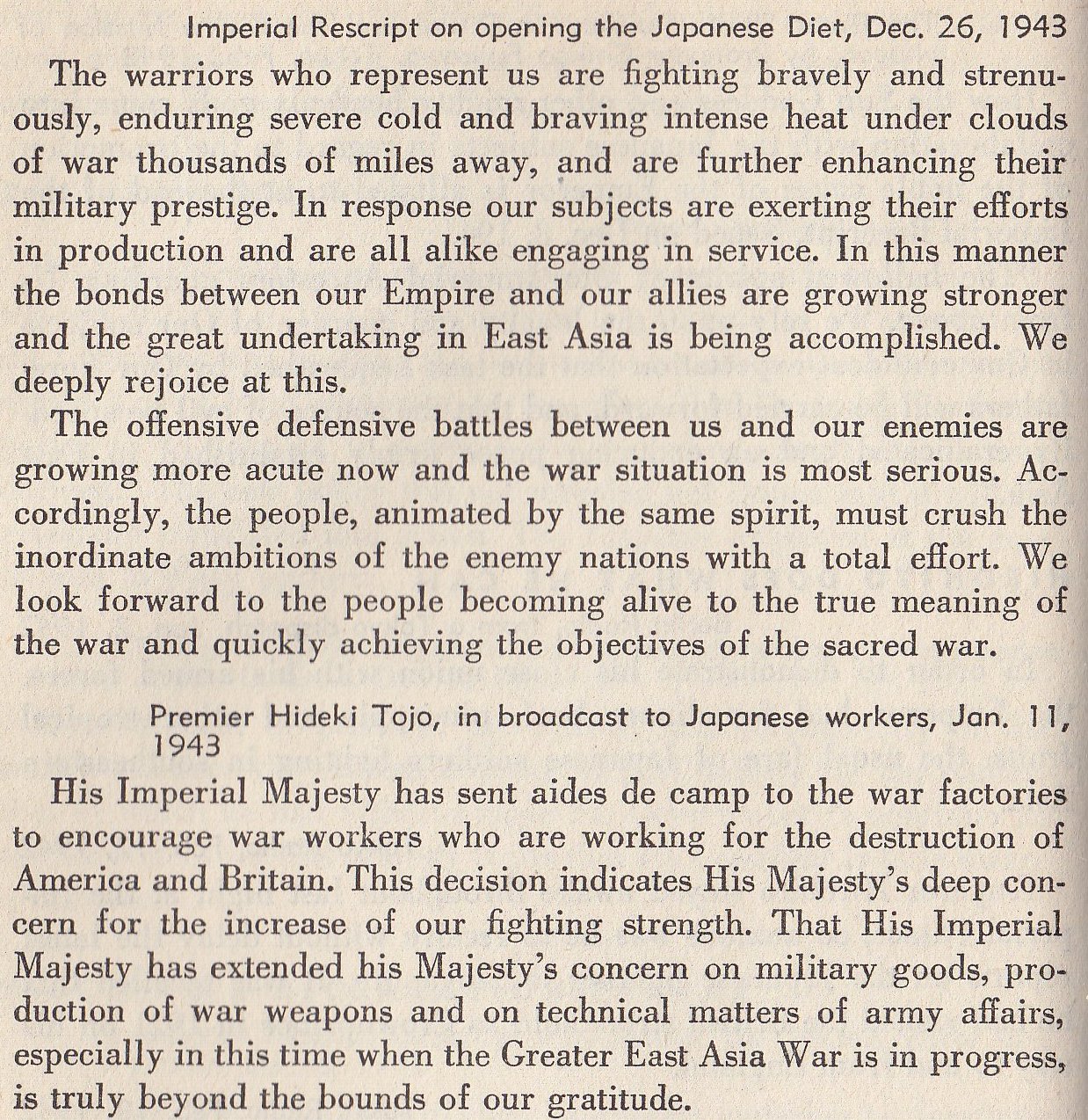
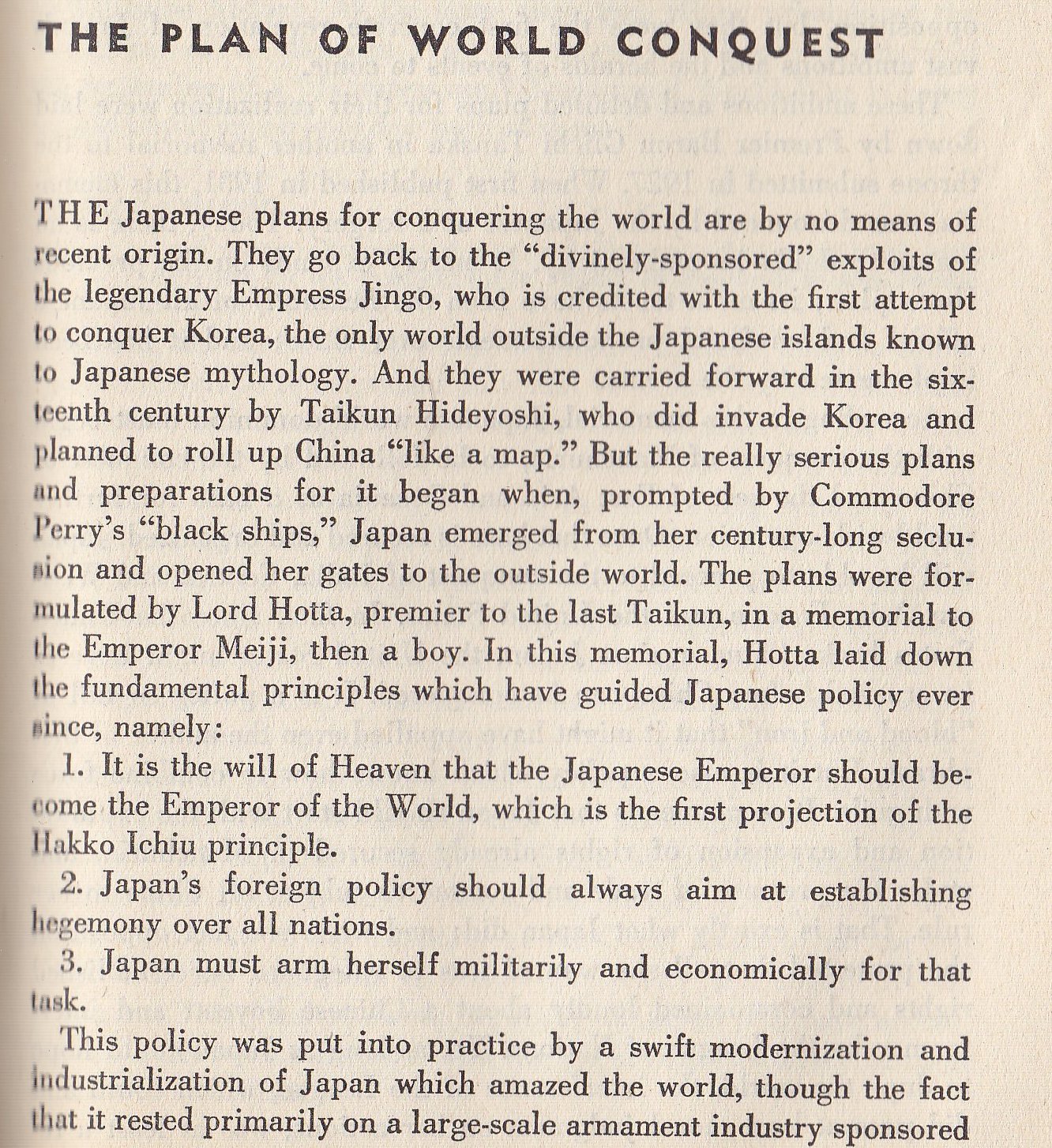
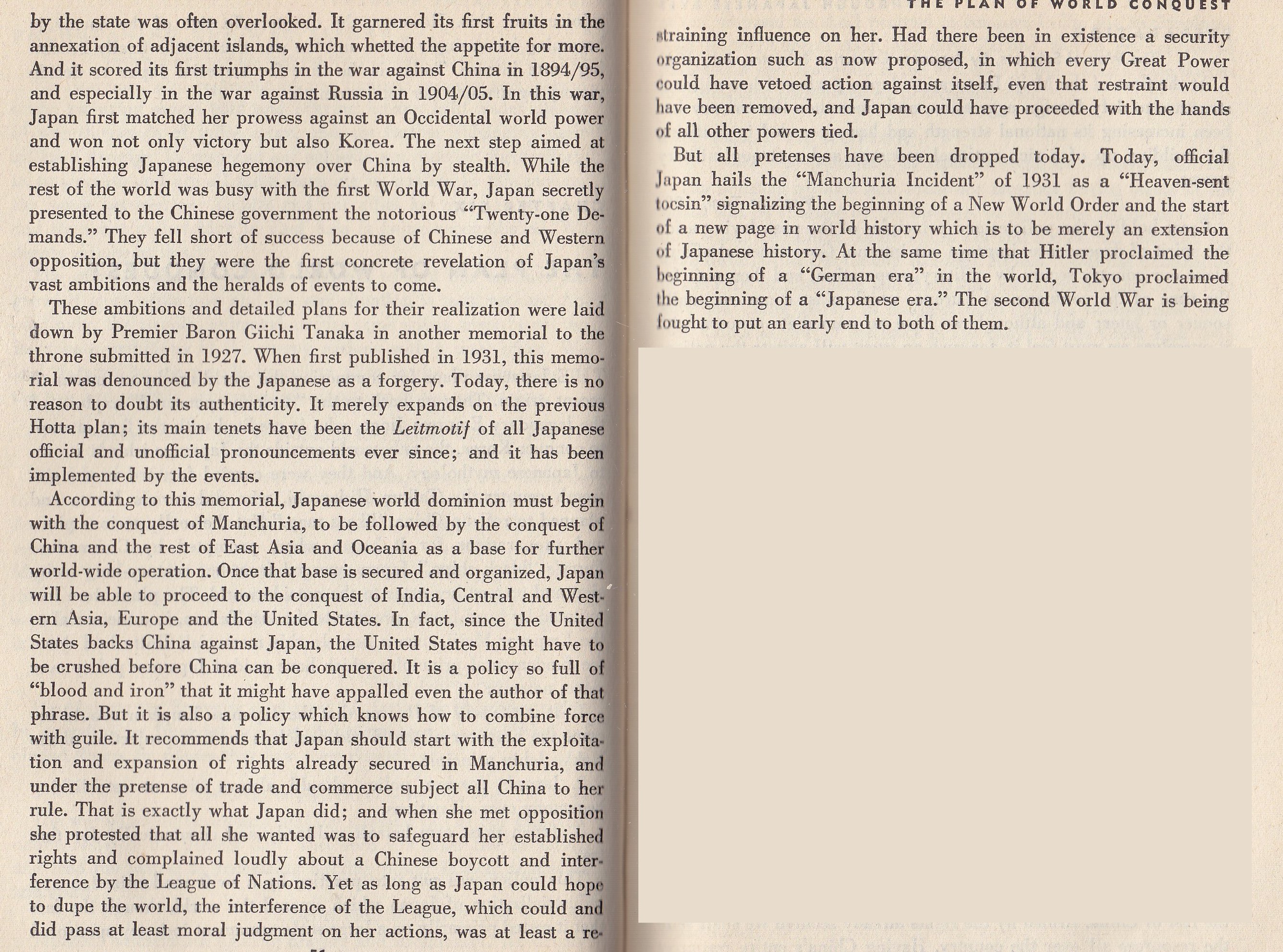
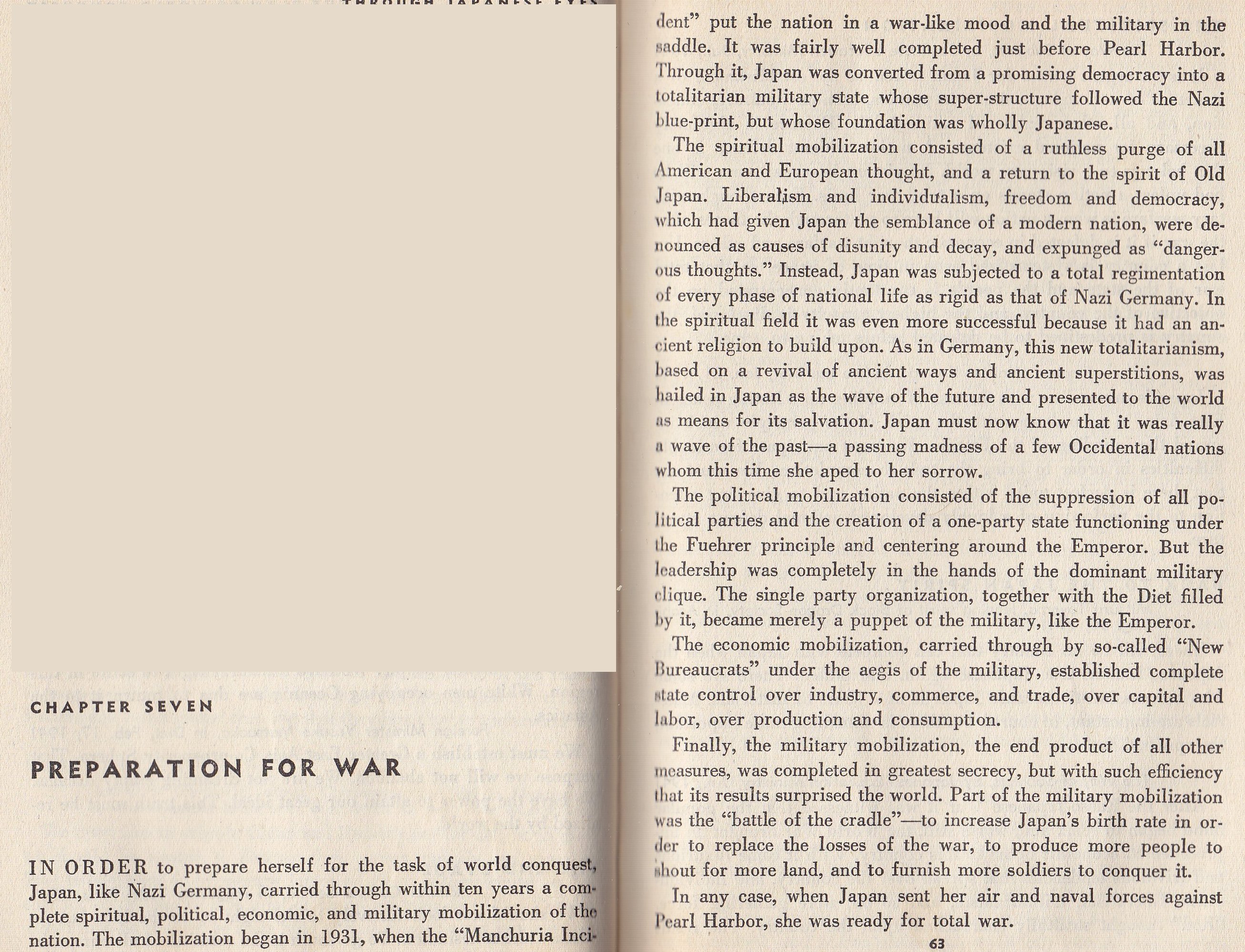
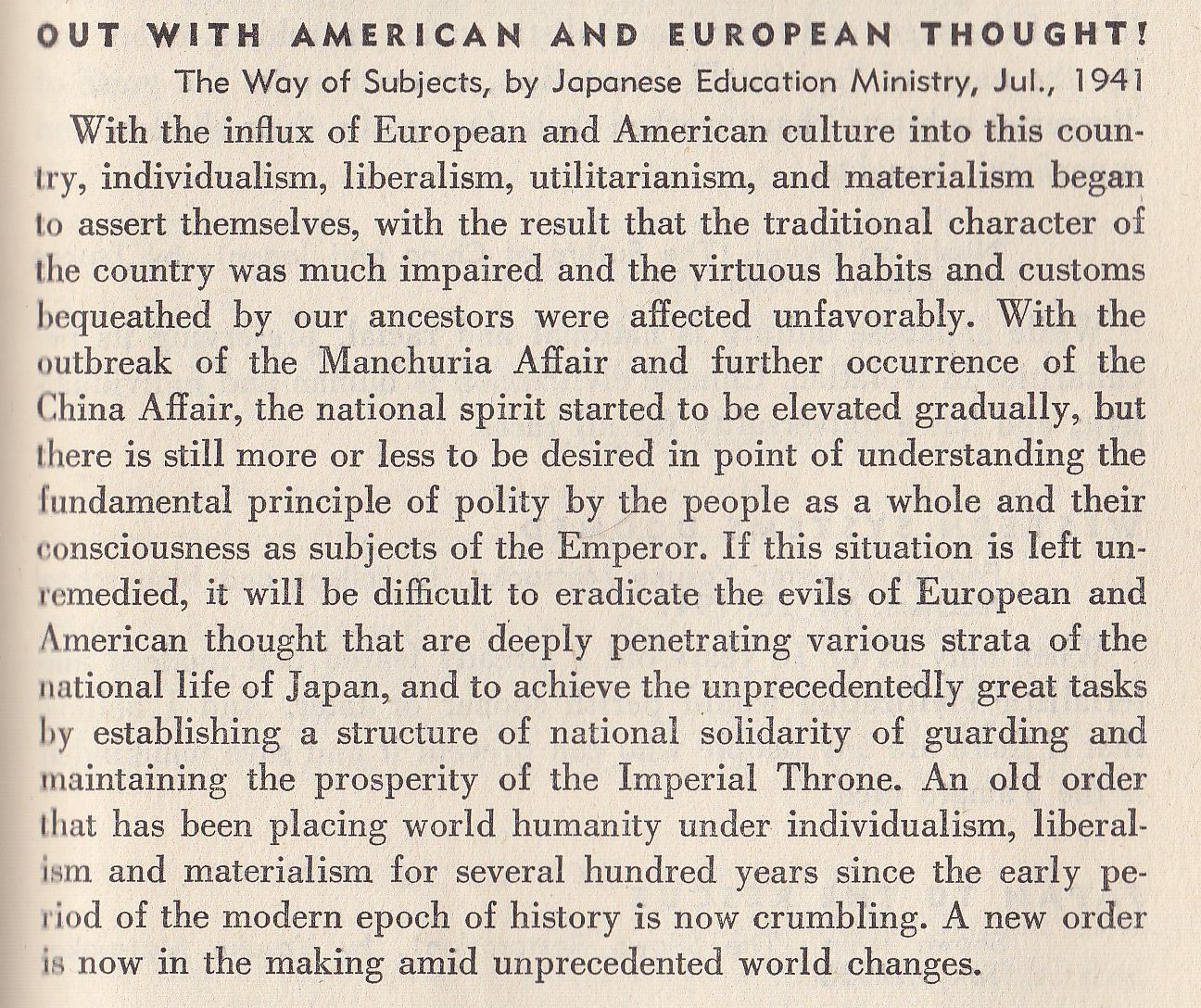
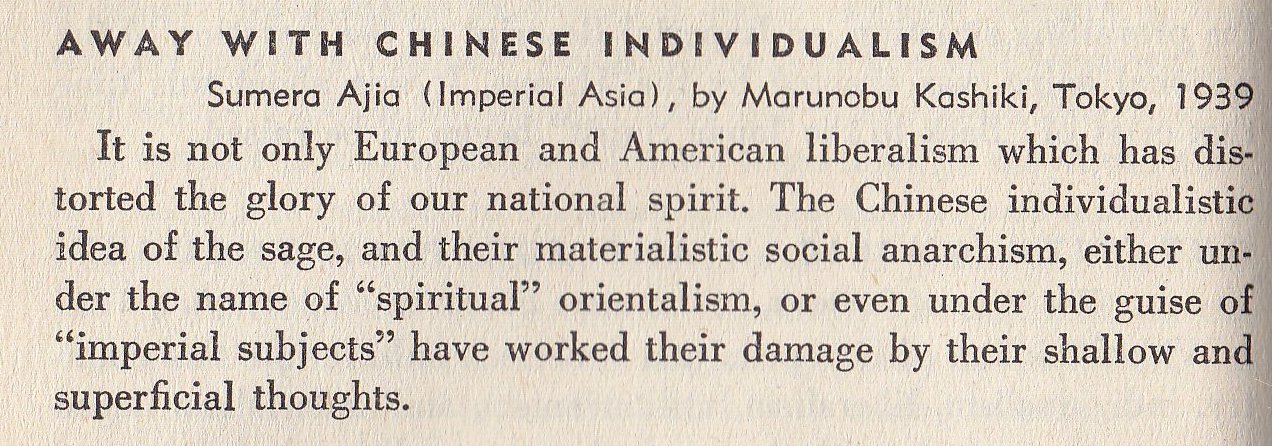
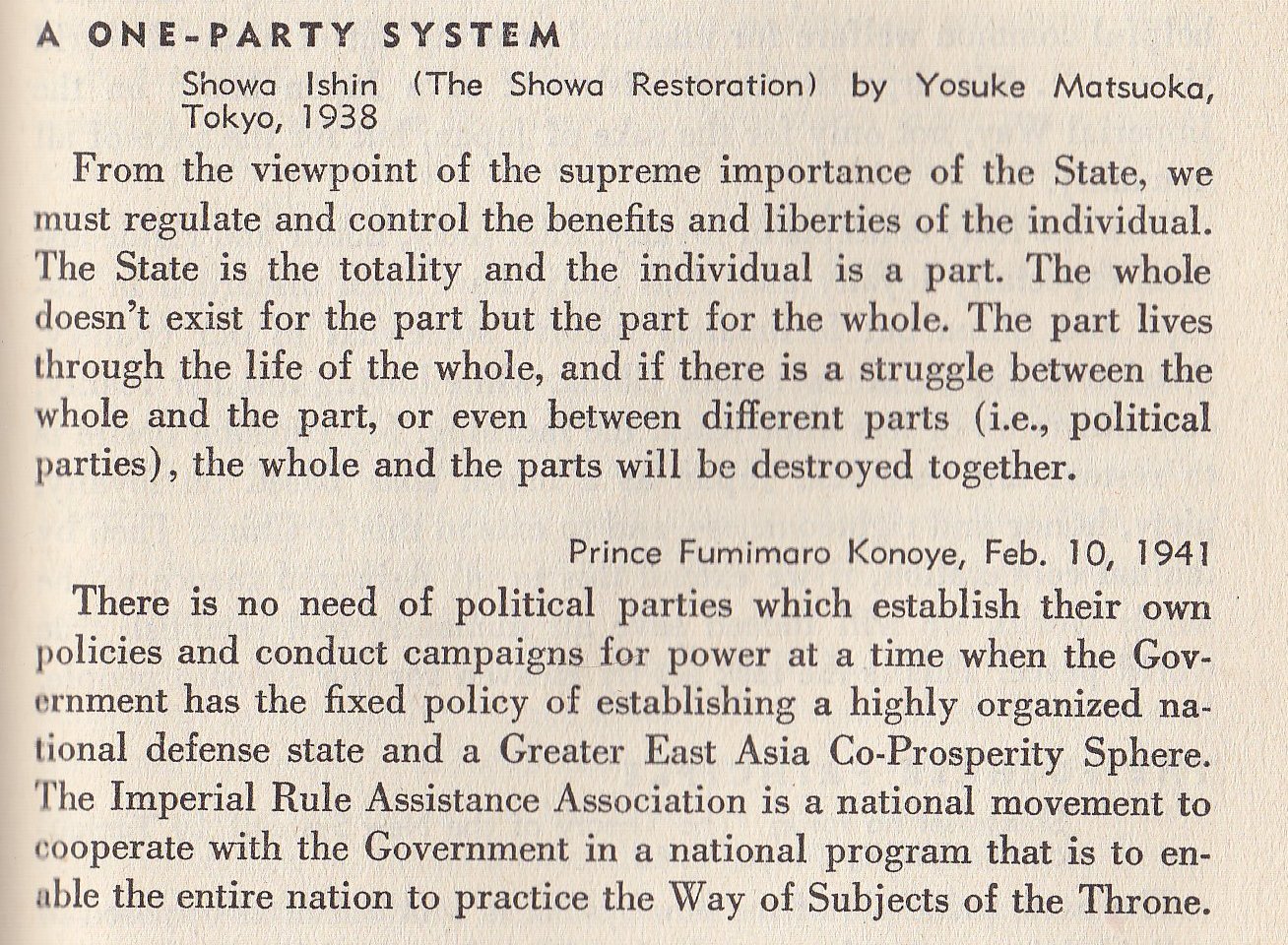
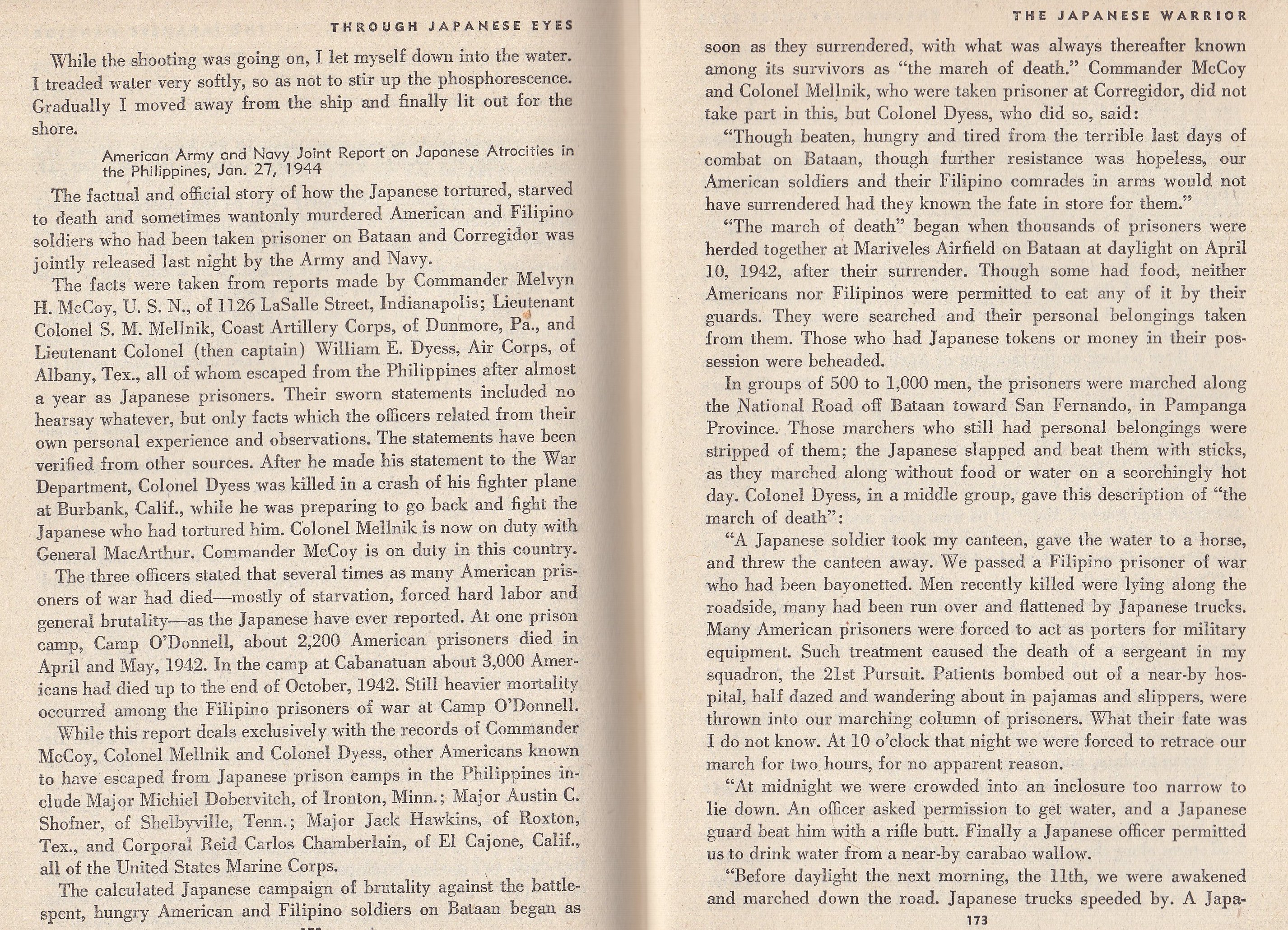
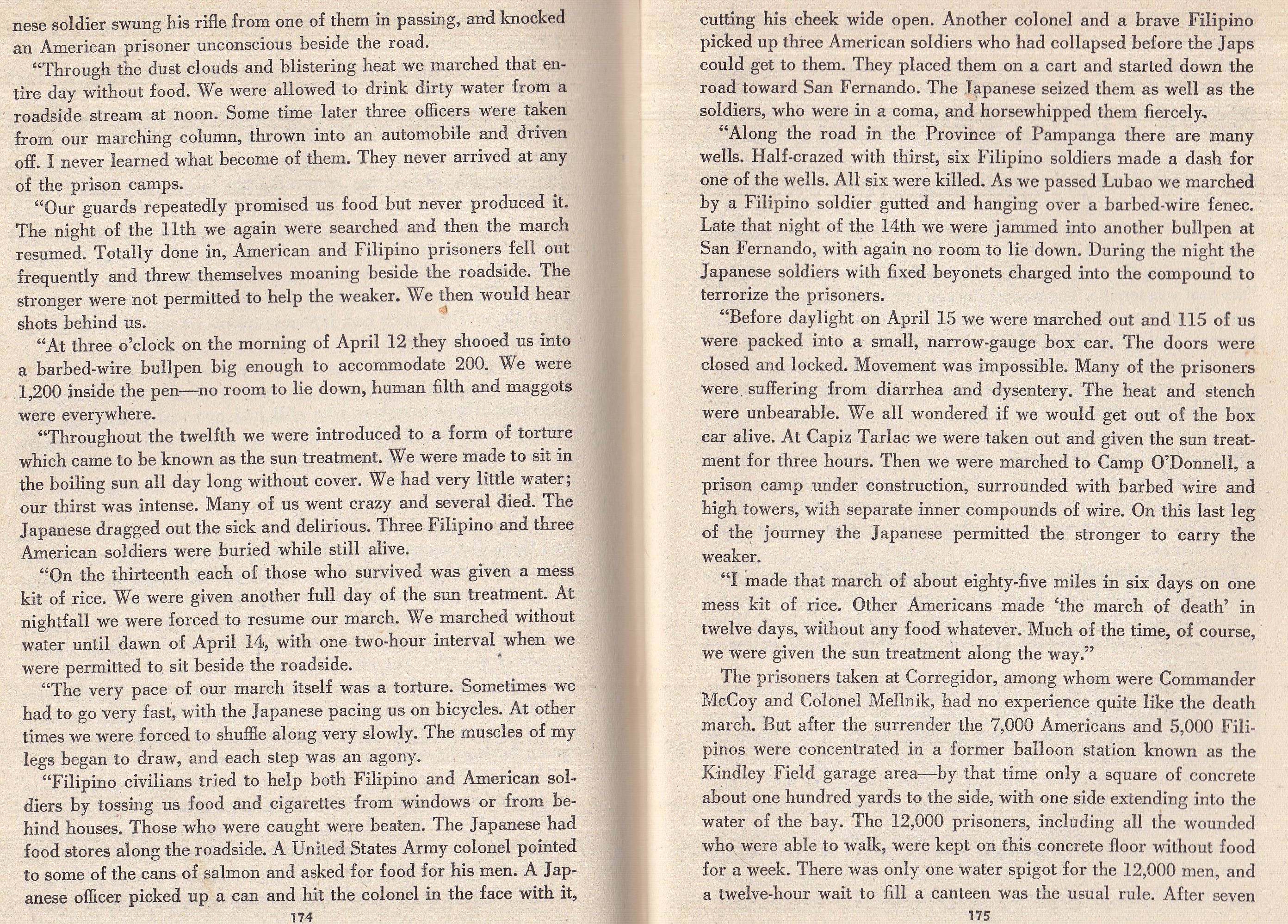
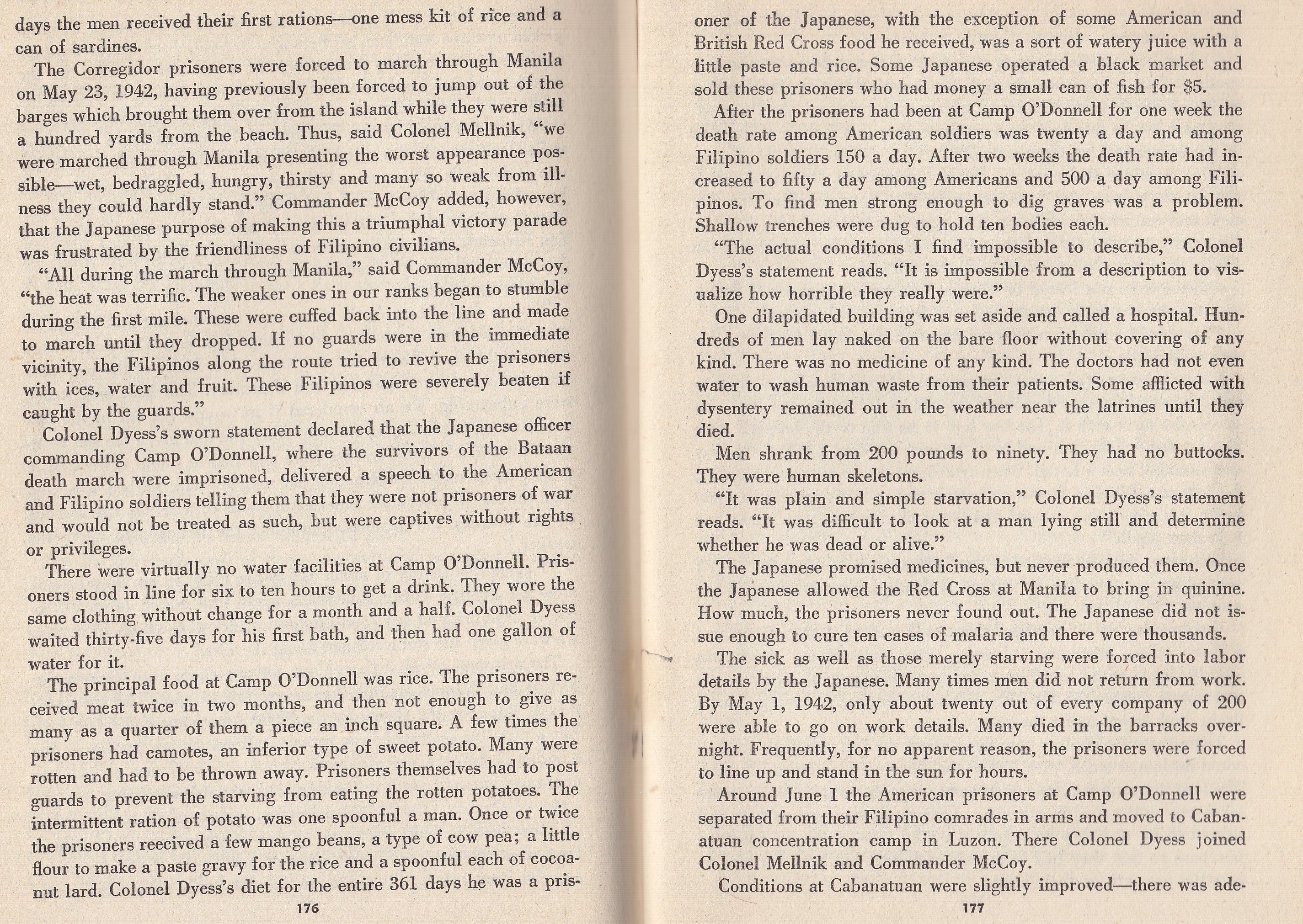
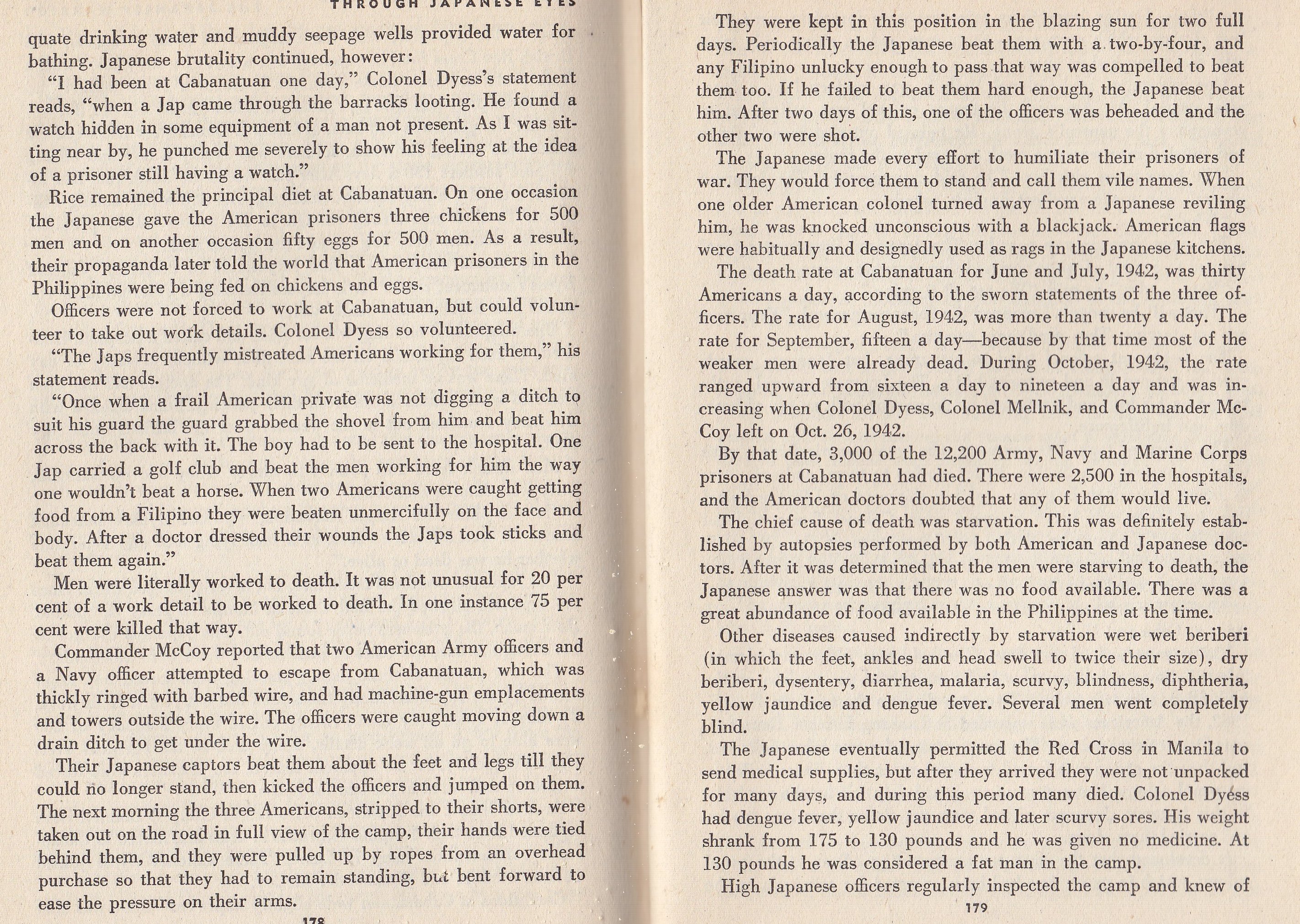
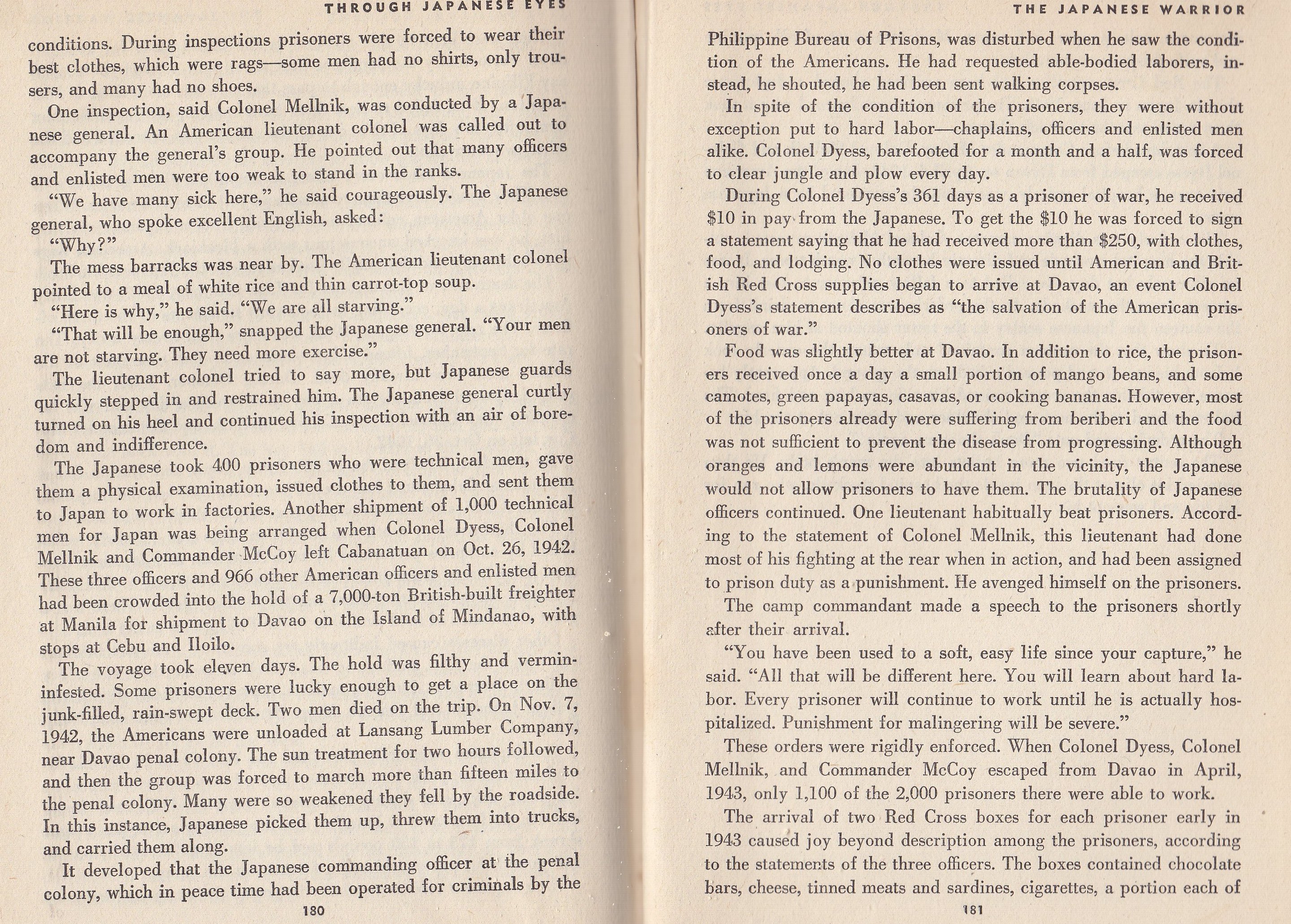
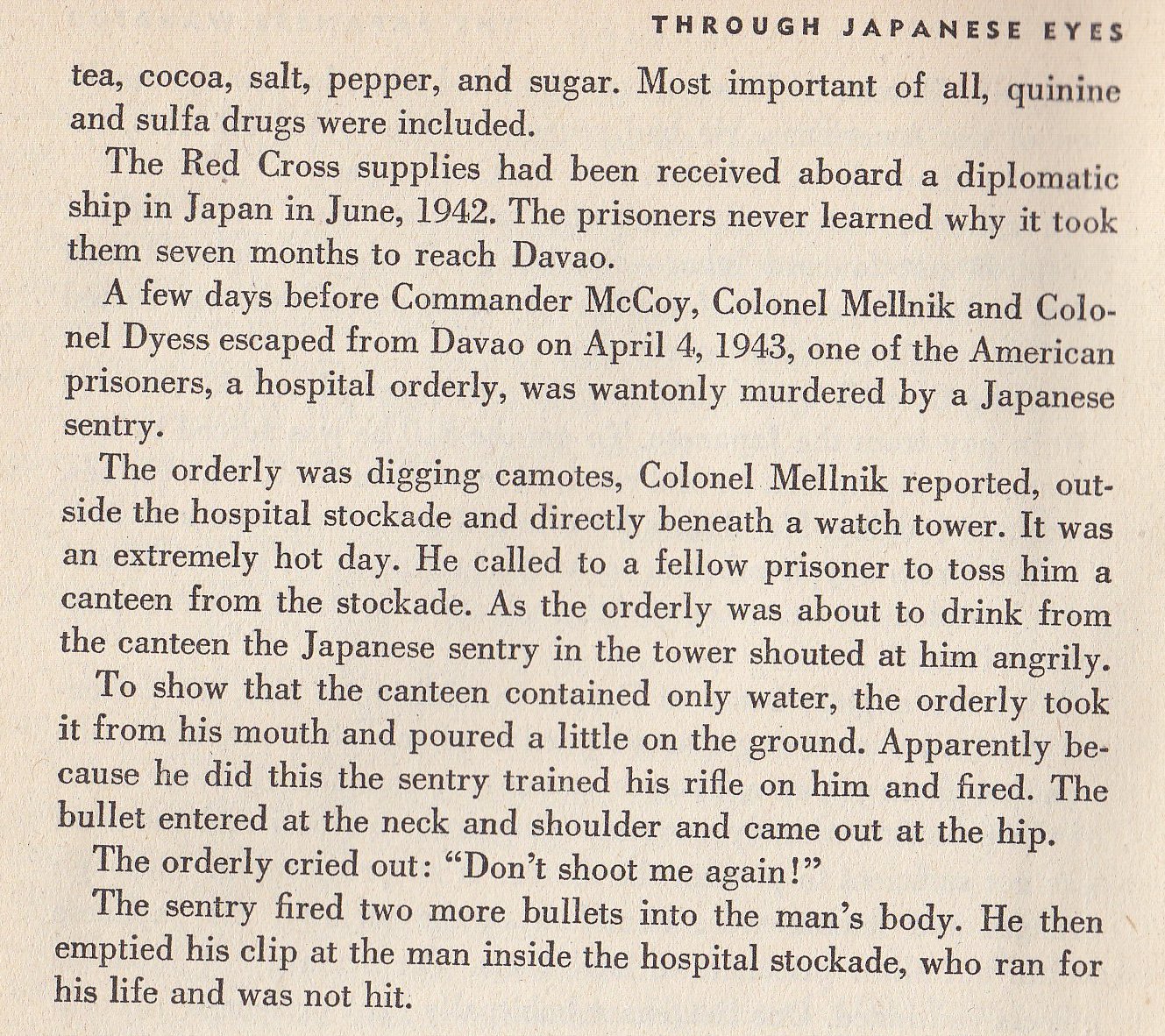
The book “Through Japanese Eyes” has numerous quotes from Japanese sources about the times leading up to the war and the war itself, and these quotes give a very good idea of the state of mind of those who were behind the war. I will reproduce a few of the quotes under separate topics.

Japan's War Aims

For those who, in the present day, are trying to rewrite history and say that Japan was a victim of the war and was not the aggressor, this might prove most interesting:

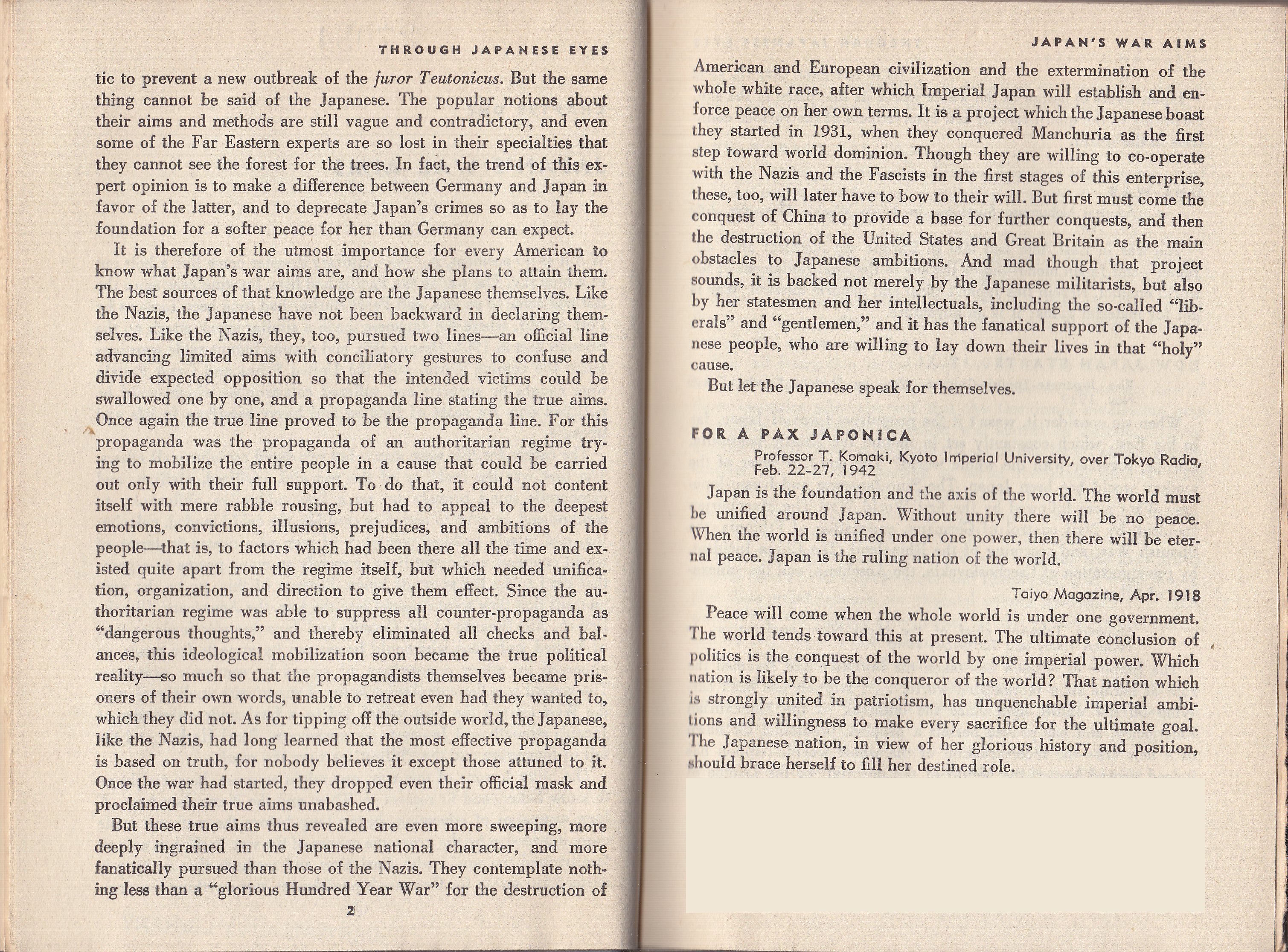
Taiyo Magazine, April, 1918: “Peace will come when the whole world is under one government. The world tends toward this at present. The ultimate conclusion of politics is the conquest of the world by one imperial power...The Japanese nation, in view of her glorious history and position, should brace herself to fill her destined role.”

Shingoro Takaishi, in Nippon Today and Tomorrow, 1940: “The Empire of Nippon has taken the initiative and assumed the role of herald of a reorganized world...Nippon has been carrying on her uphill fight since the outbreak of the Manchurian Emergency, and has proved herself a prophet, predicting the dawn of a new era-the reconstruction of the whole world.”

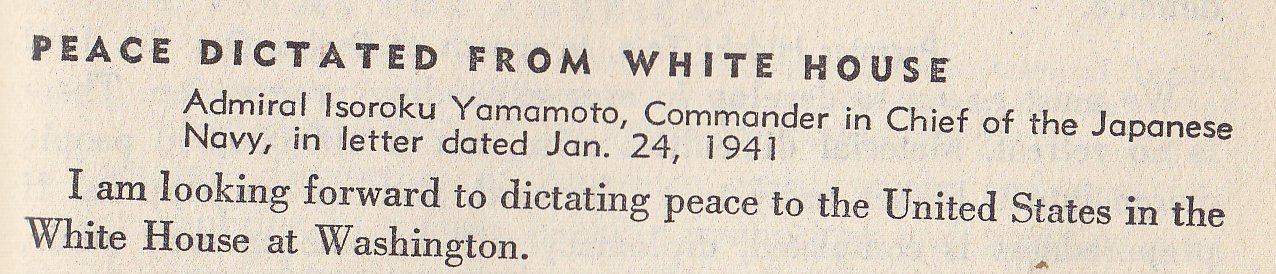
Admiral Isoroku Yamamoto, Jan. 24, 1941: “I am looking forward to dictating peace to the United States in the White House at Washington.”

Professor T. Tomaki, Kyoto Imperial University, from a radio speech during February of 1942: “Japan is the foundation and the axis of the world. The world must be unified around Japan. Without unity there will be no peace. When the world is unified under one power, then there will be eternal peace. Japan is the ruling nation of the world.”

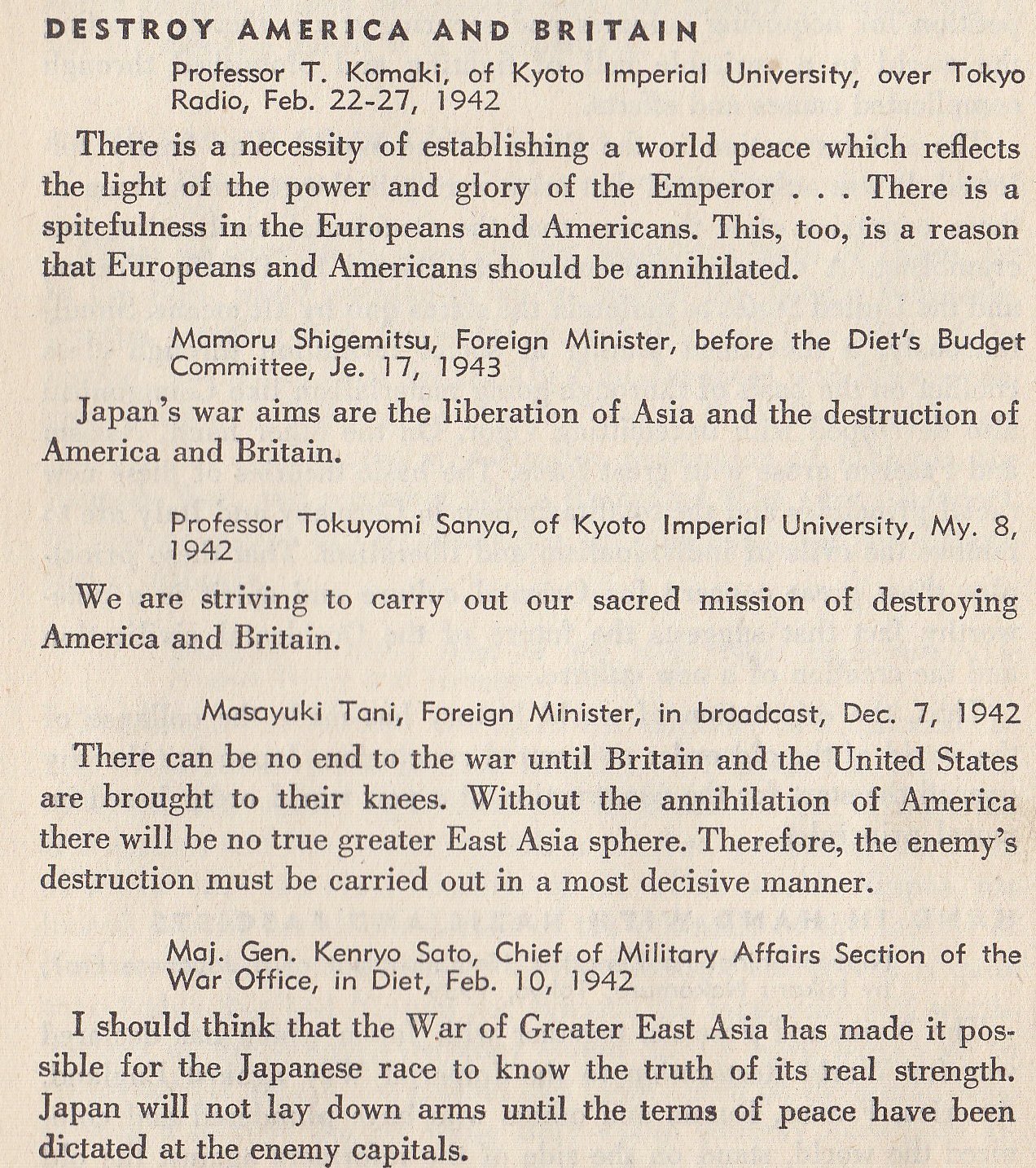
Same person, on Tokyo Radio, also in February of 1942: “There is a spitefulness in the Europeans and Americans. This, too, is a reason that Europeans and Americans should be annihilated.”

Captain Hideo Hiraide, radio broadcast Feb. and March, 1942: “Unless we track them down to the ends of the world and dictate our terms to them at Washington, we cannot accomplish the true aims of the Greater East Asia War.

Professor Tokuyomi Sanya, of Kyoto Imperial University, May, 1942: “We are striving to carry out our sacred mission of destroying America and Britain.”

Masayuki Tani, Foreign Minister, Dec. 7, 1942: “Without the annihilation of America there will be no true greater East Asia sphere. Therefore, the enemy's destruction must be carried out in a most decisive manner.”

Japanese Diet, June 18, 1943: “We are determined to accelerate our efforts for the destruction of our long-standing enemies, the United States and Britain, and to liberate Greater East Asia eternally, thereby nurturing everlasting peace in the world.”

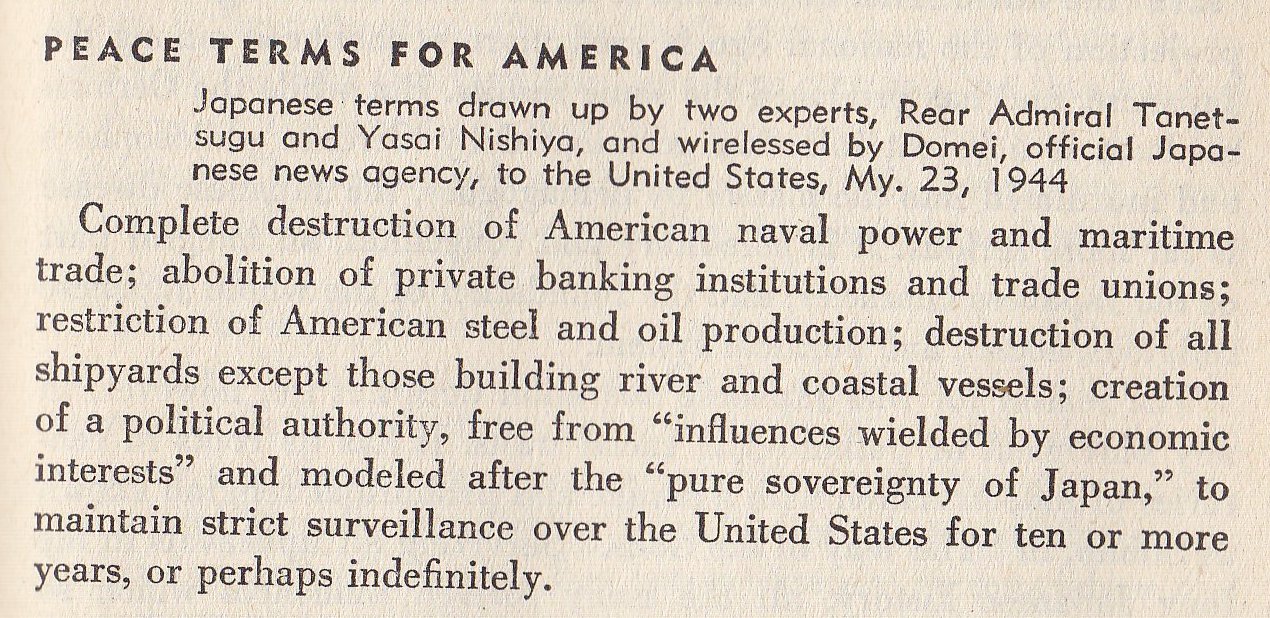
May 23, 1944, Peace terms for America as drawn up by rear Admiral Tanetsugu and Yasai Nishiya: “Complete destruction of American naval power and maritime trade; abolition of private banking institutions and trade unions; restriction of American steel and oil production; destruction of all shipyards except those building river and coastal vessels; creation of a political authority, free from 'influences wielded by economic interests' and modeled after the 'pure sovereignty of Japan,' to maintain strict surveillance over the United States for ten or more years, or perhaps indefinitely.”

The earlier material reflects the philosophy that was being adopted that Japan was to rule the entire world, and that this was destined from the start of Japanese civilization. The Yamamoto quote is the most famous of all, even appearing on anti-Japanese propaganda posters in the US.

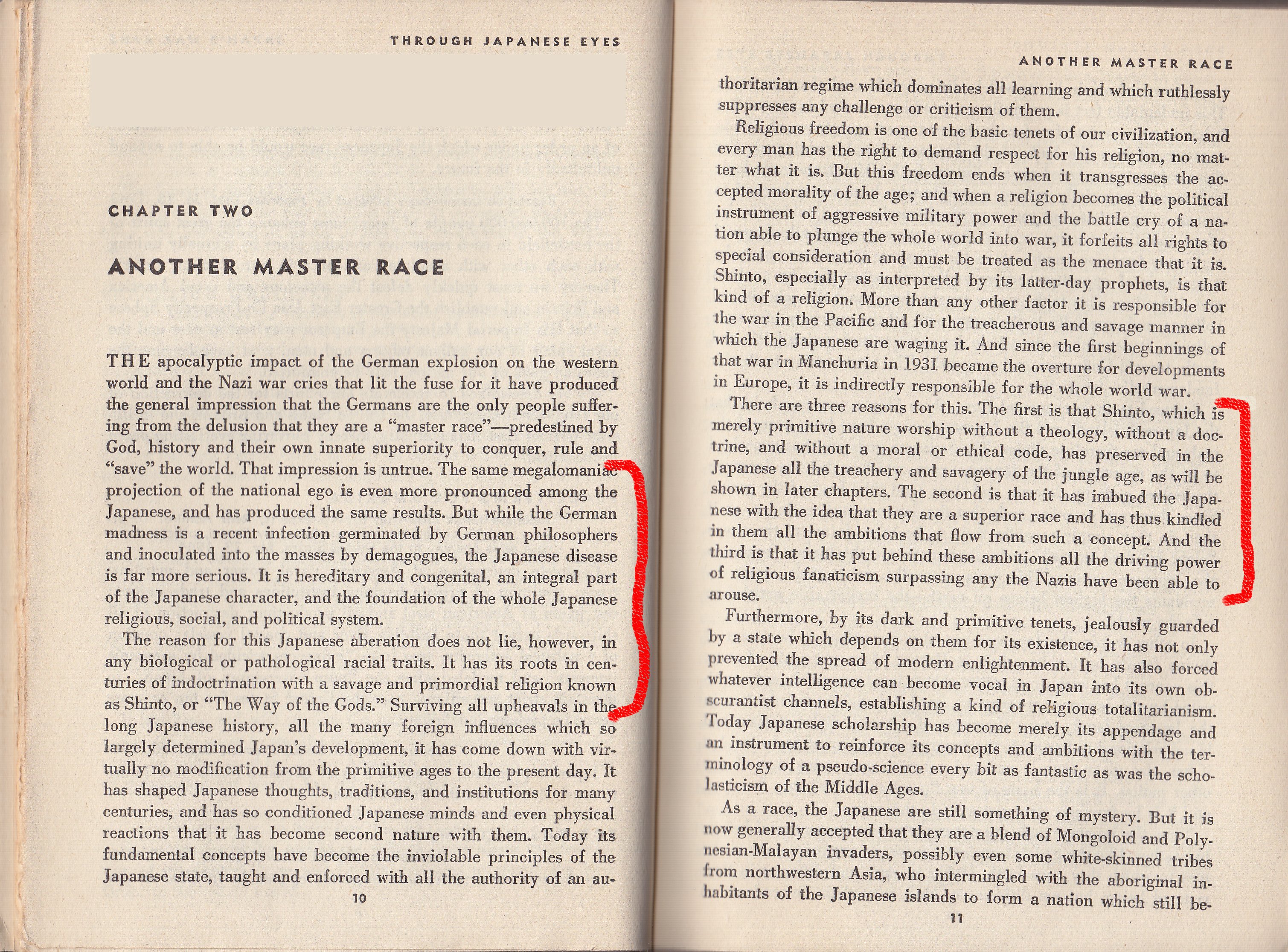
Another Master Race

One of the things that was prevalent in Japan was the notion that the Japanese were a “special” race, a race that was superior to all others. If that were true, then it would naturally seem to indicate that such a superior race was destined to rule all the other races. This type of thinking helped them to under-estimate what the US could do militarily, a mistake Japan paid dearly for in the war.

The Japanese race was created alone, but gave birth to the other races

Kitabatake Chikafusa, 1293-1354: “Great Yamato is a divine country. It is only our land whose foundations were laid by the divine ancestor. It alone has been transmitted by the Sun Goddess to a long line of descendants. There is nothing of this kind in foreign countries. Therefore it is called the divine land. It is the duty of every man born on the Imperial soil to yield devoted loyalty to his Soverign, even at the sacrifice of his own life. Let no one suppose for a moment that there is any credit due him for doing so.”

Atsutane Hirata, Japanese scholar (1776-1834): “From the fact of the divine descent of the Japanese people proceeds their immeasurable superiority to the natives of other countries in courage and intelligence.”

Tokyo Anthropological Society, 1936: “The Japanese people were created on the islands of Japan, and are a superior race, supporting an unbroken dynasty for all ages, and having no racial origin outside of the Japanese islands.”

Professor T. Komaki of Kyoto Imperial University, Feb. 1942: “The Asiatic races originated from the Japanese race. Indians in America, the natives in Australia, are all of the Asiatic race.”

Japan is responsible for early cultural advancements in China, India, and a variety of other countries.

Asiatic Problems Society, January, 1939: “Japan performed tremendous historical accomplishments not only in China but in India, Arabia, Central Asia, Siberia, etc, in the guise of Ural-Altaic or Indian peoples.”

At one time, all nations in the world were united under Japan.

Professor Chikao Fujisawa, Feb. 1942: “In the prehistoric age, mankind formed a single world-wide family system with the Japanese Emperor as its head. Japan was highly respected as the land of parents, while all other lands were called the lands of children, or the branch lands. ... the prehistoric civilization of Japan, whose records are found scattered in some chapters of the Holy Bible.”

If everything was united under Japan, then what happened?

Professor Chikao Fujisawa, Feb. 1942: “According to our ancient historical narratives, 'the world order' with Japan functioning as its absolute, unifying center collapsed in consequence of repeated occurrences of earthquakes, volcanic eruptions, floods, tidal waves, and glaciers, and due to these tremendous cataclysms, all manking became estranged geographically and spirtually from the parent-land of Japan, to the detriment of world peace. As it happened, Japan was immune miraculously from all these natural catastrophes, and its Divine Soverigns, enjoying a lineage unbroken for ages eternal, have appointed themselves the sacred mission of remoulding this floating and dismembered mankind into a large family community such as existed in the remote prehistoric age.”

This approach could naturally be used as a justification for Japan's actions

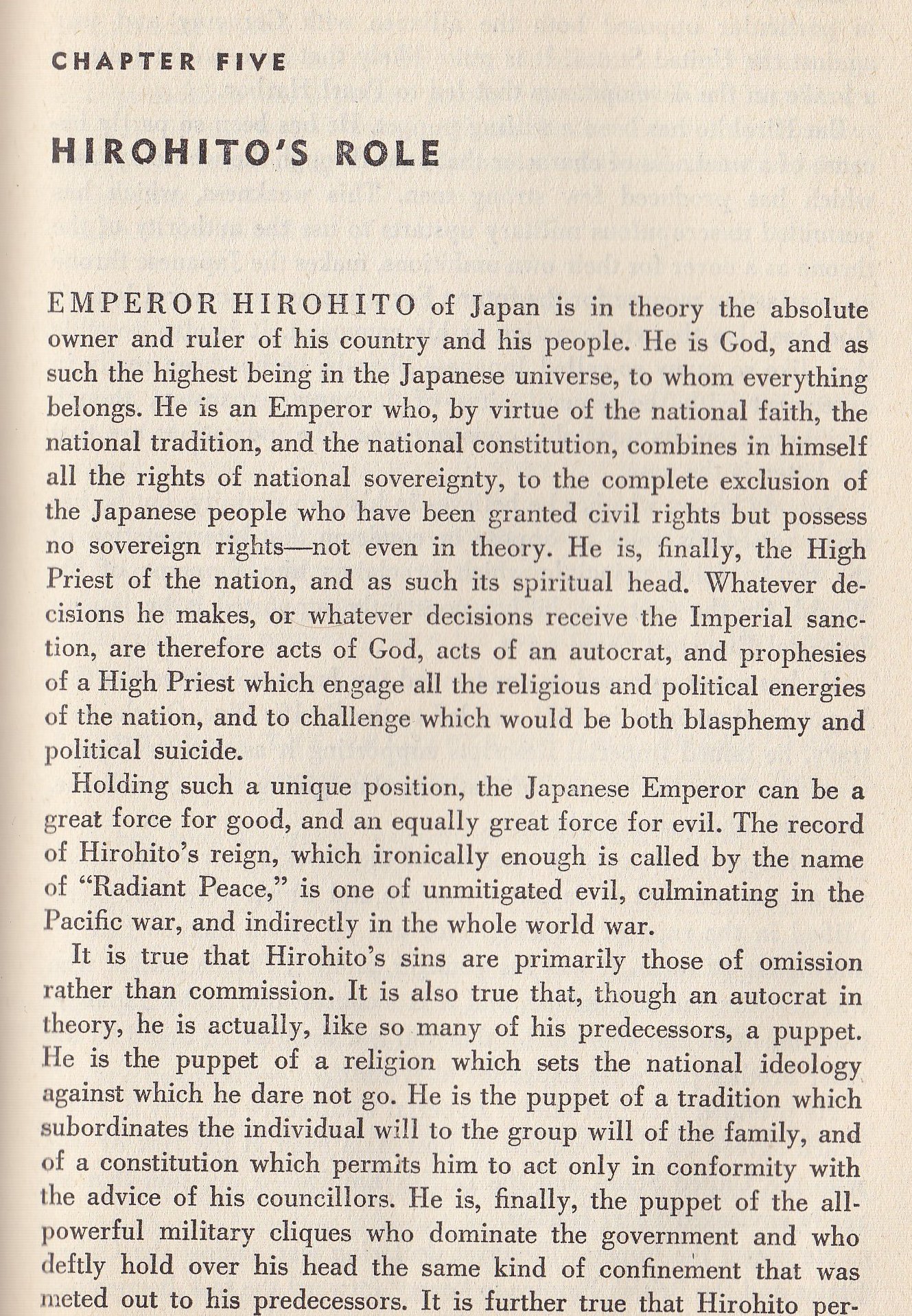
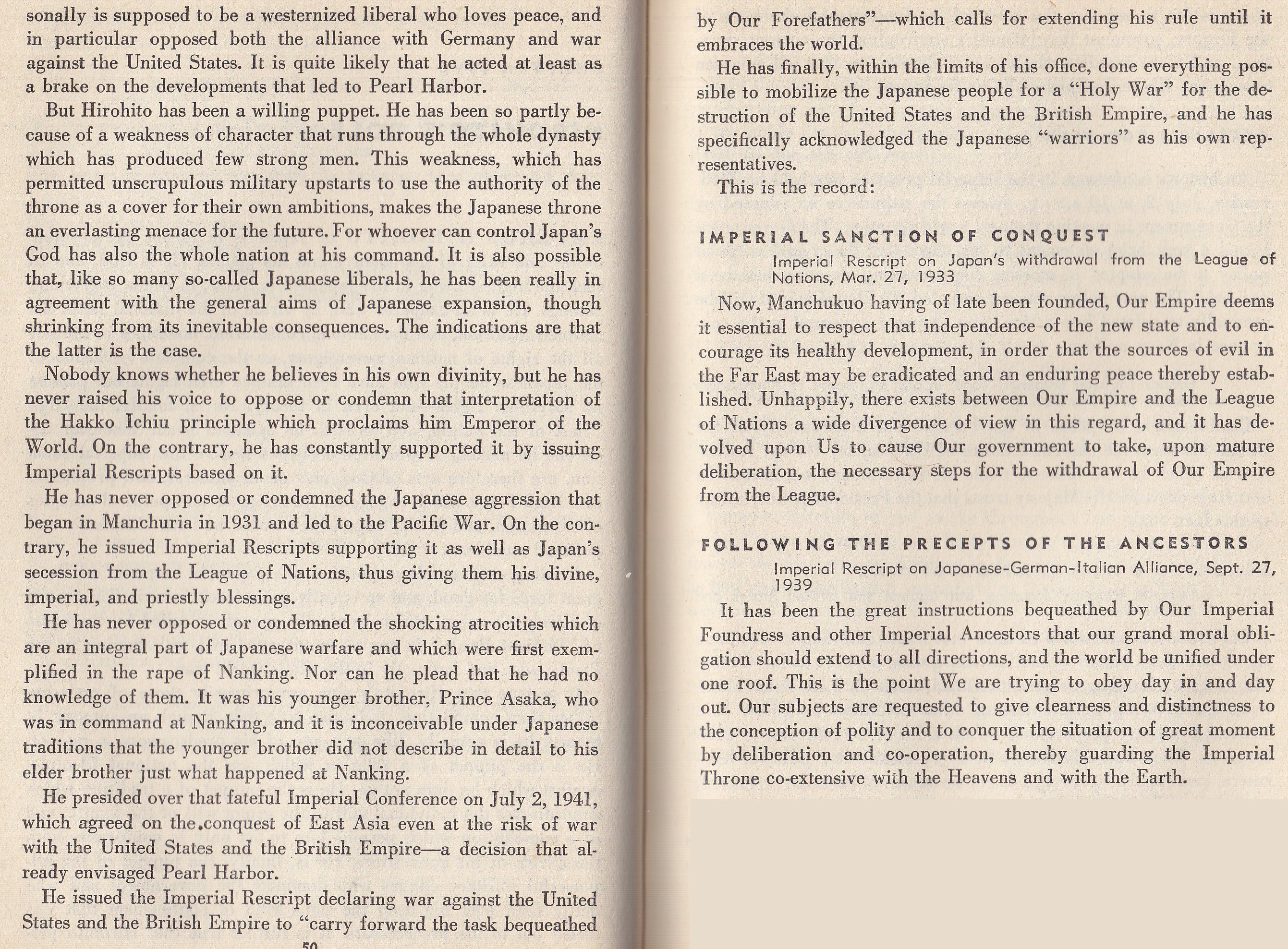
The God-Emperor

Lt. Col. Sabura Aizawa, 1935: “The Emperor is the incarnation of God who rules the universe...If the whole world cannot understand this, our way of life, it does not matter. We can have only one purpose in our existence. We Must Bring Happiness, Contentment, and Prosperity to the World in Accordance with the Commands and Wishes of the Emperor.”

Sadao Kiyahara, 1935: “The Emperor is not to be worshiped exclusively by the Japanese, not to be represented as emperor of Japan alone. The Emperor governs Japan and is the Emperor of mankind the world over.”

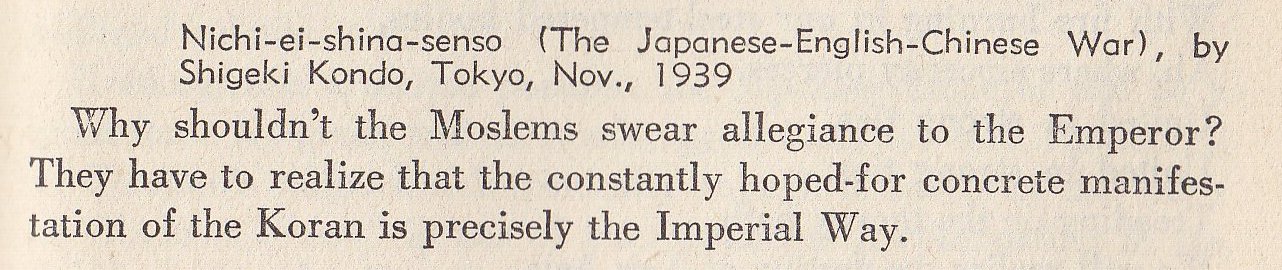
Shigeki Kando, Nov. 1939: “Why shouldn't the Moslems swear allegiance to the Emperor? They have to realize that the constantly hoped-for concrete manifestation of the Koran is precisely the Imperial Way.”

If that isn't enough to indicate how important the Emperor was considered to be, then try this:

Chikao Fujisawa, Feb. 1942: “It is the foremost axion of the Way of the Gods that without the Japanese Emperor no nations of the world would have ever come into existence, because he proves the sole successor to the Progenitress of the whole cosmos-the Sun Goddess.”

Tadahika Inaizumi, Oct. 12, 1942: “...the Emperor of Japan is the Emperor not only of Japan but also of all the races of the world.”

Japan will save the world

Yosuke Matsuoko, 1938: “It is my conviction that the mission of the Yamato race is to prevent the human race from becoming devilish, to rescue it from destruction and lead it to the world of light.”

Yosuke Matsuoko, Jan. 27, 1941: “The Manchuria Incident and the China Affair are nothing but manifestations of Japan's attempt to forestall the destruction of civilization. The Manchuria Incident should be termed the start of construction, not destruction, of world peace.”

Japanese ambassador to the US, April 22, 1934: “Japan msut act and decide alone what is good for China.”

Prince Konoye, July 7, 1938, in the New York Times:”Japan does not want an inch of Chinese territory.”

Foreign Minister Matsuoka, July 10, 1940: “Japan does not intend to annex new territories and subjugate and exploit peoples as some European and American countries have done.”

Japanese Education Ministry, July, 1941: “The China Affair is a holy task for Japan to propagate the ideals of the Empire-founding throughout East Asia and also the world over.”

Tokyo broadcast, Oct. 1942: “Our country is striving toward the attainment of co-prosperity and co-existence by liberating the various peoples of Asia from the control of America and Britain and placing them in their proper places. Our purpose in this Holy War is to give each country its rightful place.”

Which would be under the control of Japan.

Racial War

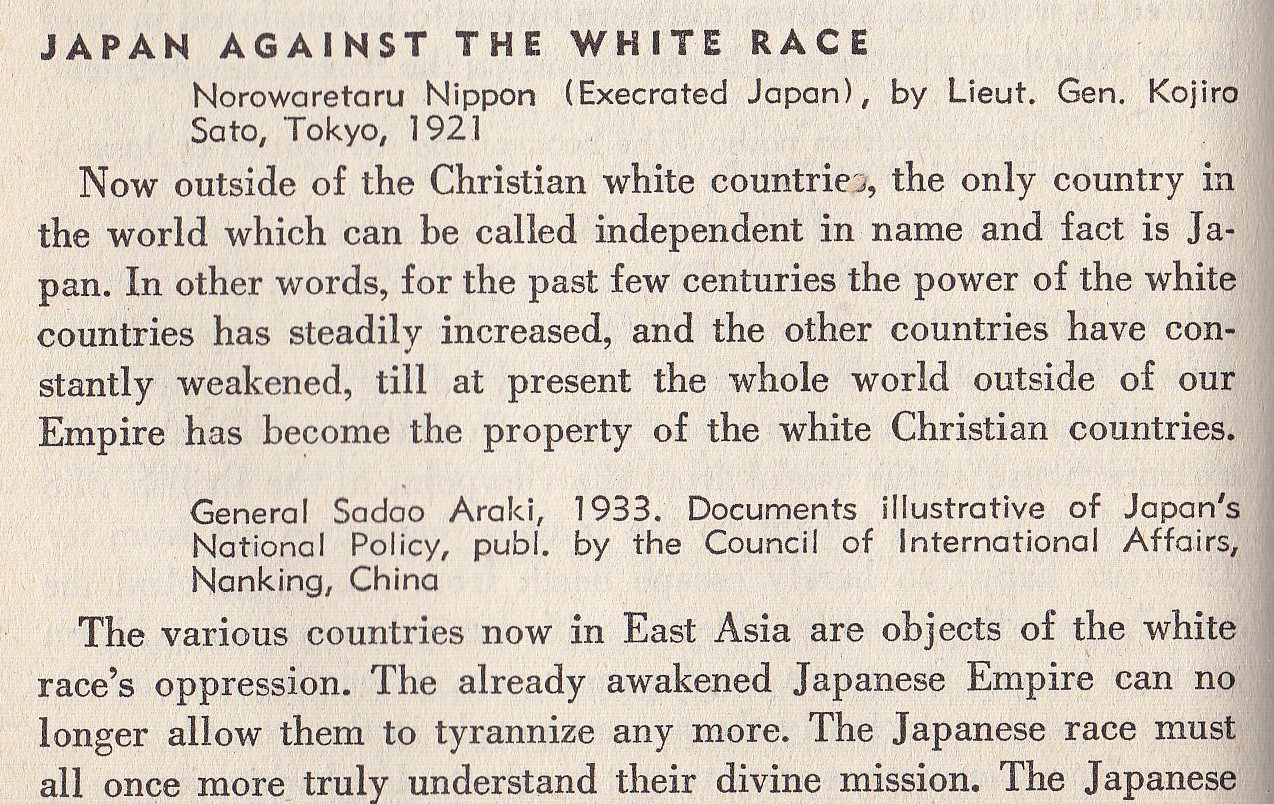
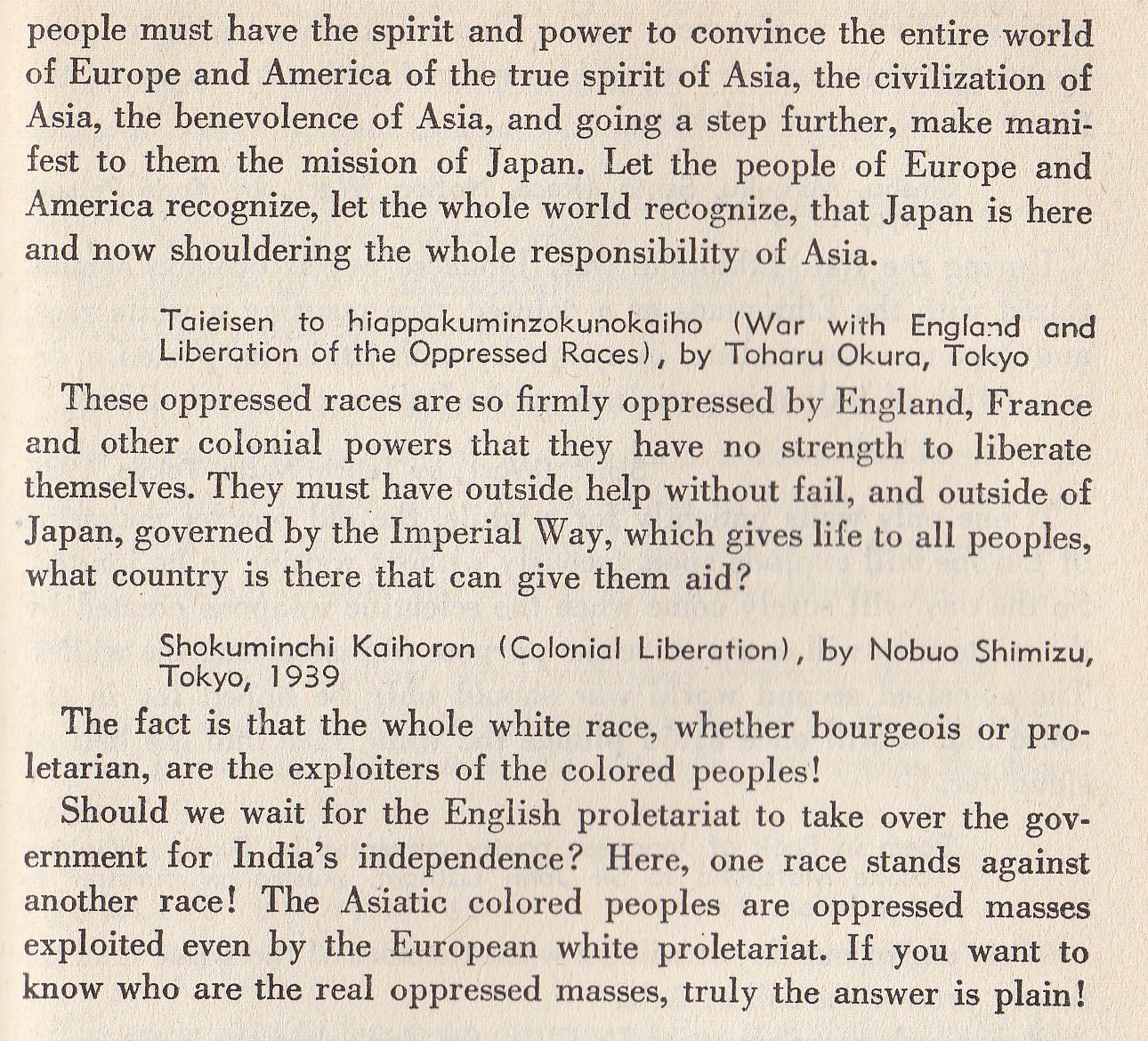
Major-General Hayao Tada, 1935: “The progressive change in the international situation may be regarded as a movement against the tyranny and high-handedness of the white people. It may be regarded as the beginning of a racial war emancipating the colored people, who form the greater part of the human inhabitants of the world, from the enslaving oppression by the whites.”

Teiichi Muto, 1938: “And the world's paradise, America, blessed with natural resources, with an average income five times the Japanese; aren't the Negroes, its aborigines (sic), notoriously the poorest people in the world? The Hawaiian natives were taught by the tools of white imperialism, the missionaries, to worship heaven, and while they were looking up to heaven the ground was stolen from under their feet.”

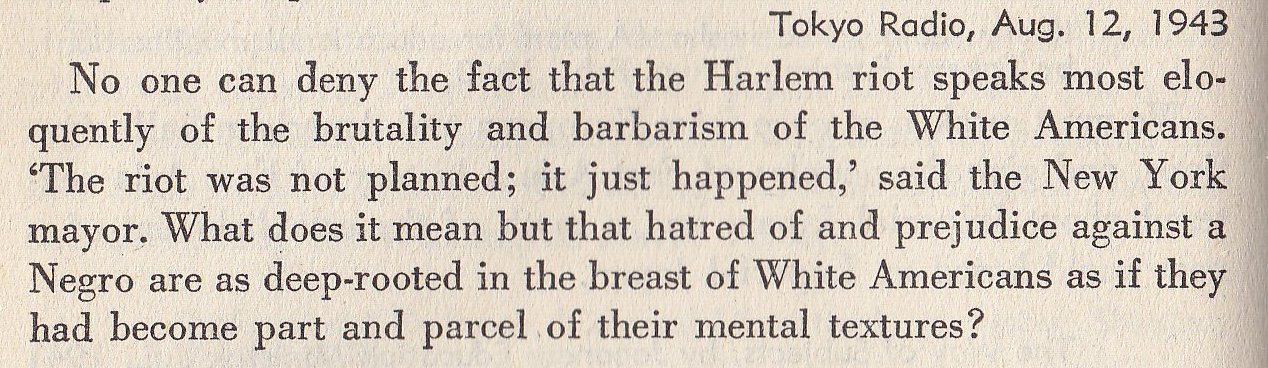
Tokyo radio, Aug. 12, 1943: “No one can deny the fact that the Harlem riot speaks most eloquently of the brutality and barbarism of the White Americans.”

Unfortunately, these types of statements do contain their own kernals of truth. The white race, lead by England, France, Spain, Portugal, and eventually the US, established colonies all over the world, taking over other countries to use for their own purposes, rather than allowing the peoples of those countries to rule themselves. Hawaii was an independent monarchy until big business and the US government conspired together to take the country over; the lawful monarchy of Hawaii was done away with and Hawaii became a US “protectorate.” Likewise, there is no doubt that Blacks were treated terribly historically by the whites, and were still not in a good position in the thirties and forties.

Things were more complex than that, of course, but since there was a kernal of truth in these arguments it made them all the more effective for the Japanese.

Japanese Anti-Semitism

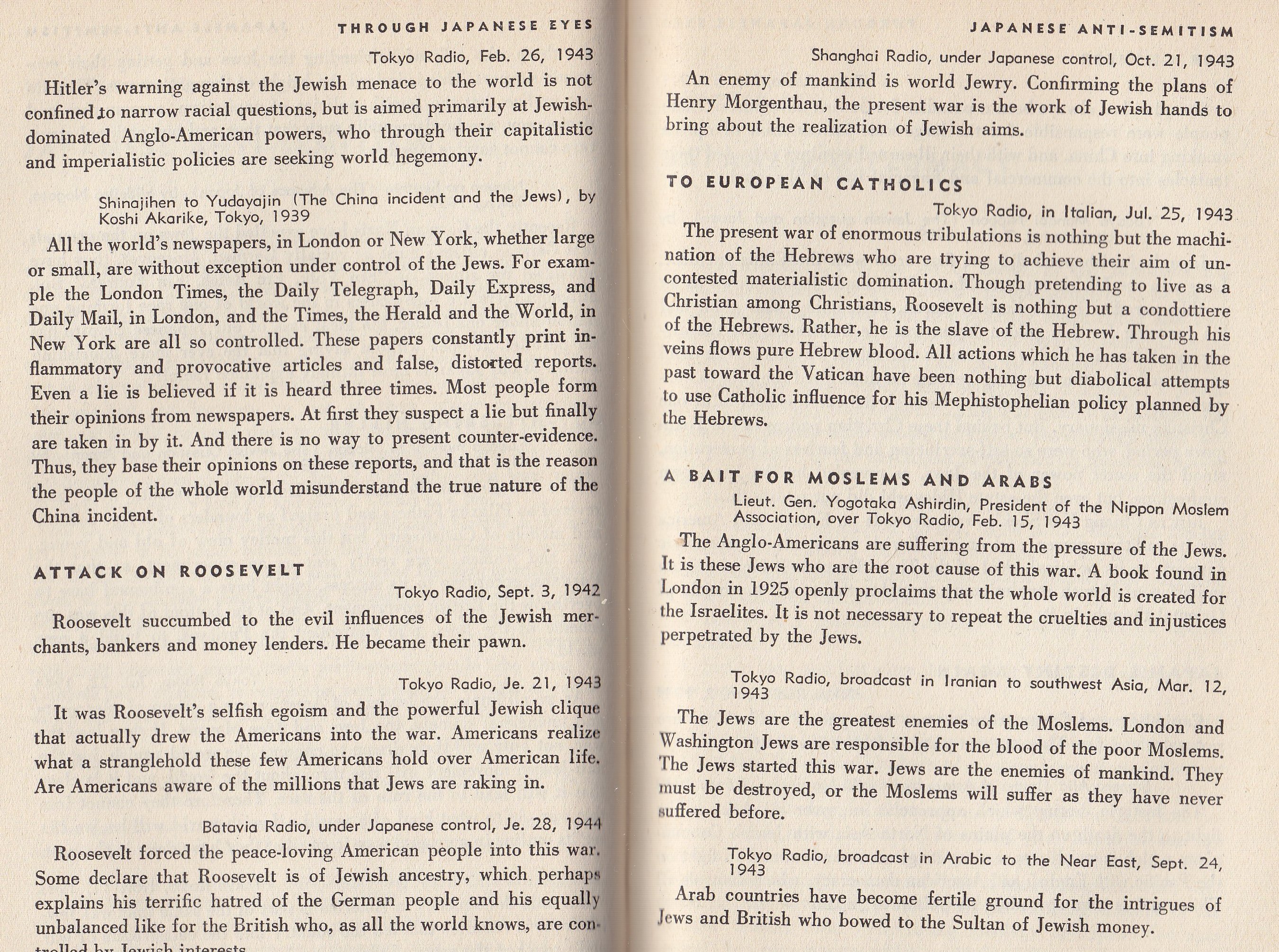
What is extremely strange about this section is that Japan has never, ever had a significant population of Jews; indeed, I've seen numbers as low as 1500 Jews in the entire country. Yet Japan developed its own form of anti-Semitism, and even today there are anti-Jewish articles in various magazines. (See my review of A Public Betrayed.)

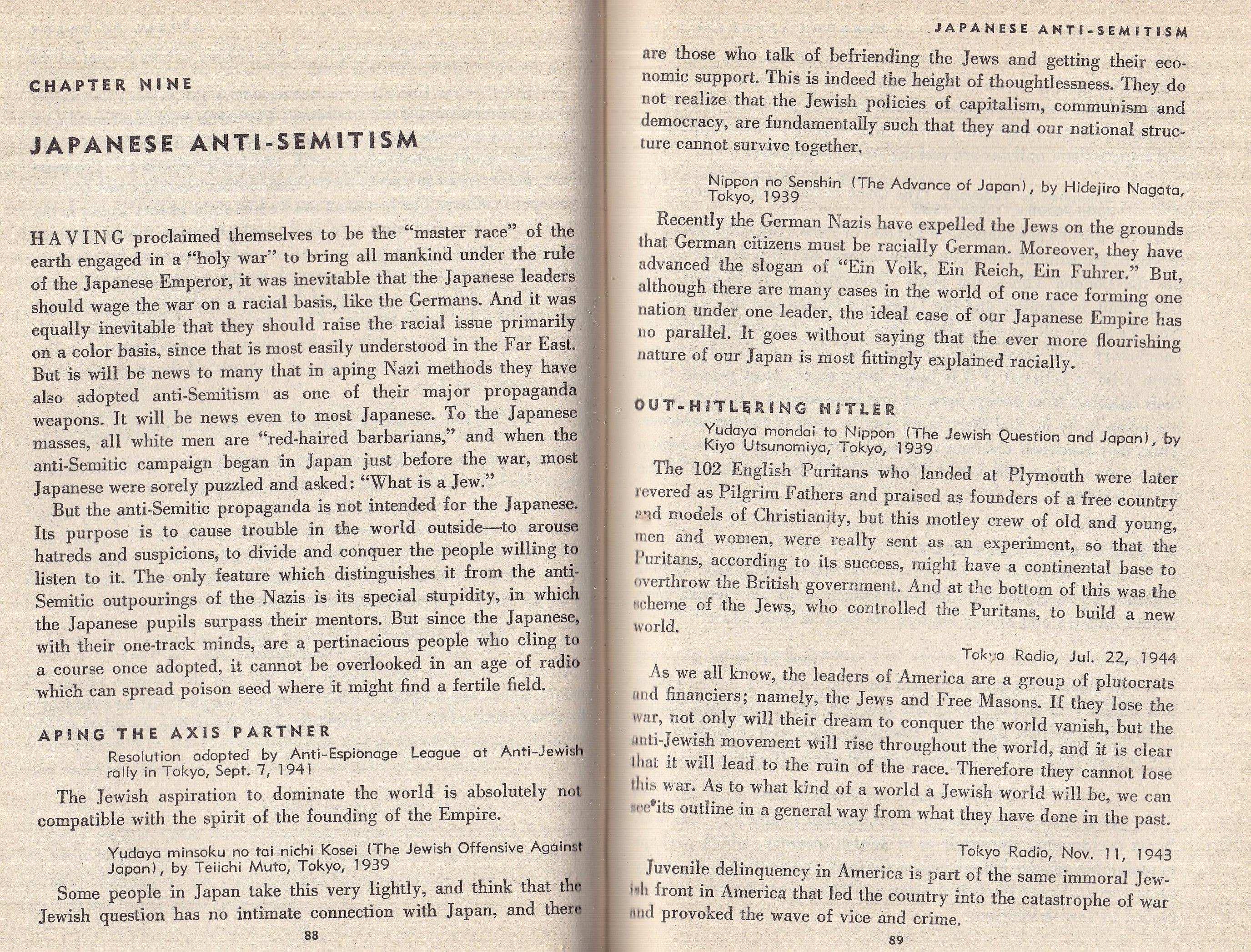
Teiichi Muto, 1939: “They do not realize that the Jewish policies of capitalism, communism and democracy, are fundamentally such that they and our national structure cannot survive together.”

Capitalism, communism and democracy, all at the same time? Seems to me you could have two of those three, but not all three of them at the same time.

One of the quotes that I found absolutely fascinating was this one, relating to the Puritans:

Kiyo Utsunomiya, 1939: “The 102 English Puritans who landed at Plymouth were later revered as Pilgrim Fathers and praised as founders of a free country and models of Christianity, but this motley crew of old and young, men and women, were really sent as an experiment, so that the Puritans, according to its success, might have a continental base to overthrow the British government. And at the bottom of this was the scheme of the Jews, who controlled the Puritans, to build a new world.”

So there was some kind of Jewish scheme behind the landing of the Pilgrims in North America, and from the first it was all part of another scheme to overthrow the British government by sending this “motley crew” of people to another continent.

Somehow, the logic of that escapes me.

Now, here was something that I didn't know:

Koshi Akarike, 1939: “All the world's newspapers, in London or New York, whether large or small, aer without exception under control of the Jews.”

Resolution adopted by Anti-Espionage League in Tokyo, Sept. 7, 1941: “The Jewish aspiration to dominate the world is absolutely not compatible with the spirit of the founding of the Empire.”

Tokyo Radio, July 25, 1943: “The present war of enormous tribulations is nothing but the machination of the Hebrews who are trying to achieve their aim of uncontested materialistic domination.”

Tokyo Radio, July 22, 1944: “the leaders of America are a group of plutocrats and financiers; namely, the Jews and Free Masons.”

The US will feel Japan's wrath

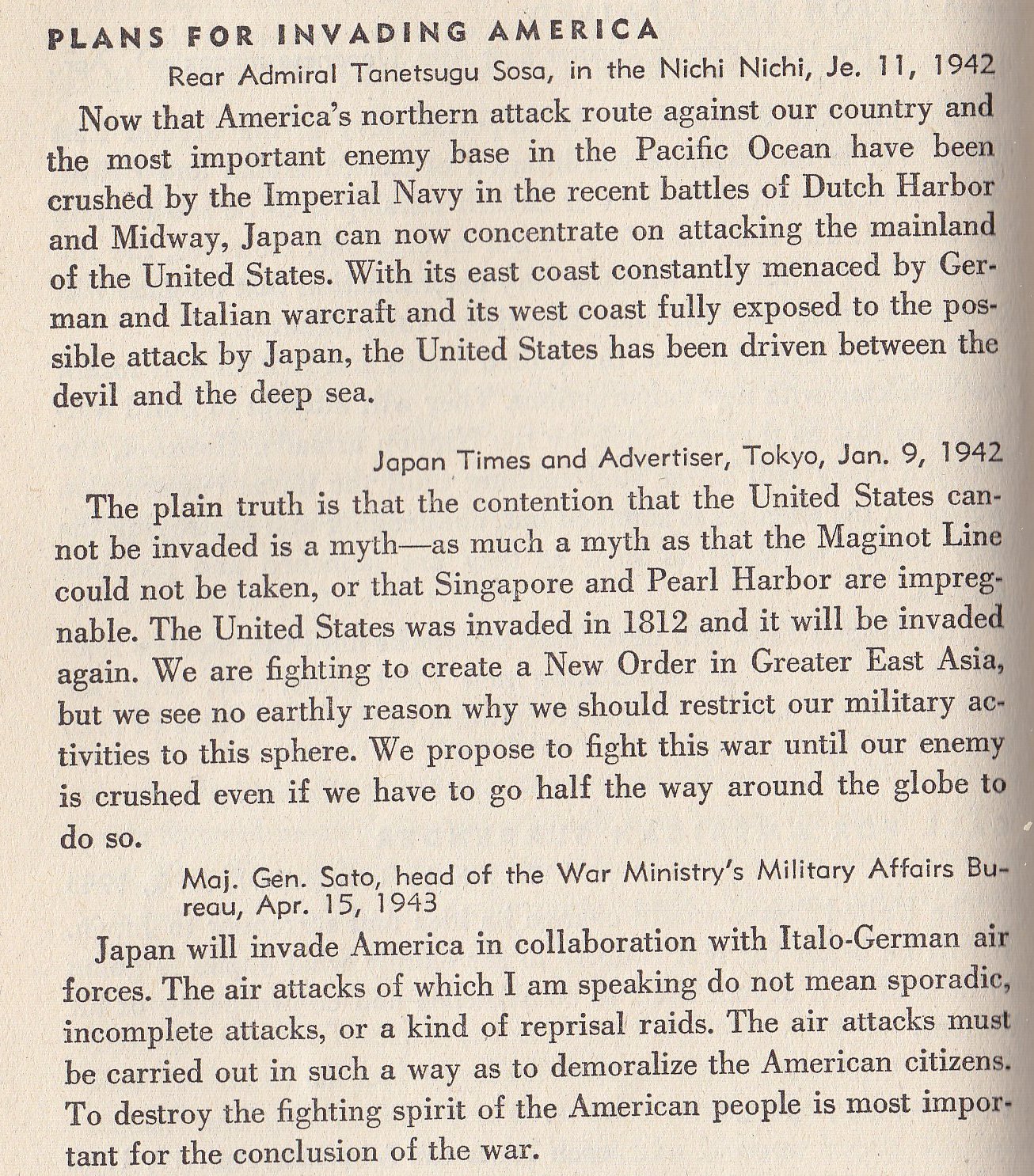
Rear Admiral Tanetsugu Sosa, June 11, 1942: “Now that America's northern attack route against our country and the most important enemy base in the Pacific Ocean have been crushed by the Imperial Navy in the recent battles of Dutch Harbor and Midway, Japan can now concentrate on attacking the mainland of the United States.”

That sort of overlooks the fact that the Battle of Midway was most definitely a loss for the Japanese, not a victory in any sense. Pearl Harbor, by this time, was well back on the way to full operational capability. US subs were beginning to take their toll.

Admiral Nomura, June 22, 1943: “Japan is invincible.”

The US fights not against just humans, but against spirits, too

Japan Times and Advertiser, Aug. 24, 1943: “There are no longer any Japanese forces on Kiska. But it seems that in their place the heroic spirits of Attu have landed. Foreign reports reveal that the American forces fought intensely and bitterly against this army of spirits over a period of three weeks. In the South Pacific sector, too, spirits of the Japanese troops have tangled with the enemy, causing many of them mental derangements and others to kill themselves as a result of nervous breakdown and morbid fear.”

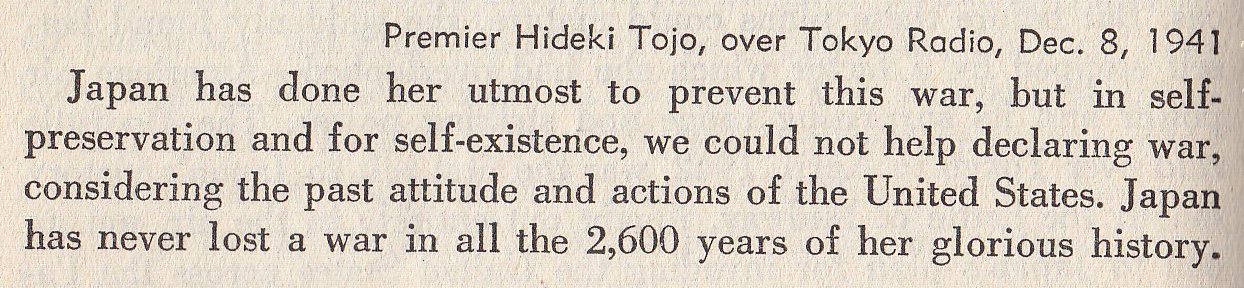
These are just a small number of the quotes in the book. Taken together, they give a clear idea of the mindset of the Japanese military, politicians, writers and intellectuals about the origin of Japan and its glorious destiny. It indicates people who knew what they wanted to do, which was have their own “holy war” to unite the world in their image. This was not a form of self-defense or self-preservation; it was an approach based on belief of racial superiority, spiritual superiority, and ultimate destiny that gave Japan the “right” to invade other countries, kill people, and try to remake the entire world in its own image.


Main Index
Japan main page
Japanese-American Internment Camps index page
Japan and World War II index page
Back to start of kimono section