Eyewitness: The Pacific War – Road to War
 |
 |
 |
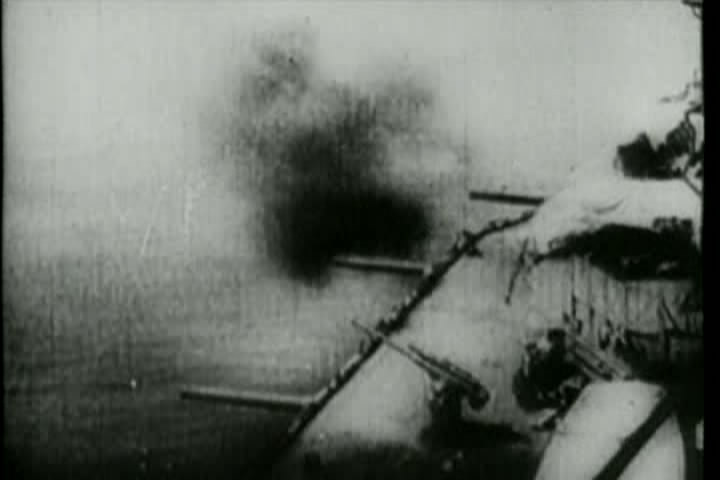
The film opens with the attack on Pearl Harbor, then notes how the Japanese had been on the Allied side during World War I.
 |
It then goes into the history of Japan's emergence from the Shogunate rule.
 |
It then discusses the Sino-Japanese war of 1895, and gave Japan control over Korea and Formosa.
 |
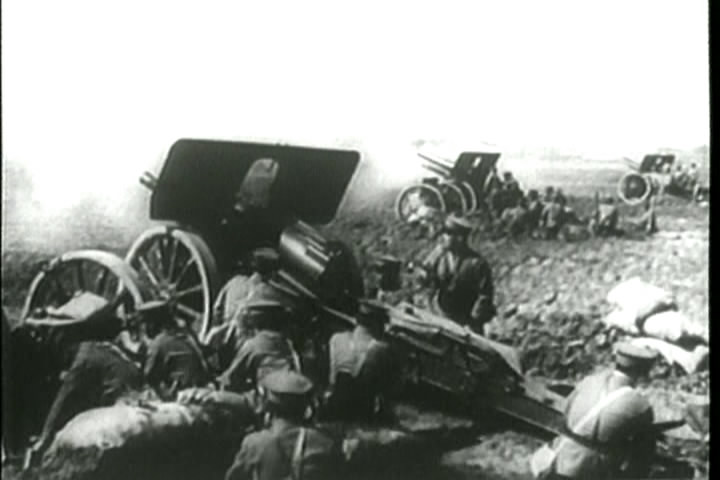
Then there's the Japanese/Russian war of 1904.
 |
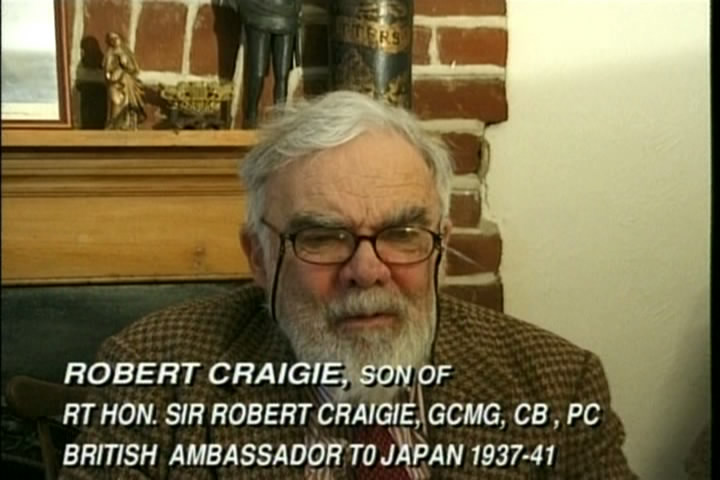
There are also interviews with various people. This individual is talking about how Japan's relations cooled with England.
 |
The Washington Naval Treaty of 1922.
 |
During the 1920's the Japanese were engaged in a program of modernization.
 |
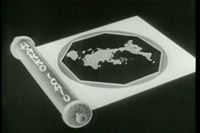
The 1924 act by the US to ban all Oriental immigration is next discussed.
 |
The Tanaka Memorial is next to be discussed.
 |
The one guy says that the Tanaka Memorial could be nothing but Chinese propaganda.
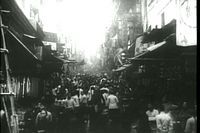 |
Japan wants the natural resources of China, and the Chinese people as consumers of Japanese products. The film also talks about how China is not entirely unified.
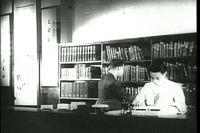 |
The film then goes into the modernization of China.
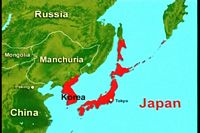 |
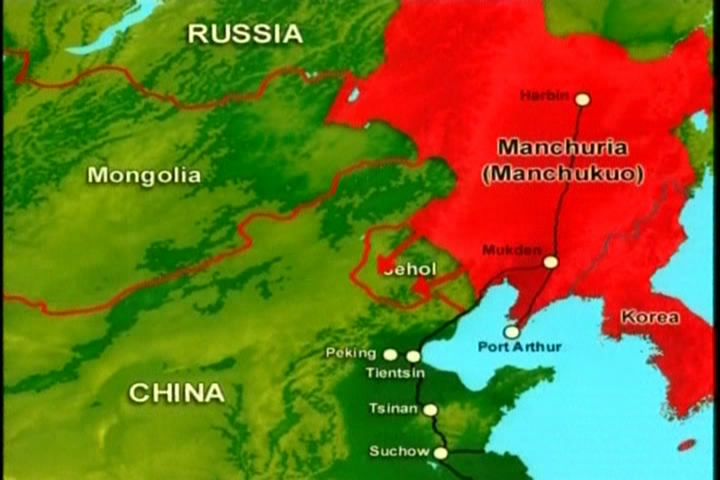
Japan plans to take Manchuria, and then Mongolia.
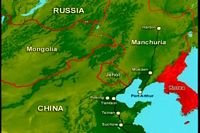 |
Various key positions that Japan wanted to occupy.
 |
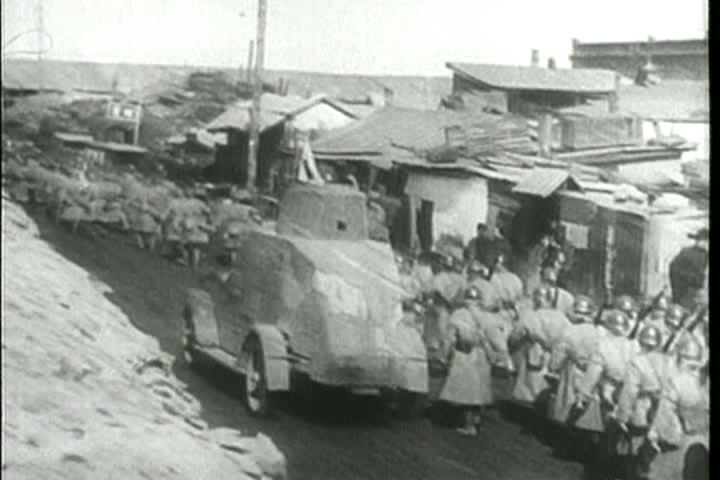
The Japanese attack at Mukden.
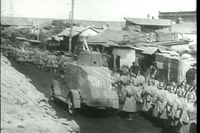 |
Japan ends up taking all of Manchuria. This video seems to have some footage that I have not seen elsewhere.
 |
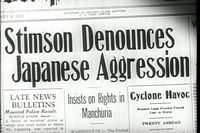
1932, Manchuria is declared independent and becomes the state of Manchuko.
 |
 |
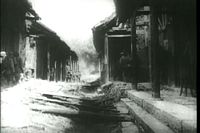
The League of Nations rules against Japan, and Japan leaves the League.
 |
China boycotts Japanese goods, and Japan attacks Shanghai.
 |
1933, Japan continues to expand further into China.
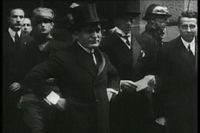 |
The film talks about what was going on in Japan in relation to what was going on in the rest of the world, such as the rise of a Facist Italy.
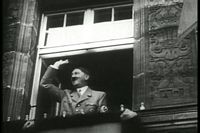 |
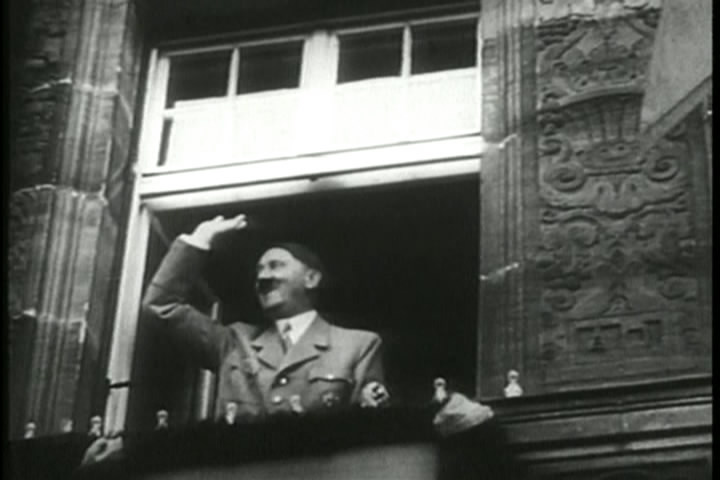
The Nazis gain power in Germany.
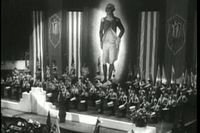 |
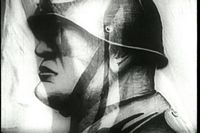
A pro-Nazi rally in the U.S. The narrator says the right-wing movements around the world found support due to the economic depression of the times. There's also an excellent discussion of exactly how the Japanese Army and Navy were able to so strongly influence the Diet.
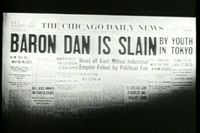 |
Then there's a good explanation of the radicalism in the military, and how a wave of assassinations began.
 |
Italy attacks, defeats and annexes Abyssinia.
 |
There was a strong isolationist movement in America.
 |
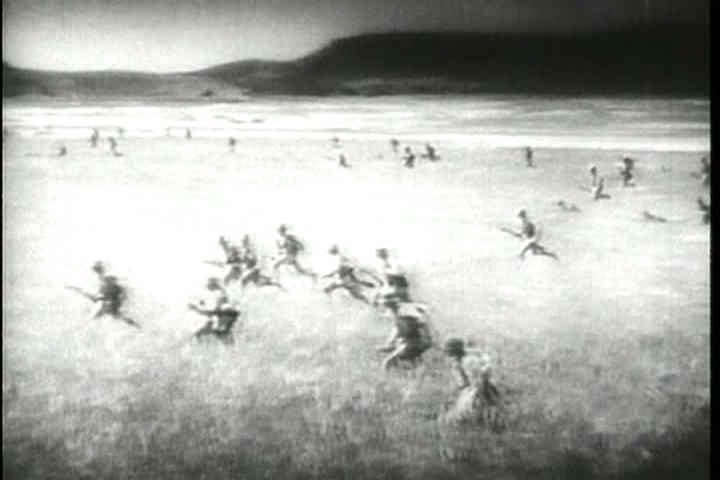
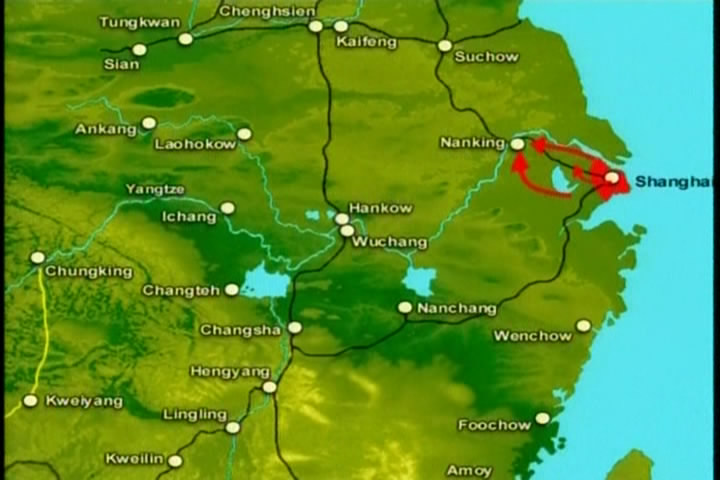
The 1937 Japanese invasion of China.
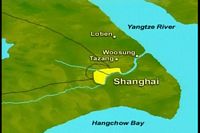 |
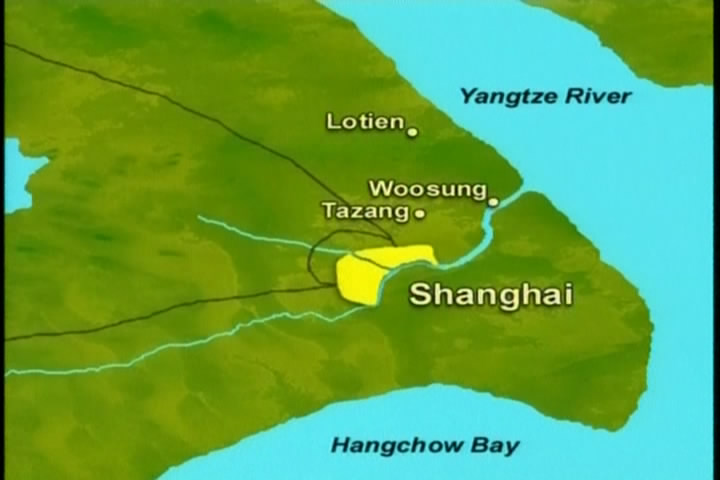
Shanghai is attacked by the Japanese.
 |
Japan lands additional troops and takes Shanghai, while the Chinese Army retreats towards Nanking.
 |
The Japanese bomb Shanghai.
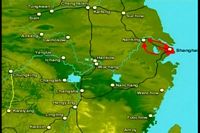 |
The Japanese move towards Nanking.
 |
The Japanese take Nanking on Dec. 13, 1937.
The video then talks about the rape of Nanking.
The Chinese retreat 2000 miles to the west, to rebuild their industries and their army.
The Japanese bomb the new Chinese positions, but are unable to destroy the newly built industries.
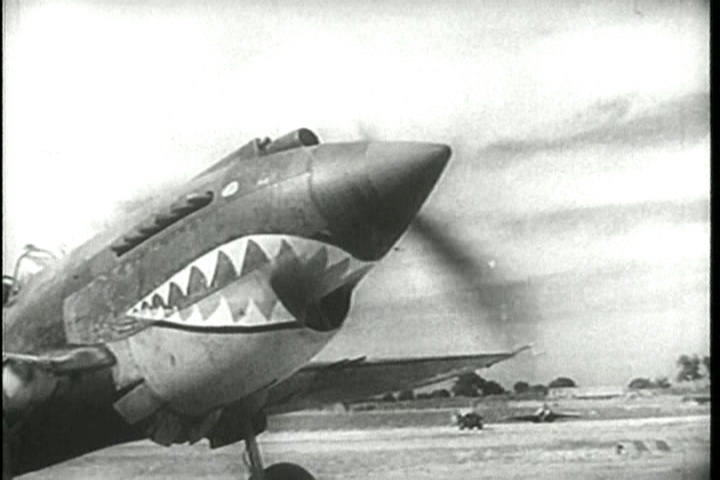
The Flying Tigers, a voluntary American group, help the Chinese.
1939. Germany attacks Poland, “officially” starting World War II.
Japan sets plans for the invasion of Southeast Asia.
Japan, Germany and Italy form an alliance.
Japanese troops land in Northern Indo-China.
America, Britain and Holland freeze all Japanese assets in response to the continued Japanese aggression.
Tojo becomes the Prime Minister.
This person talks about how the Navy said they could fight only for about a year with the materials available to them, but the Army said they could keep fighting on spirit alone.
The decision is made to attack Pearl Harbor.
Yamamoto did not want Japan to go to war with the US.
Main Index
Japan main page
Japanese-American Internment Camps index page
Japan and World War II index page
|
|