Tule Lake Relocation/Detention Center

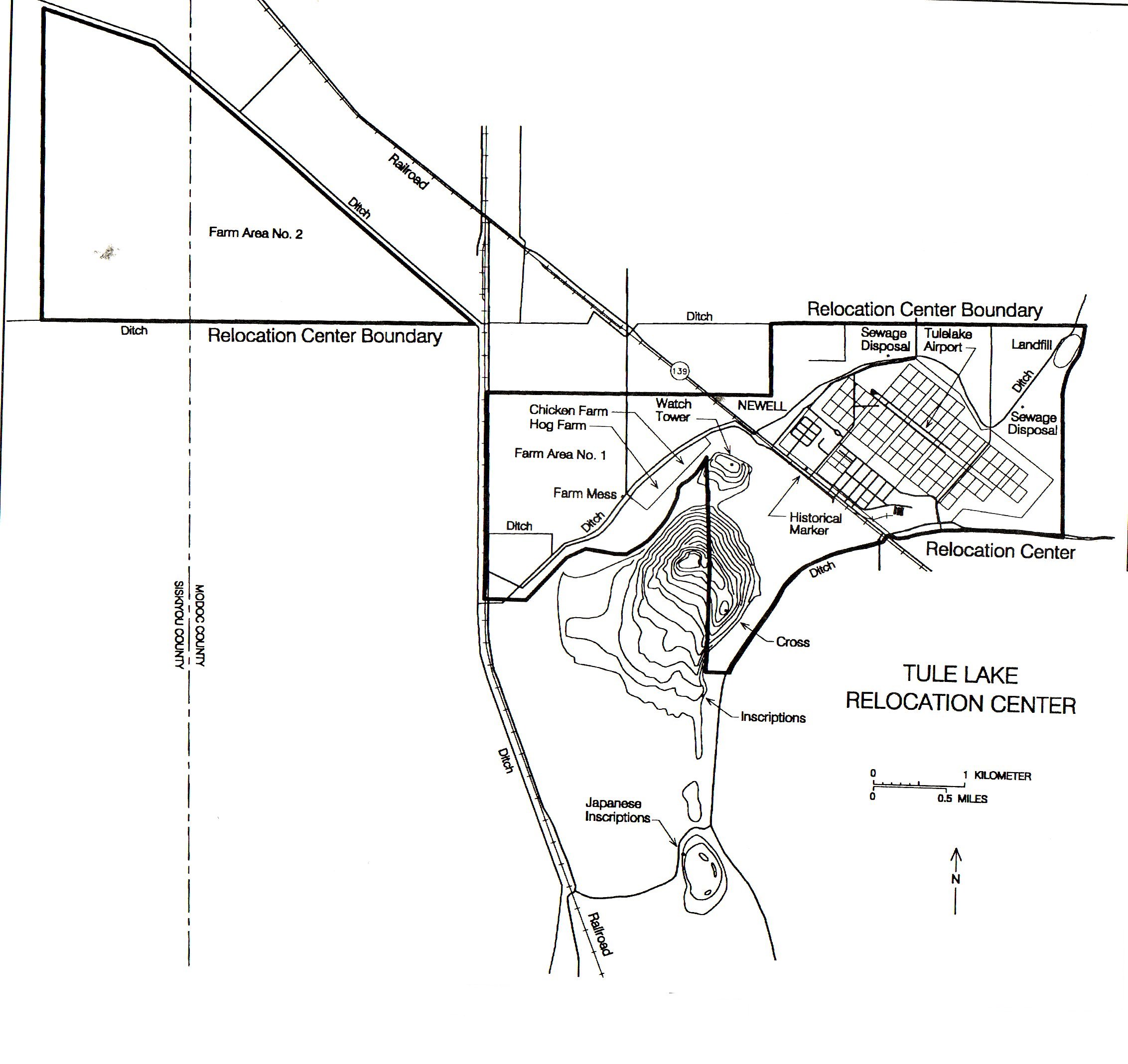
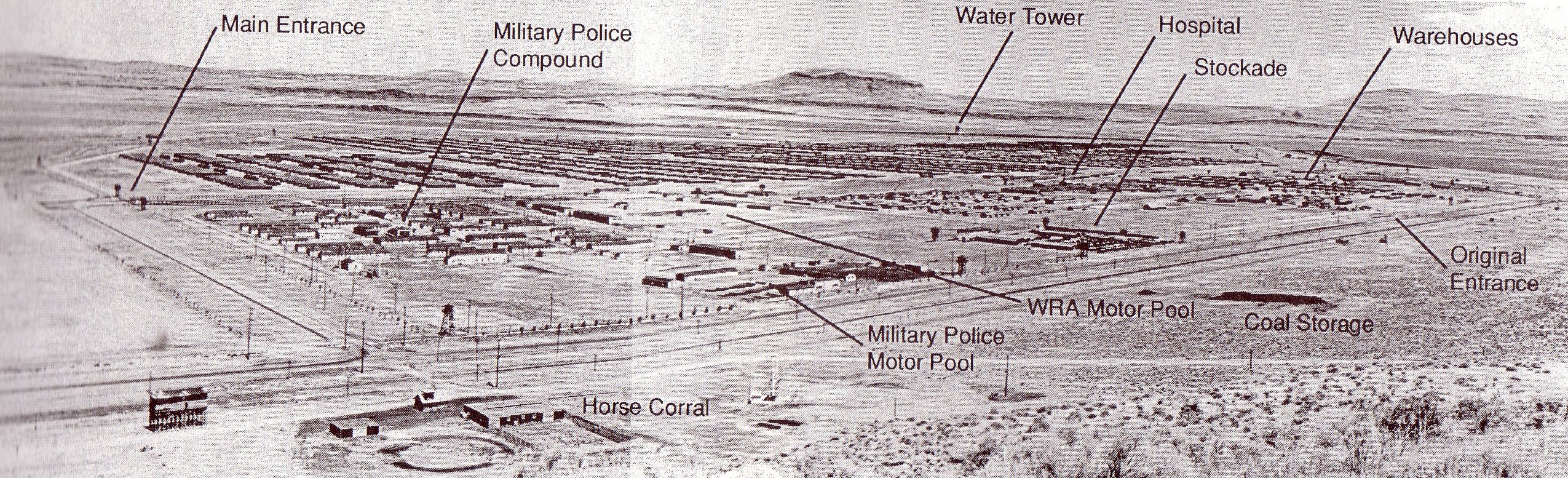
A map of the center |
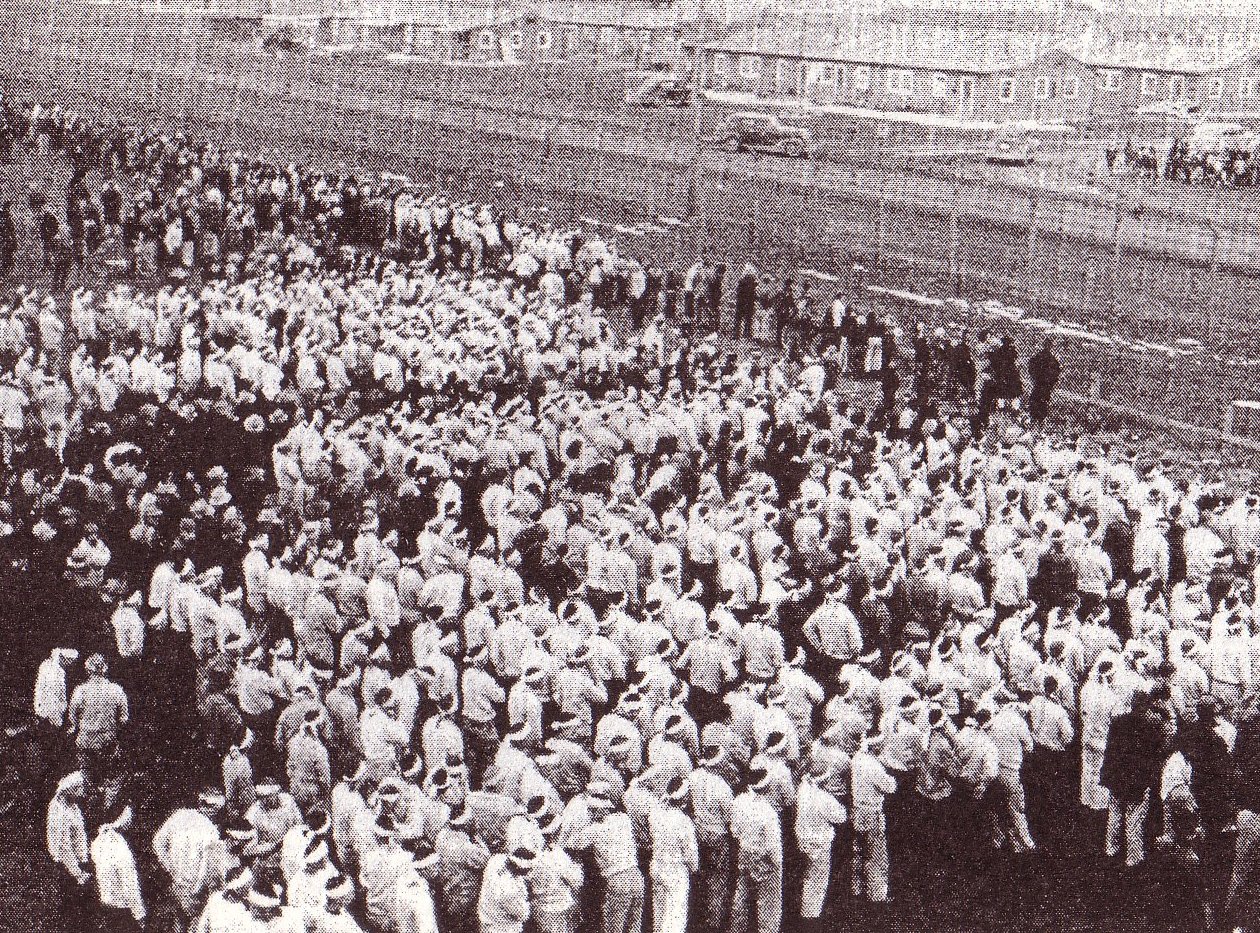
 A demonstration at the camp
|
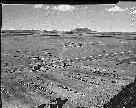
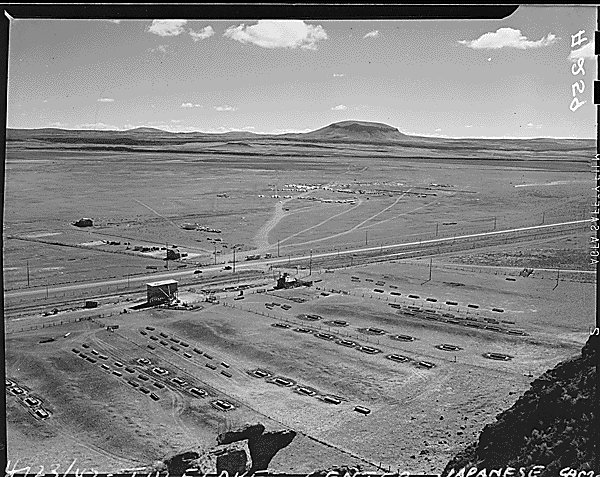
Bird's-eye view of the Tule Lake Relocation Center., 04/23/1942 |
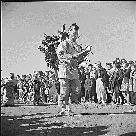
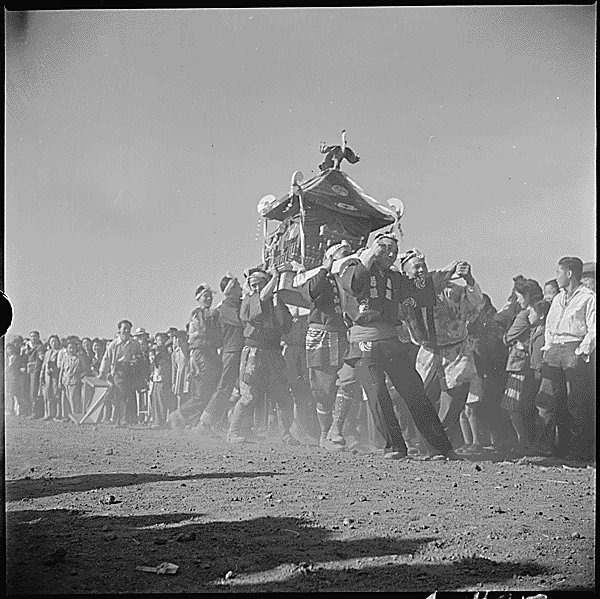
Great originality in costumes was shown at the Harvest Festival parade held at this relocation center. |
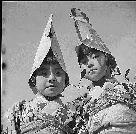
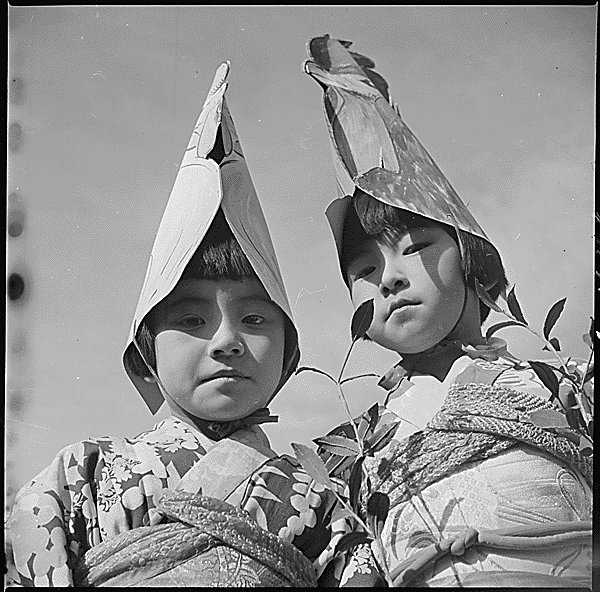
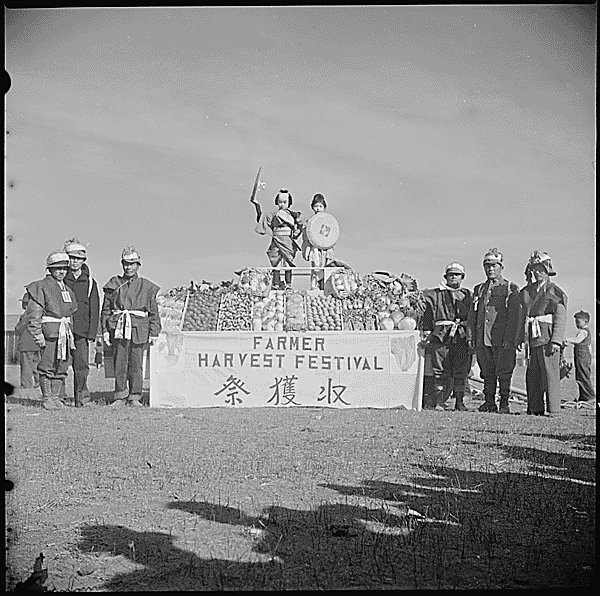
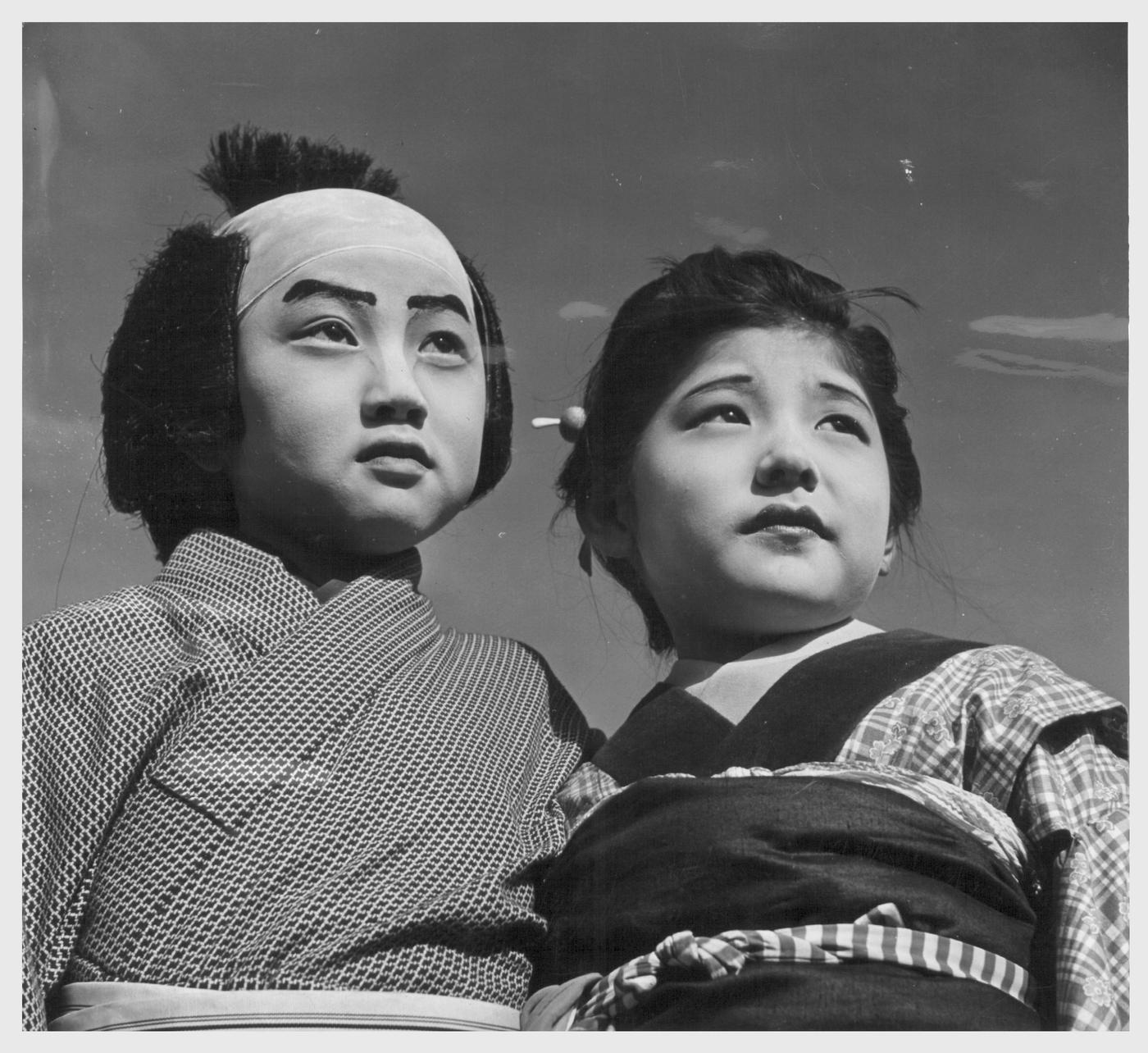
Two of the Nursery School Children who participated in the Harvest Festival Parade held at this relocation center. |
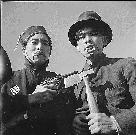
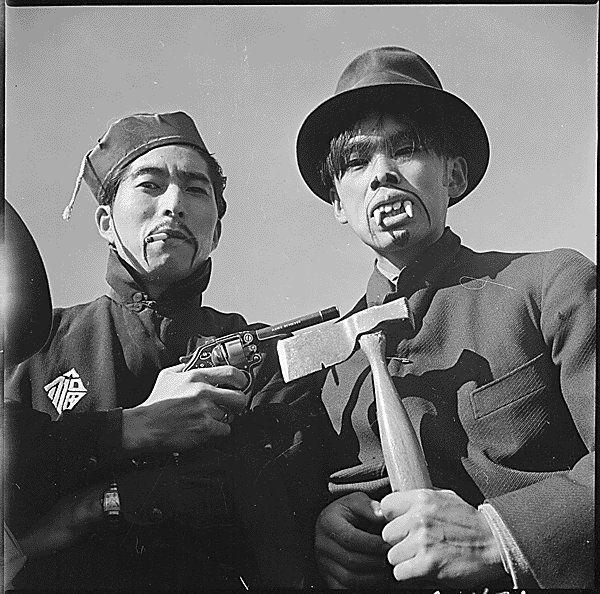
Two evacuees in the Harvest Festival Parade who wore cleverly designed costumes. |
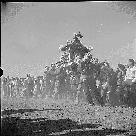
The Harvest Day Festival parade., 10/31/1942 |
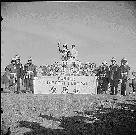
This float in the Harvest Festival Parade consisted of garden produce from the farm at this relocation center |
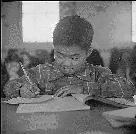
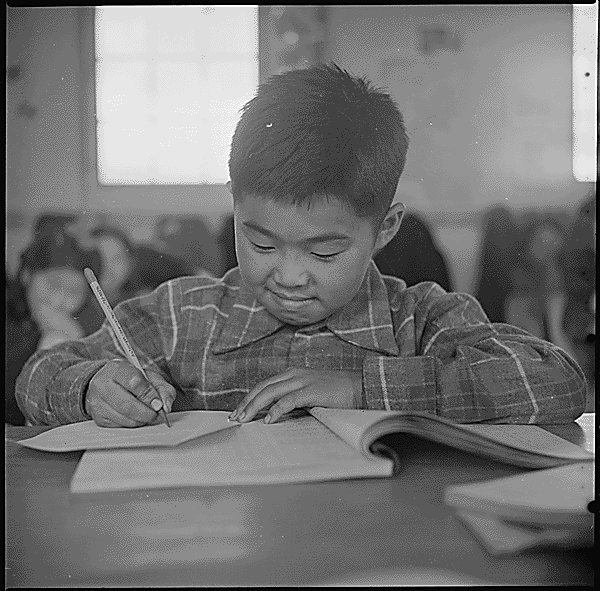
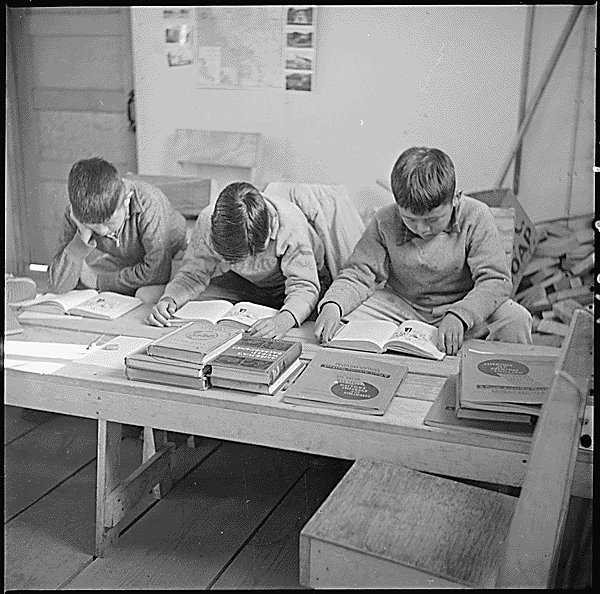
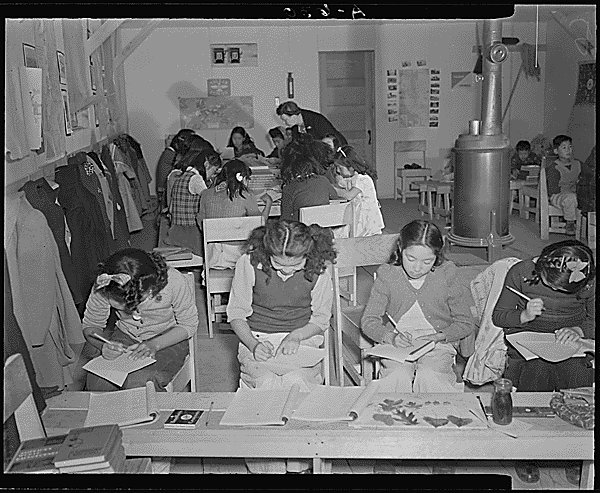
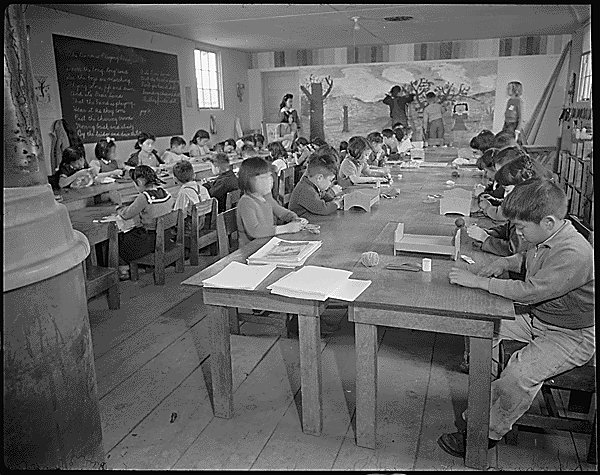
A sixth grade pupil un the classroom. Miss Mae Hert is the teacher. |
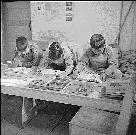
Sixth grade pupils in the classroom. Miss Mae Hert is the teacher. |
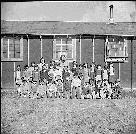
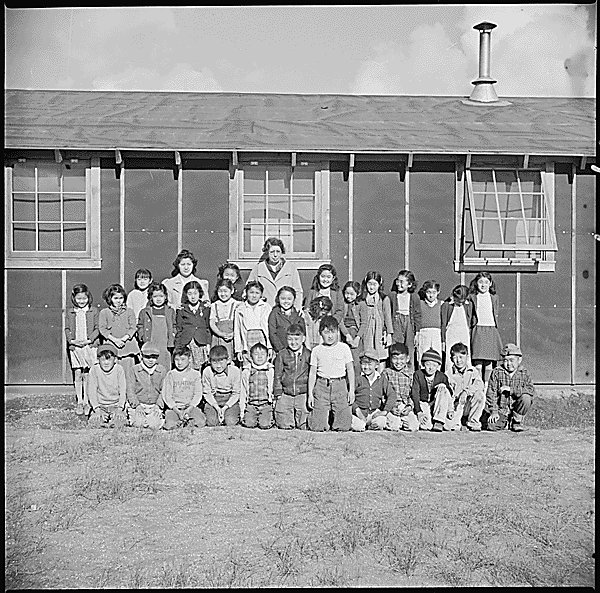
Low fifth grade pupils and their teacher, Mrs. Rhoda McGarve, outside their barracks school room. |
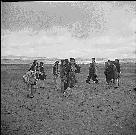
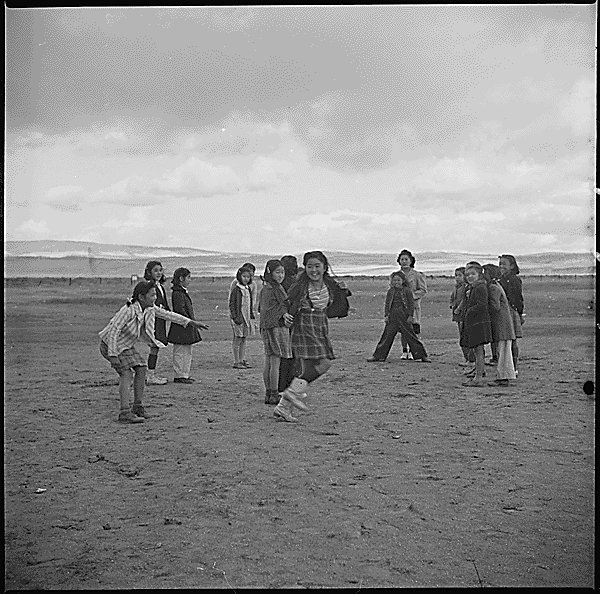
The girls of the lower fifth grade, taught by Mrs. Rhoda McGarva, are here shown playing "Two Deep." |
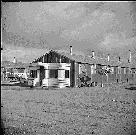
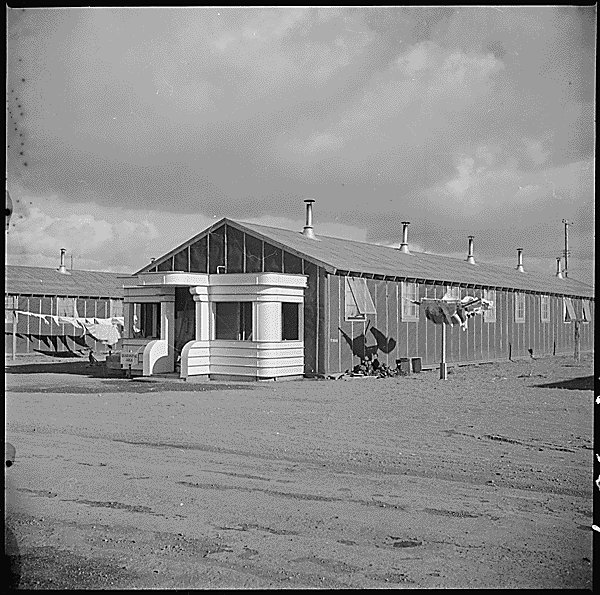
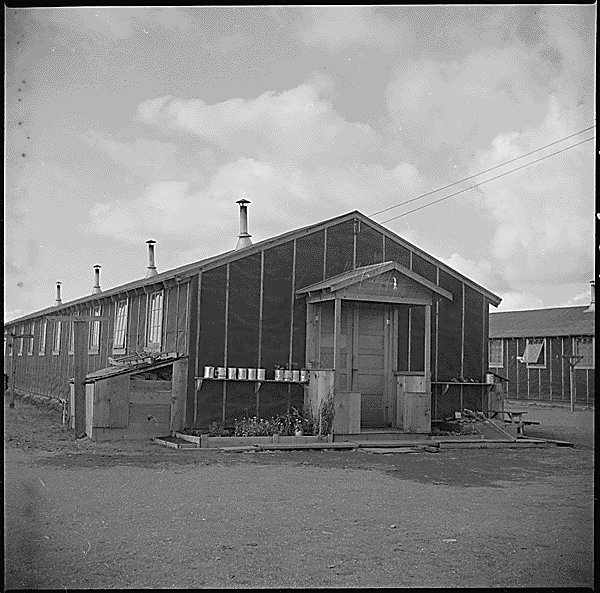
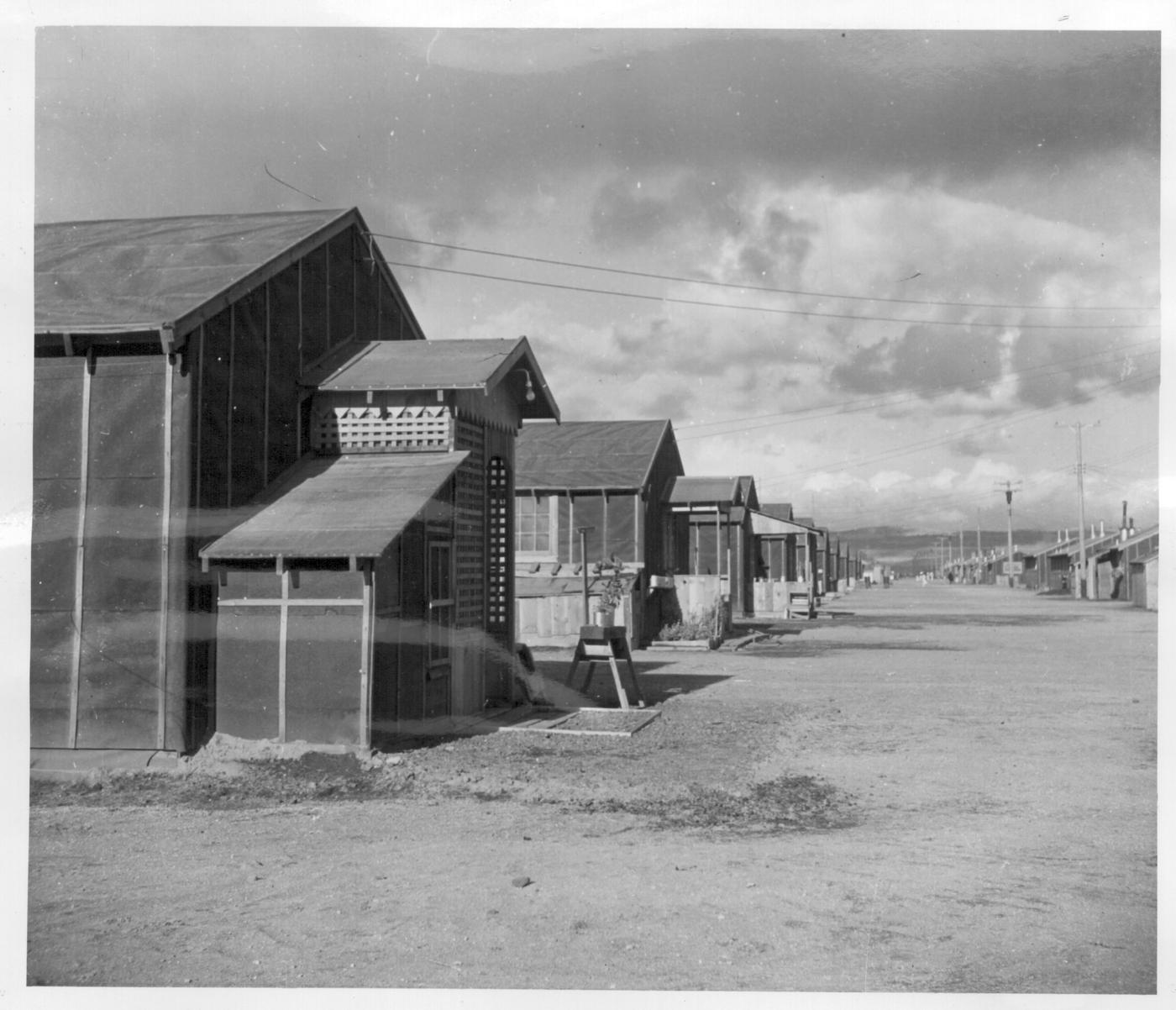
A view showing the artistic way in which the evacuees decorate the exterior of the barracks to make them more homelike. |
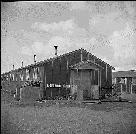
A view showing the way in which the evacuees decorated the exterior of the barracks to make them more homelike |
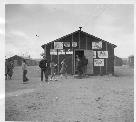
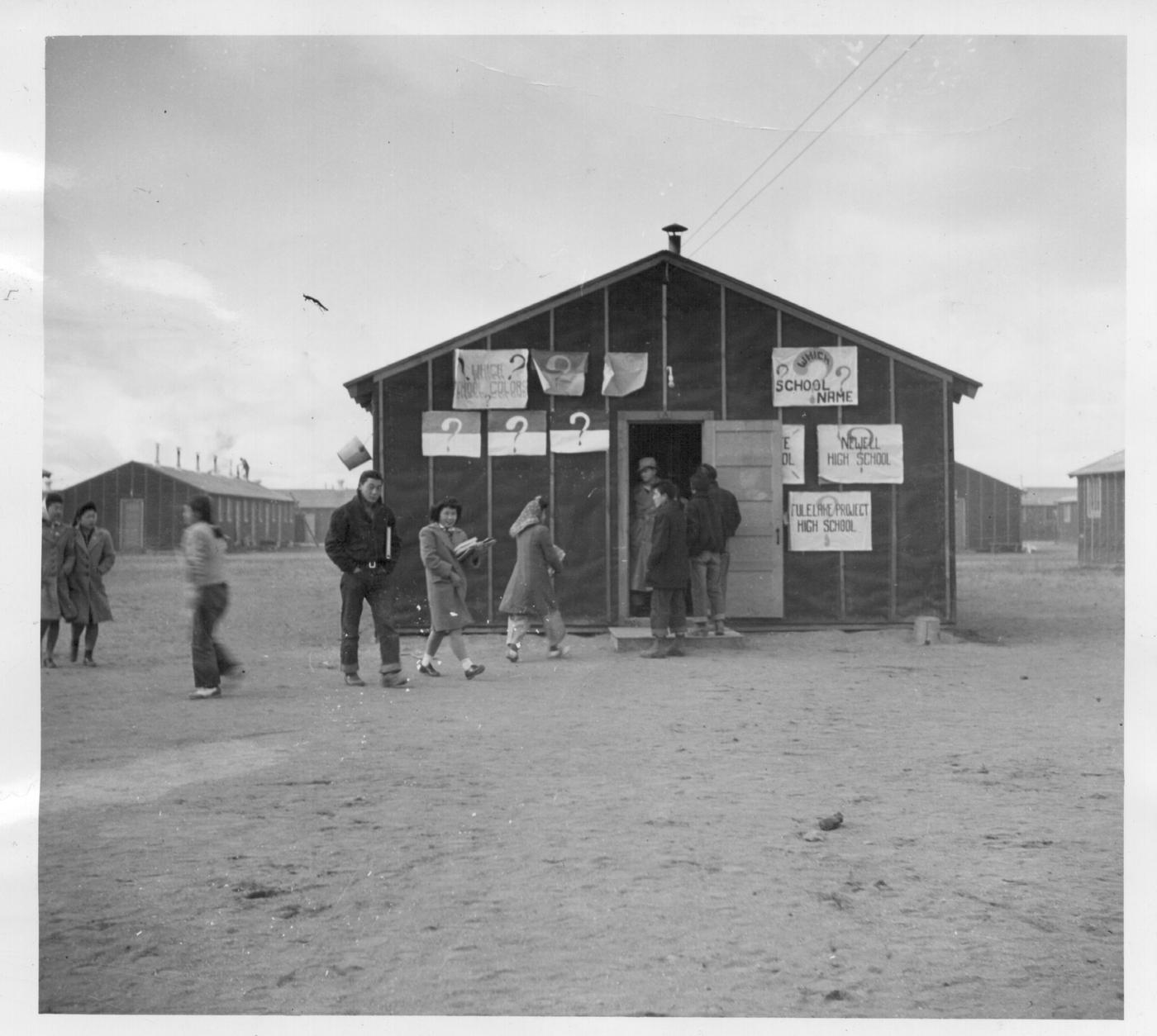
One of the barracks at this center which is used for a high school. As yet the students haven't decided on a name for the school |
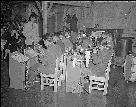
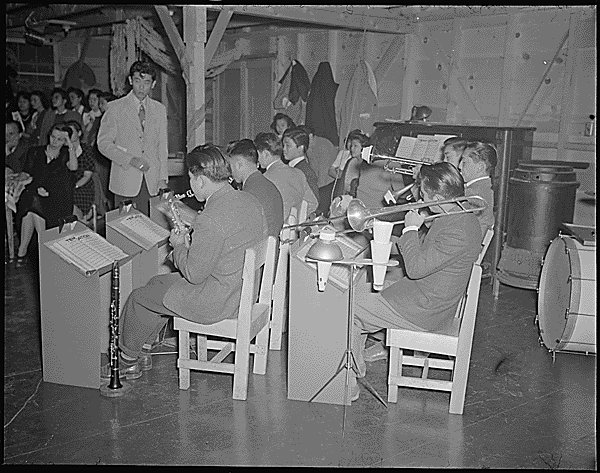
Woodie Ichihashi band., 11/01/1942 |
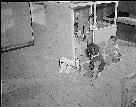
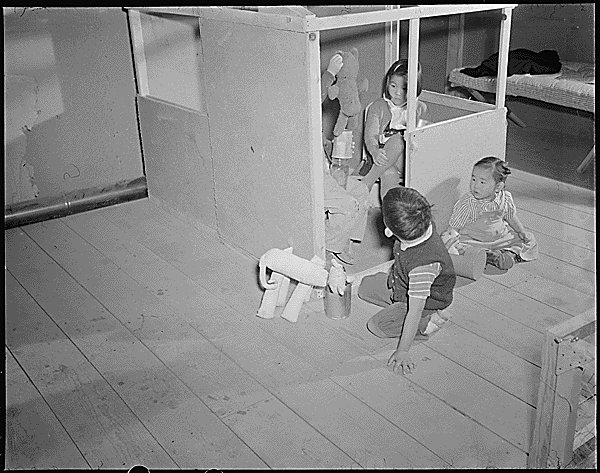
Nursery school children playing house., 11/02/1942 |
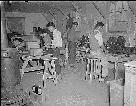
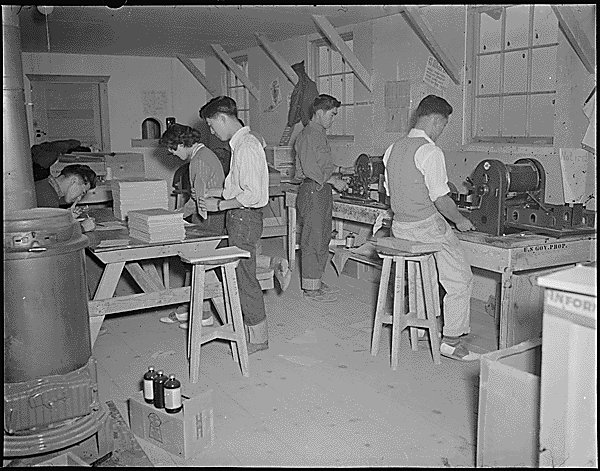
A general view of the office of the Tulean Dispatch, center, newspaper. |
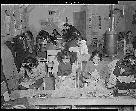
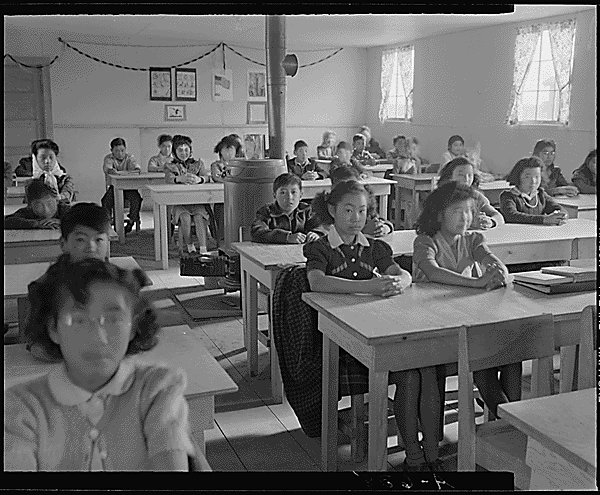
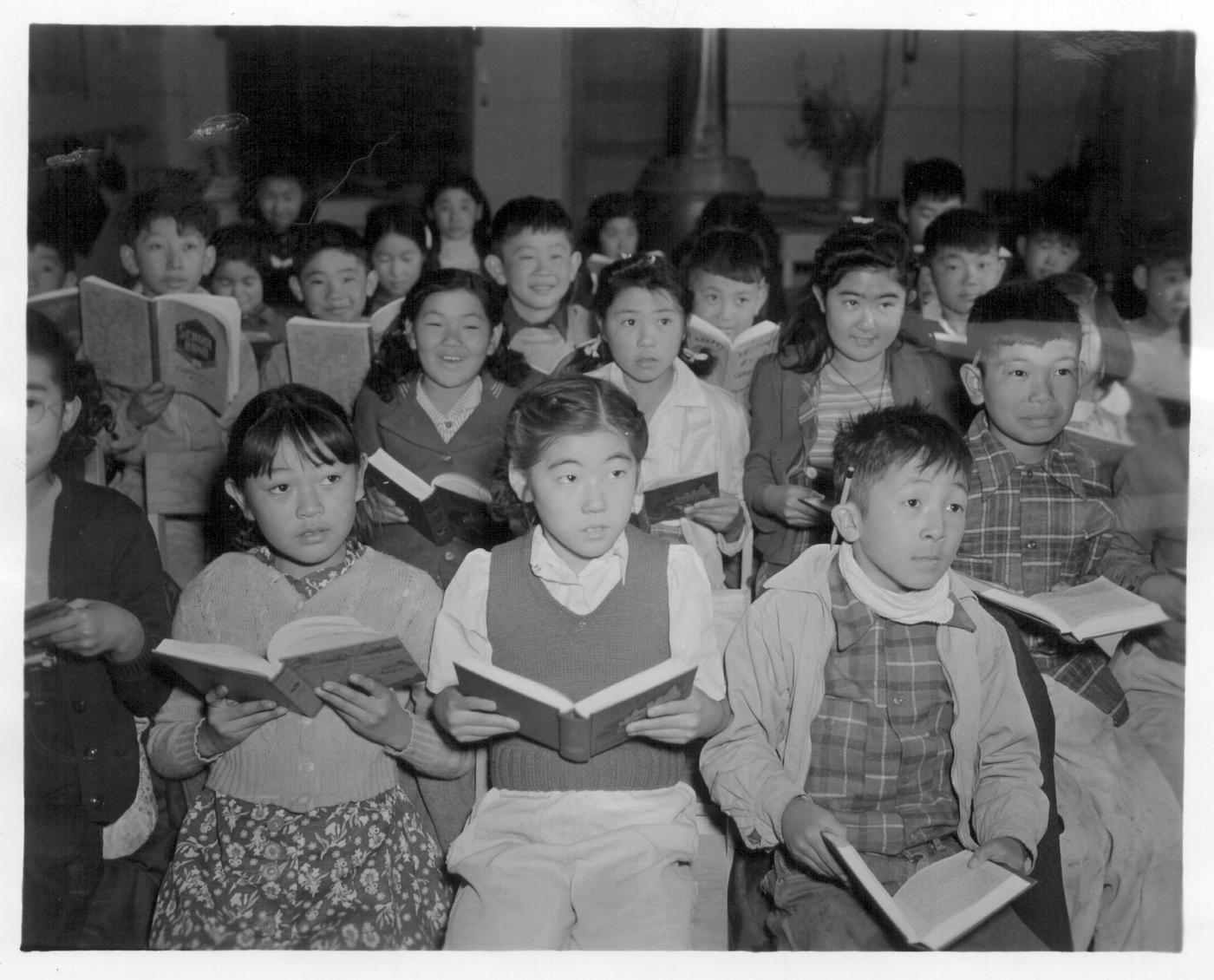
View in grammer school at this relocation center., 11/04/1942 |
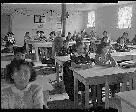
Seventh grade pupils at this relocation center., 11/04/1942 |
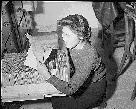
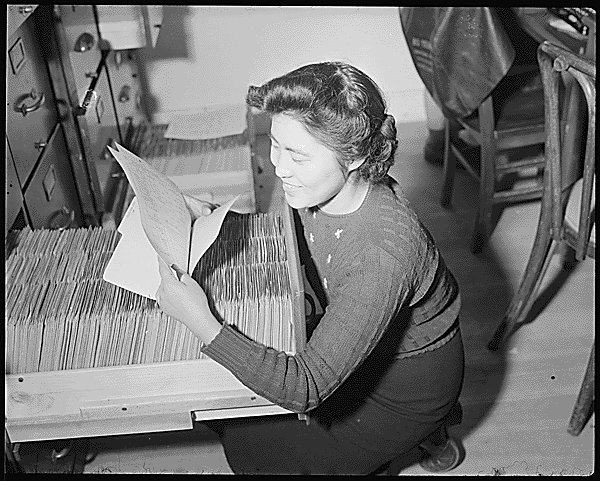
Filing clerk, Hana Uyeno., 01/28/1943 |
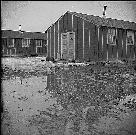
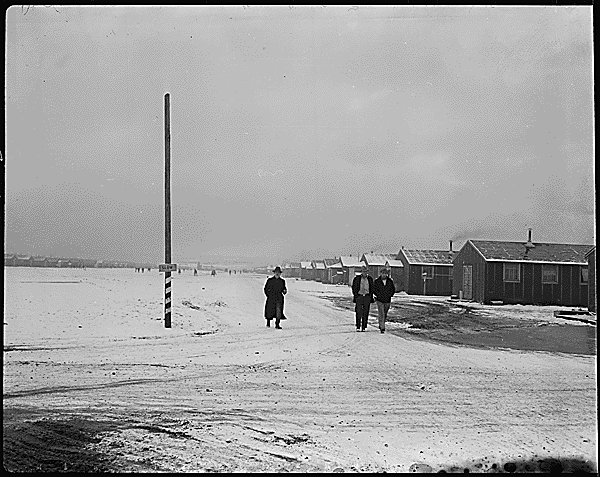
Thaws turn the streets and firebreaks into seas of mud, and makes difficult motor transportation through the center |
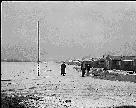
A winter time scene looking east down the main firebreak |
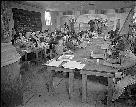
Pupils in the "Activities Class" at the Rim Rock school, enjoy diversified fields of training. The two boys in the background are painting on a mural, which is entirely conceived and executed by themselves. Mrs. Eva Adams is the instructor in this third grade class. |
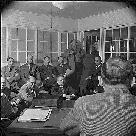
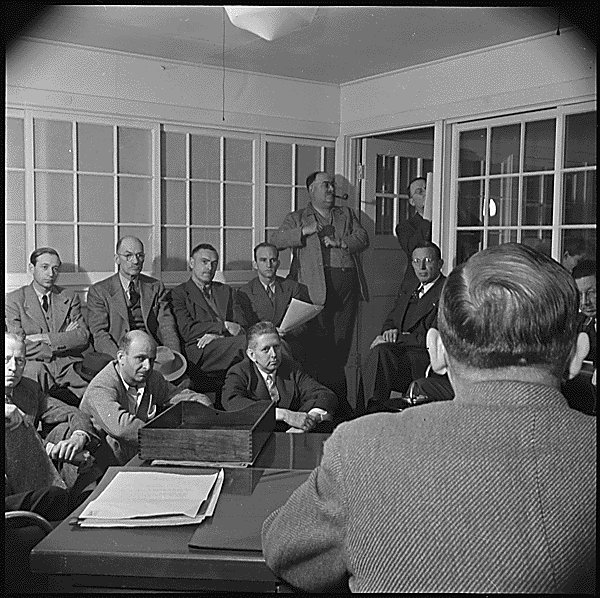
Newspaper reporters and cameramen, newsreel cameramen, representatives from the West Coast OWI [Office of War Information] Office, and wire service reporters visited the Tule Lake Relocation Center to make an on the spot inspection of this camp. This was the first such inspection permitted the press. |
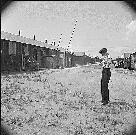
Gertrude Michaelove, member of the West Coast OWI [Office of War Information] Office, takes field notes on living conditions at the Tule Lake Relocation Center. |
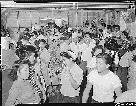
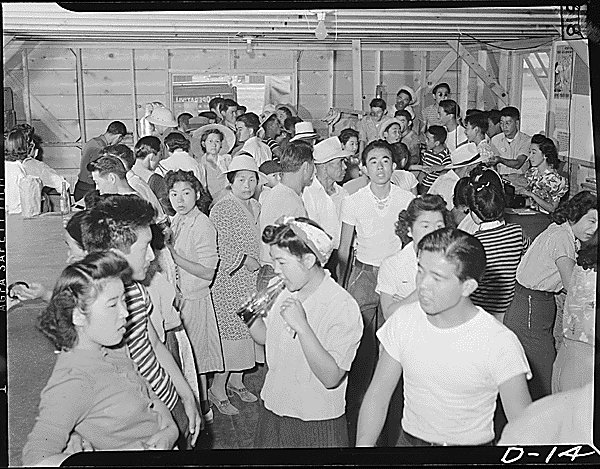
A view showing part of the crowd at general store Number 1 at this War Relocation Authority center where evacuees of Japanese descent are spending the duration. |
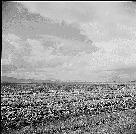
A view of the farm at this relocation center, showing the tremendous acreage and superb crops grown by evacuee workers. |
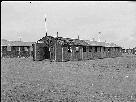
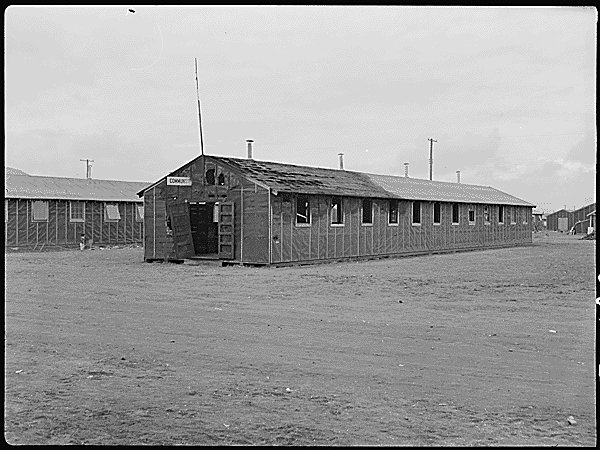
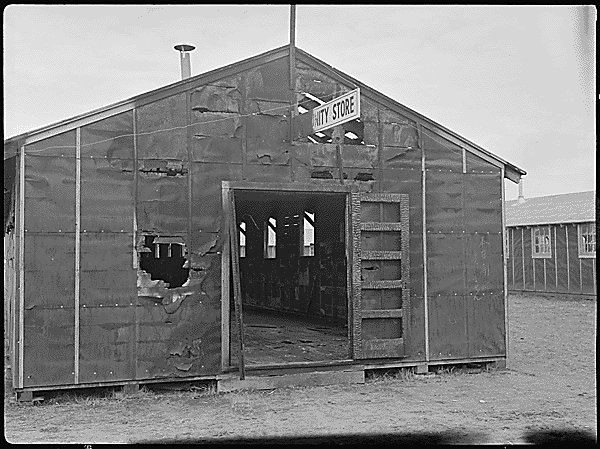
View showing the half burned community store. the fire which destroyed this building occurred in the middle of the night and for awhile threatened adjacent buildings. It was promptly brought under control by the efficient work of the volunteer fire department. |
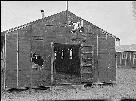
View showing the half burned community store. the fire which destroyed this building occured in the middle of the night and for awhile threatened adjacent buildings. It was promptly brought under control by the efficient work of the volunteer fire department. |

Two pretty evacuees shouldered their lunch and hiked into the foothills for a labor day picnic. |
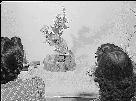
Local evacuee artisans displayed their handiwork in a labor day festival. |

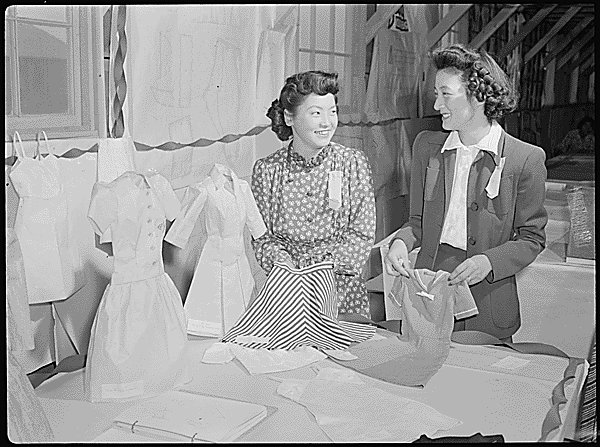
These attractive young evacuees show the garments made by the pattern drafting class in Block 1808. |
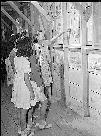
An evacuee girl proudly shows friends her art work which was on display in the exhibit shows held on labor day. |
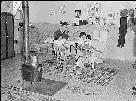
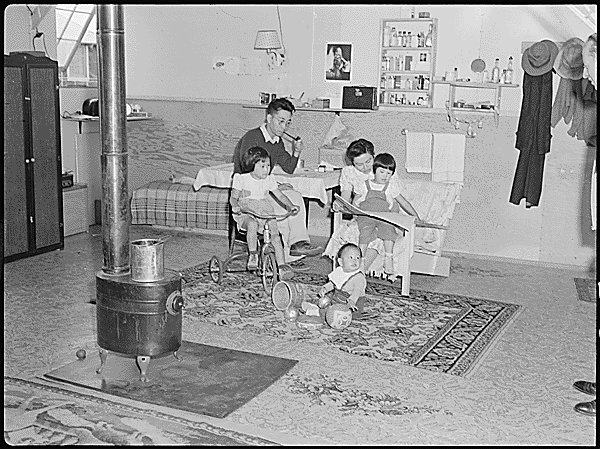
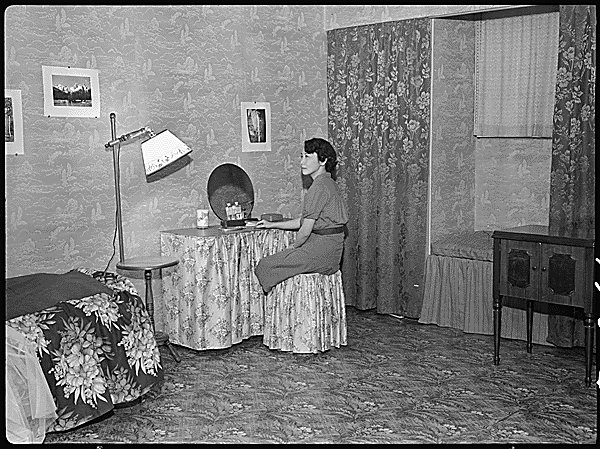
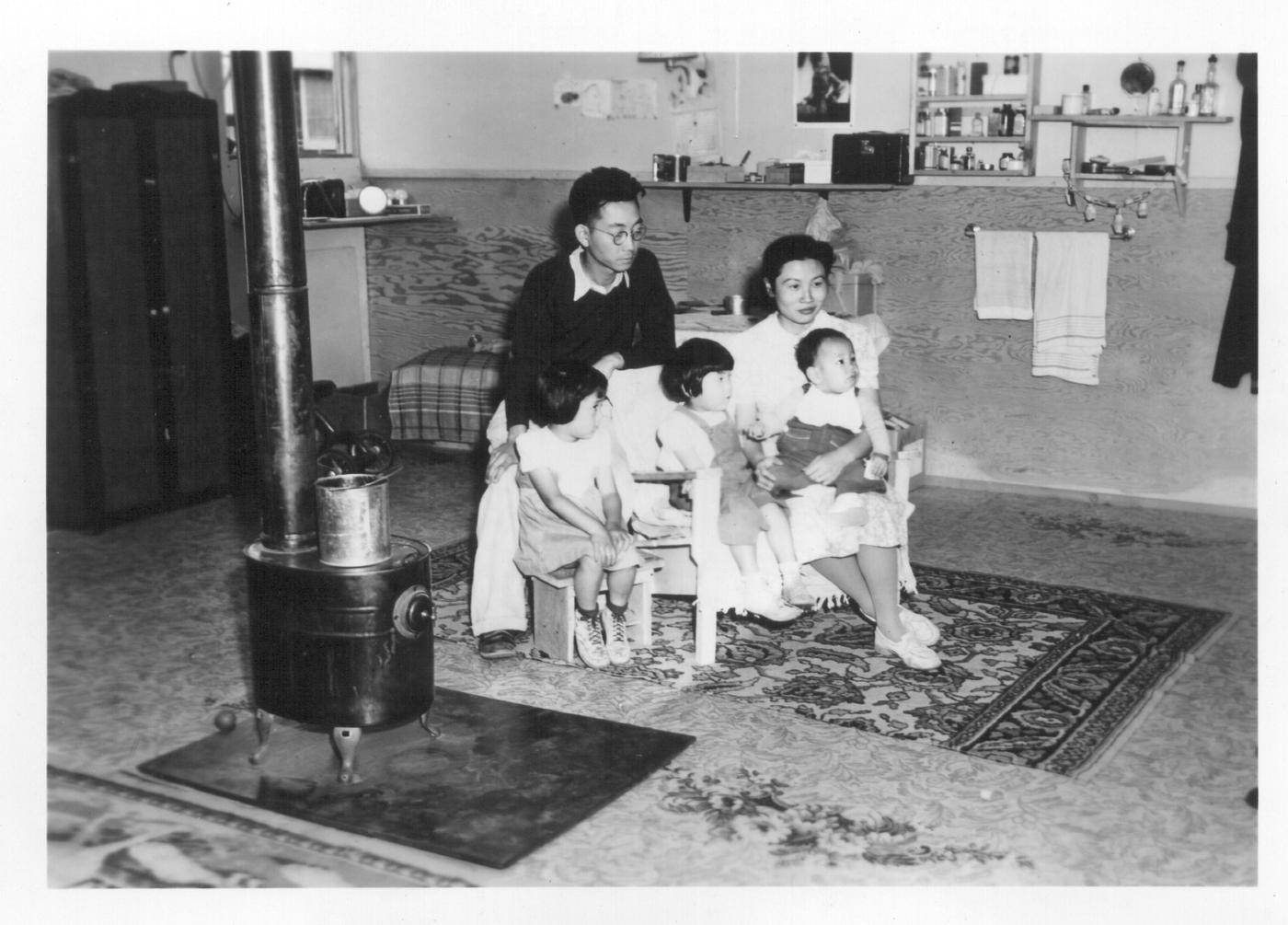
An evacuee family spends a quiet evening in their barracks. The decoration of this apartment is quite typical and shows the homemade furniture, shelves, bookcases and other furniture. |
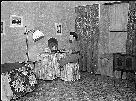
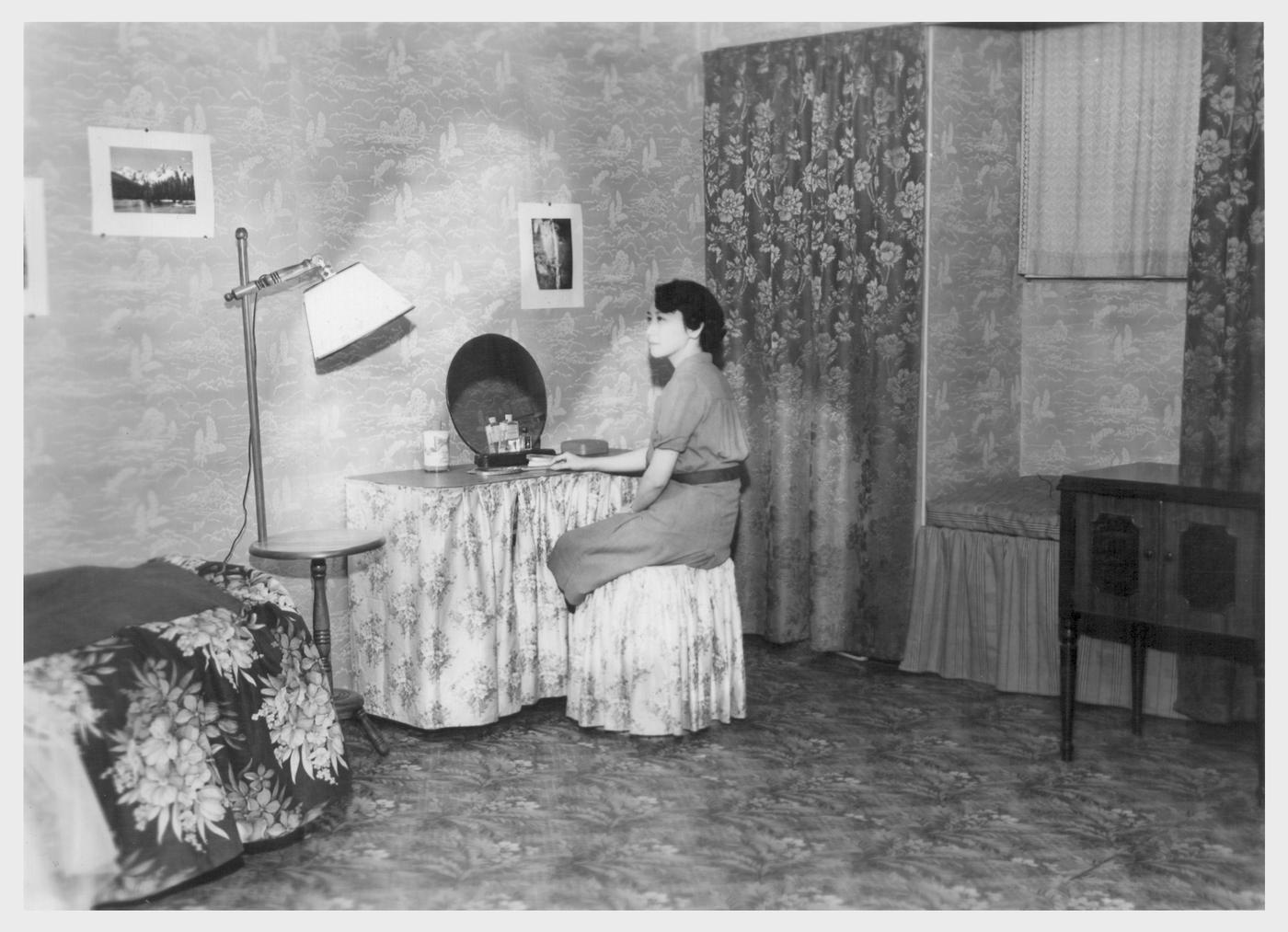
A view in one of the evacuee apartments. This apartment was very tastefully decorated and showed great originality in interior decoration. Blue was the dominant color in the room and was relieved by brightly colored couch covers and other spots of contrasting color. All of the material used in decorating this room was ordered by the evacuee through a mail order house. |
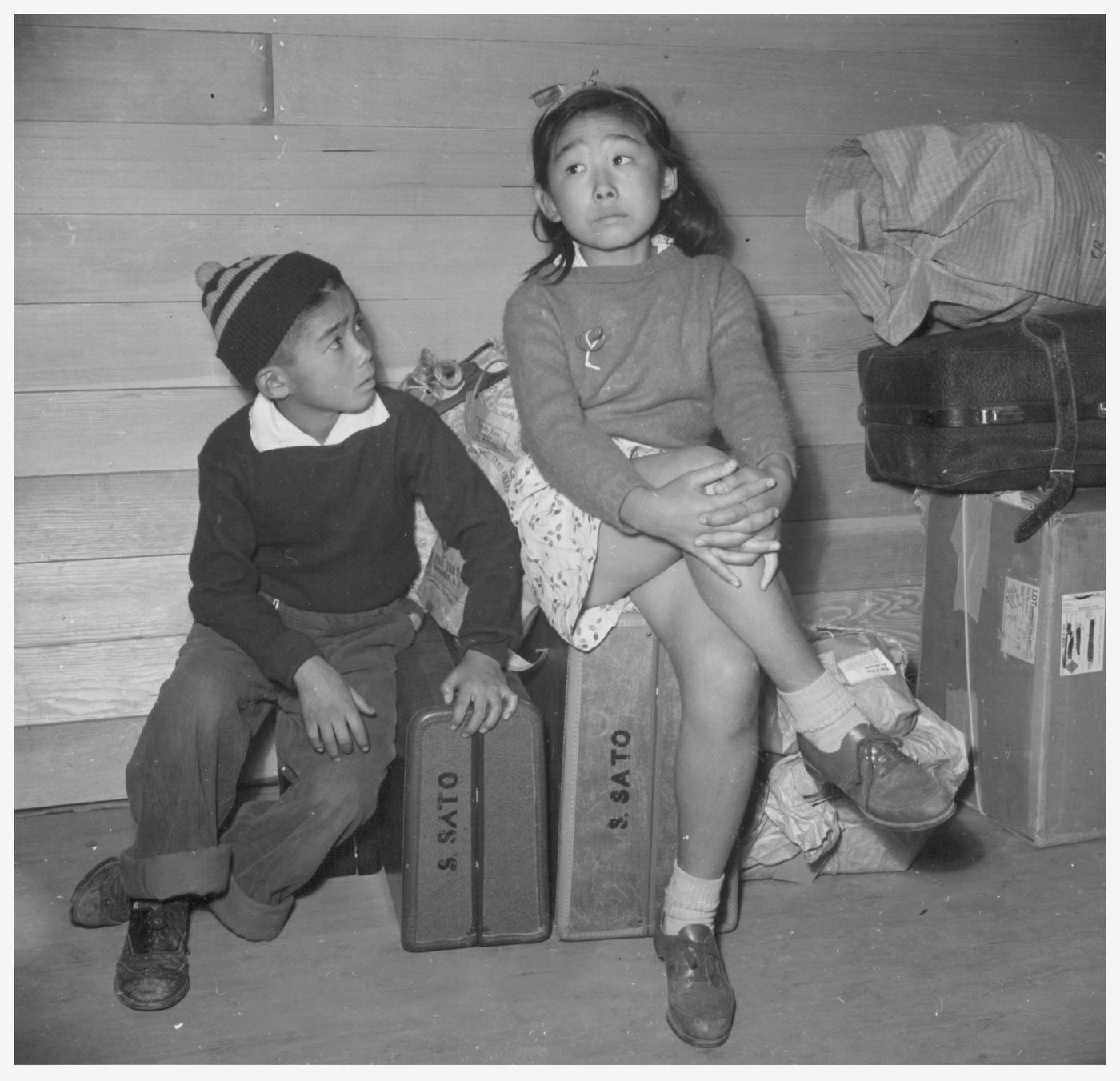
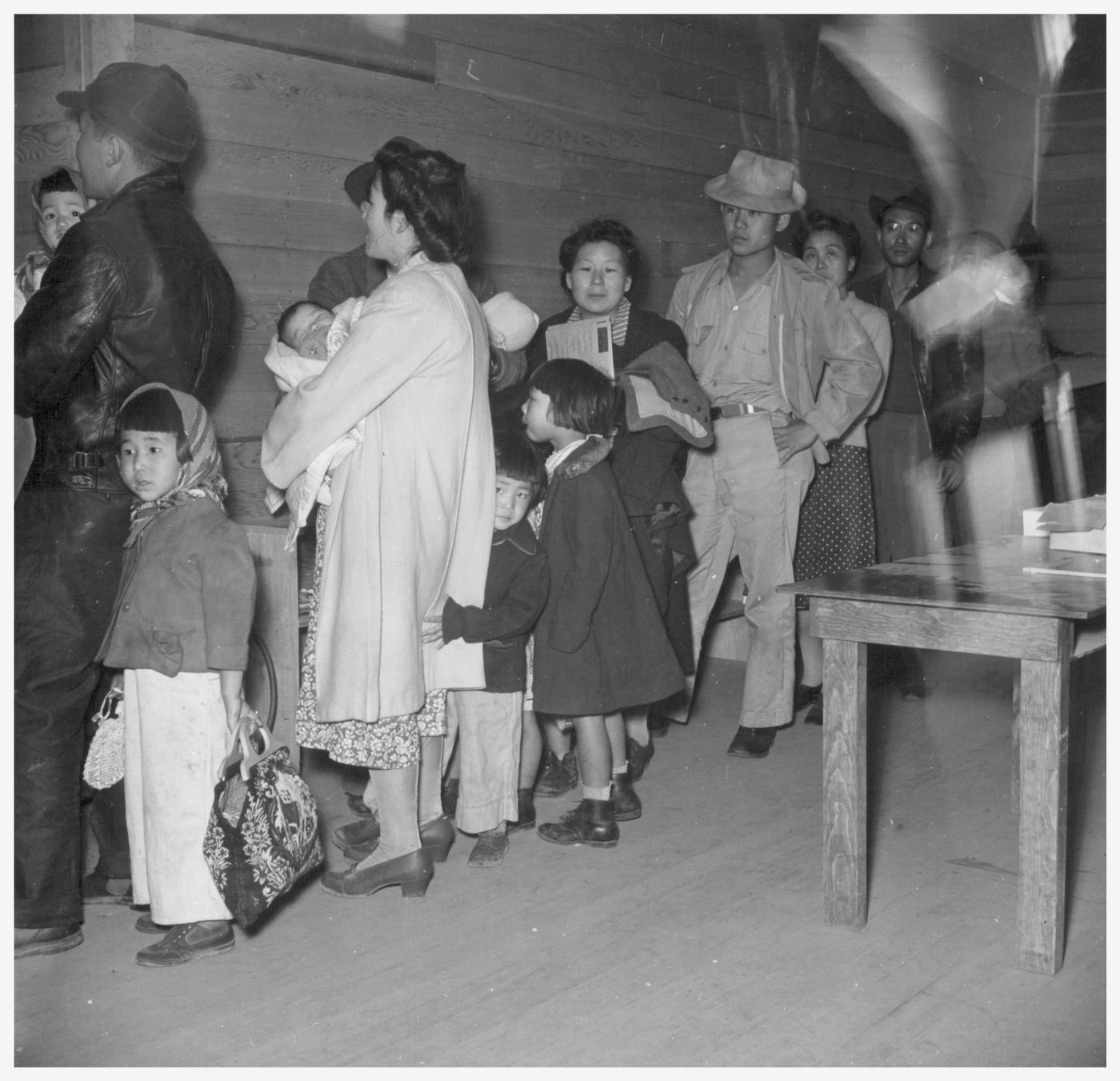
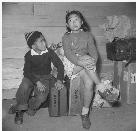 A scene in the induction center at Tule Lake. Many children were left guarding the family's sole possessions while their parents went through the rather trying routine of being photographed, finger printed and assigned to new quarters. To the very young children, the whole business of evacuation, relocation and segregation is incomprehensible, as registered in the faces of these two children from the Jerome Center. 9/26/43
|
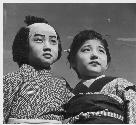 Two of the evacuees who participated in the Harvest Festival Parade which was held at this relocation center. |
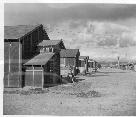 A view down one of the streets of this relocation center, showing the artistic way in which the evacuees decorate the exterior of their barracks to make them more homelike. 11/3/42
|
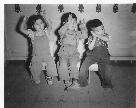 Nursery school children singing Twinkle, Twinkle, Little Star. 11/2/42 |
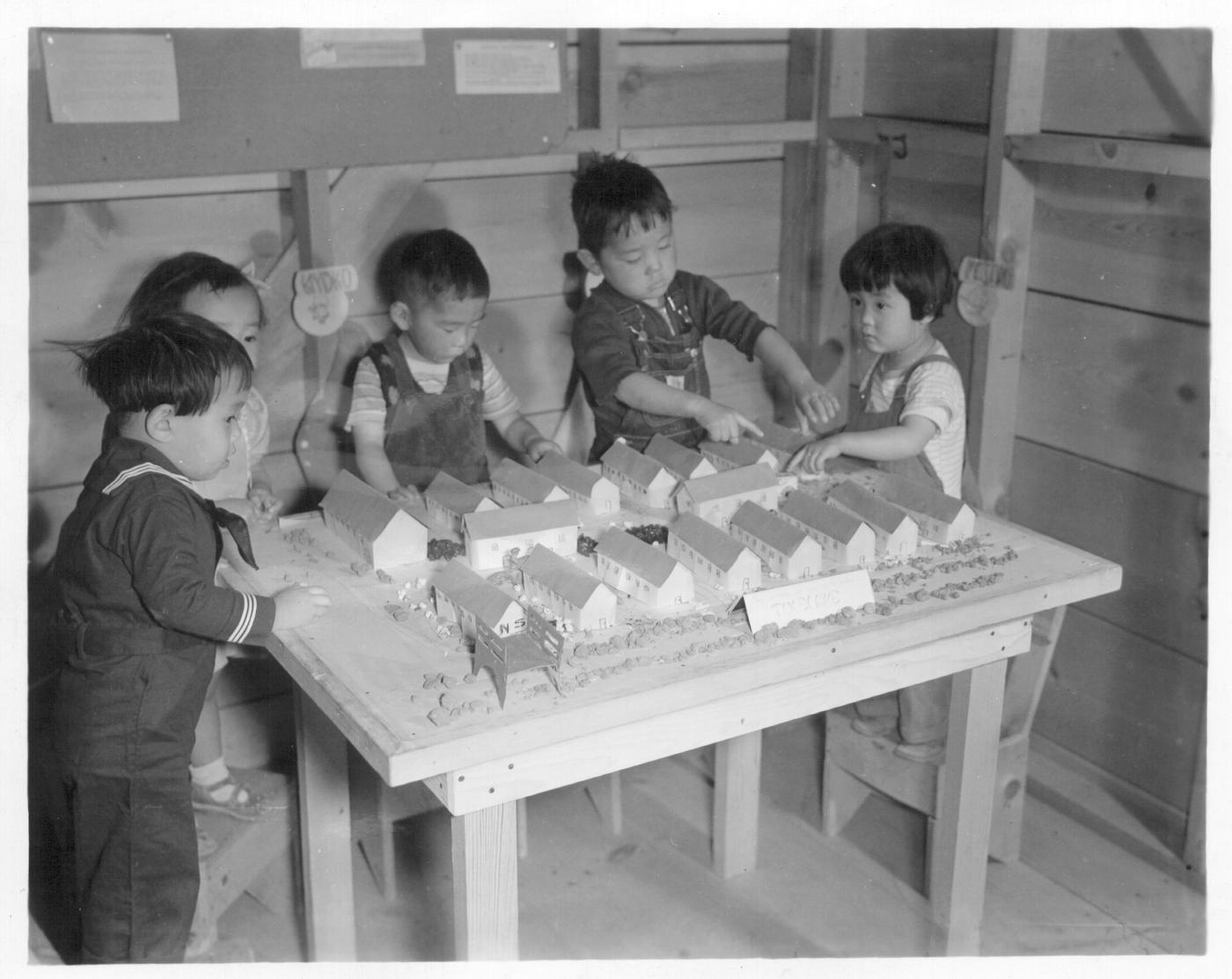
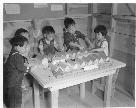 Nursery school children with model barracks. 11/2/42
|
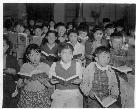
| View in grammar school at this relocation center. 11/4/42
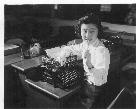 Haru Uno. Present occupation: stenographer. Former occupation: stenographer. Former residence: Loomis, California
|
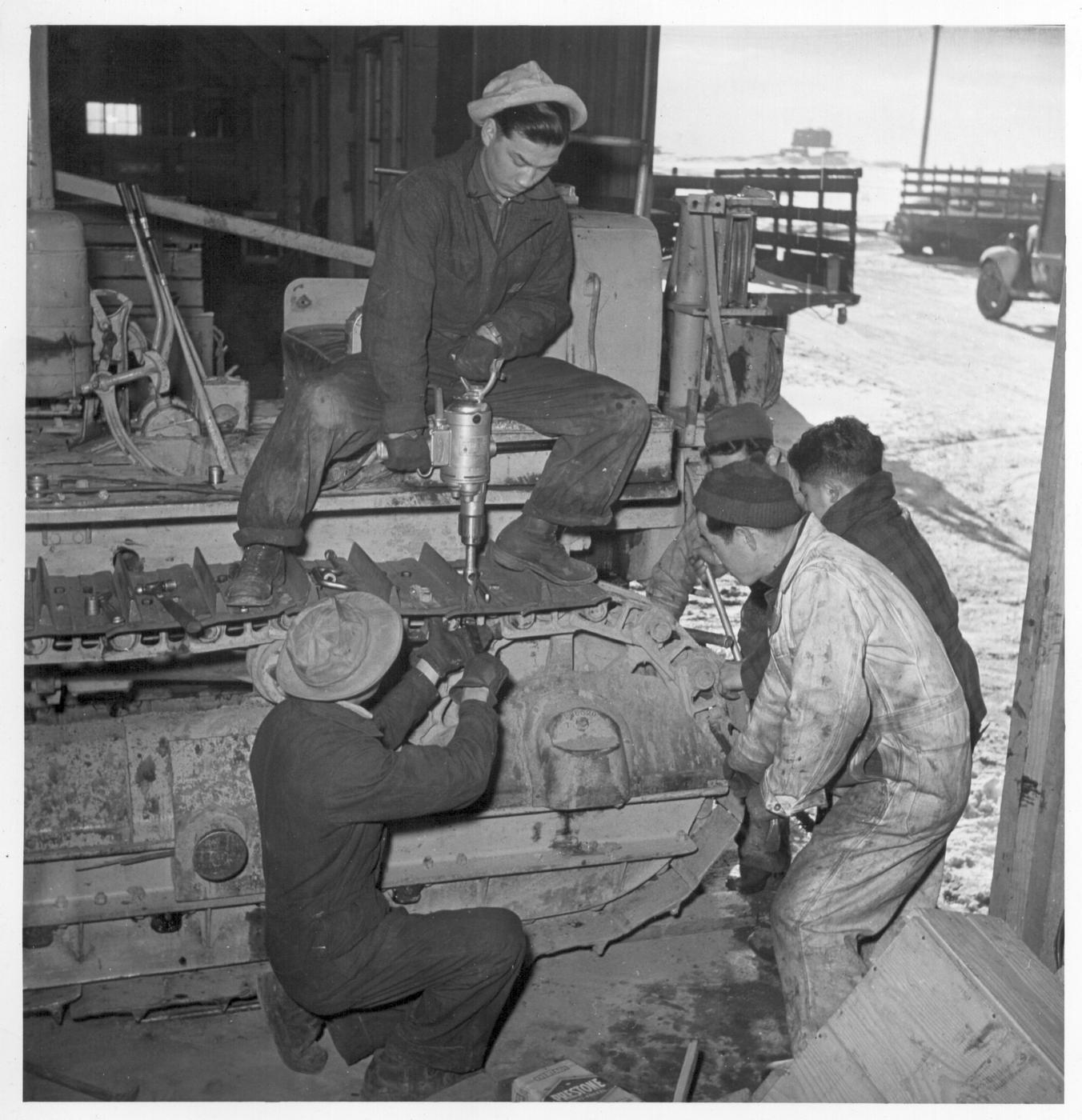
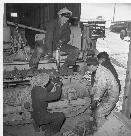 The treads on a caterpillar tractor are repaired by local mechanics. All repair work on cars, trucks, tractors, and other motor vehicles is done by evacuee workers. 1/30/43 |
 1946 view
|
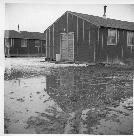 Thaws turn the streets and fire breaks into seas of mud, and makes difficult motor transportation through the center. 2/2/43 |
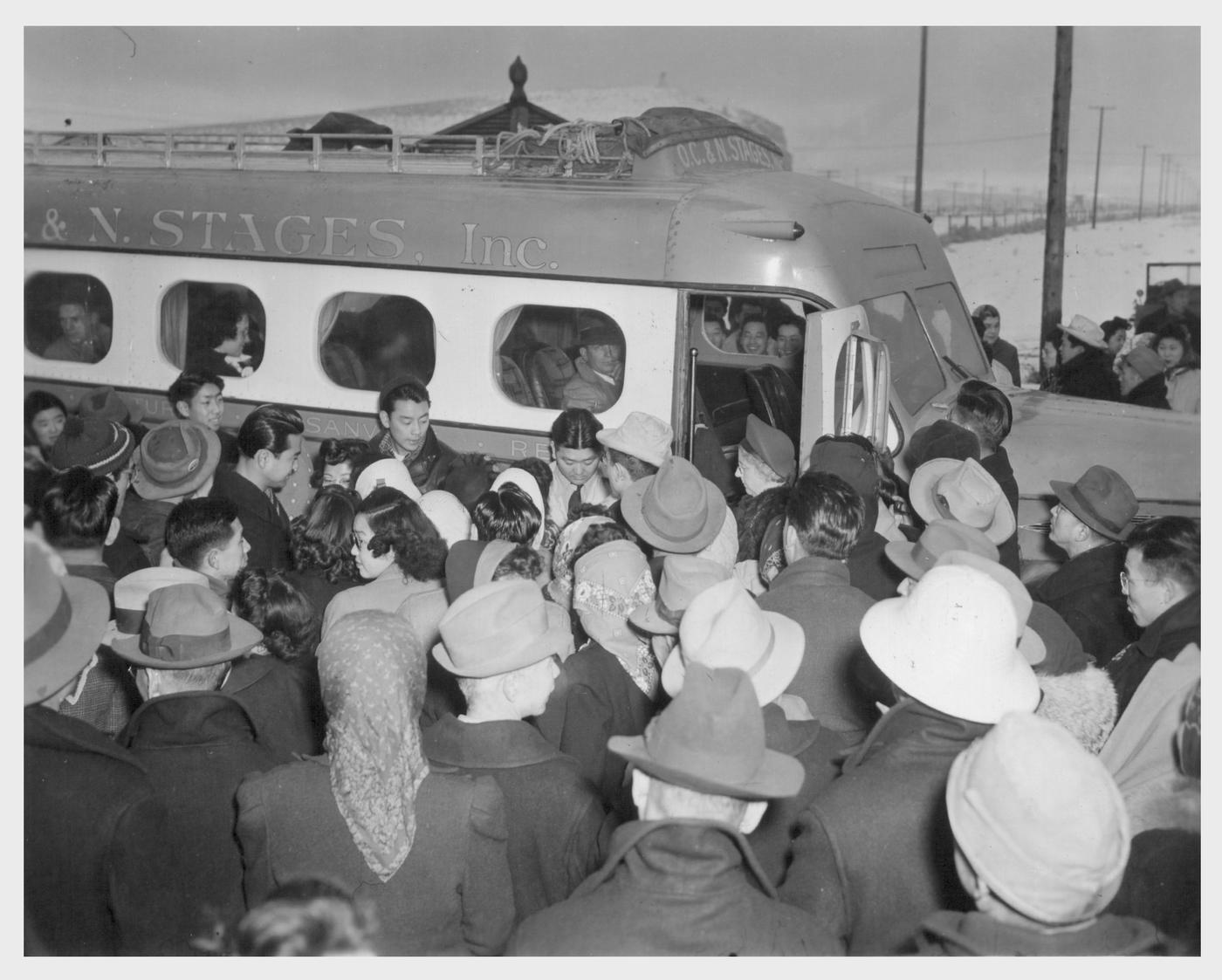
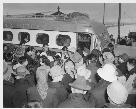 A large group of friends wish bon voyage to a group of eleven evacuees, who are leaving the center. Of this group, seven were students and workers going out on indefinite leave, and the other four were transferred to the Central Utah Project. Mixed emotions were displayed as these people boarded the bus.
|
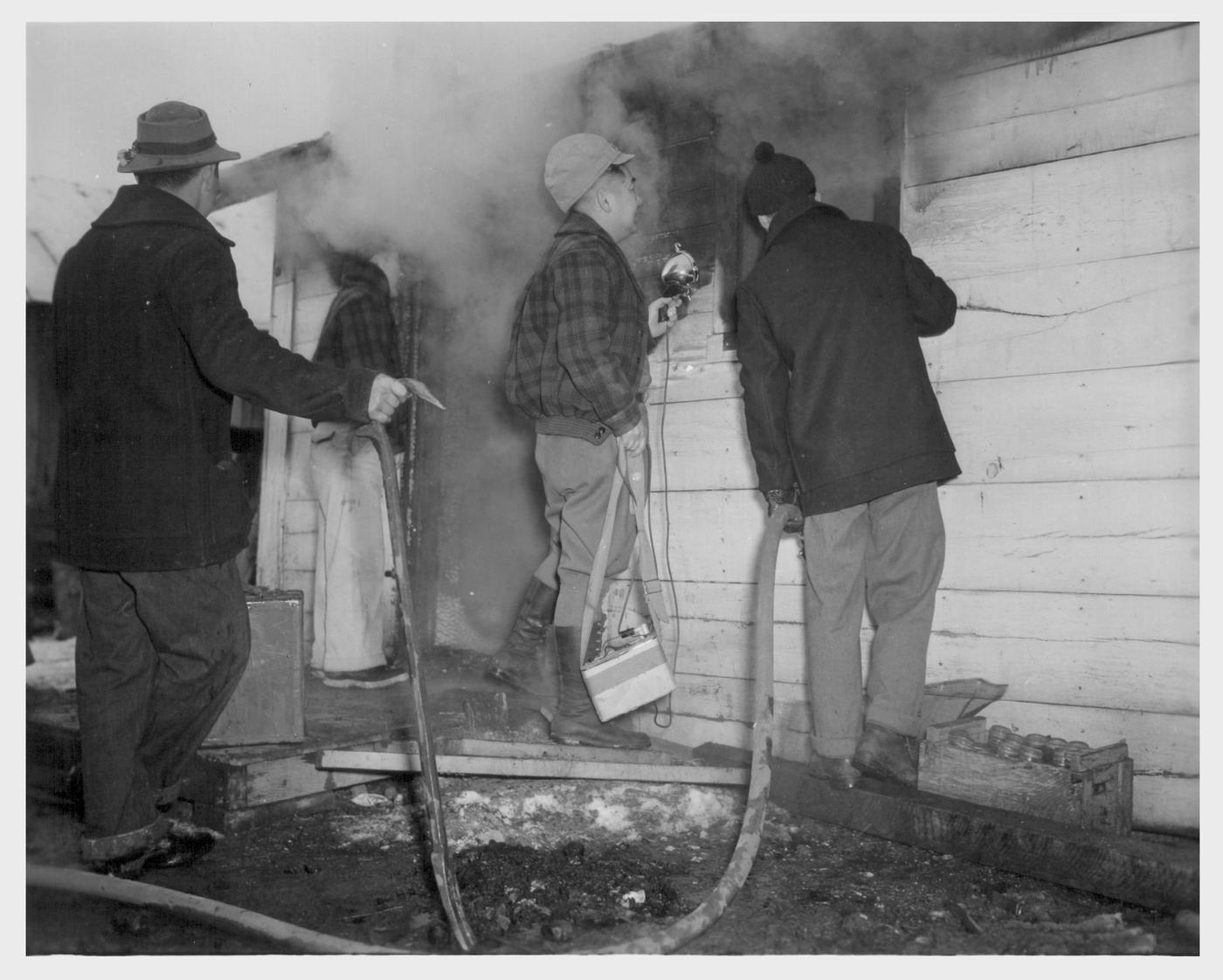
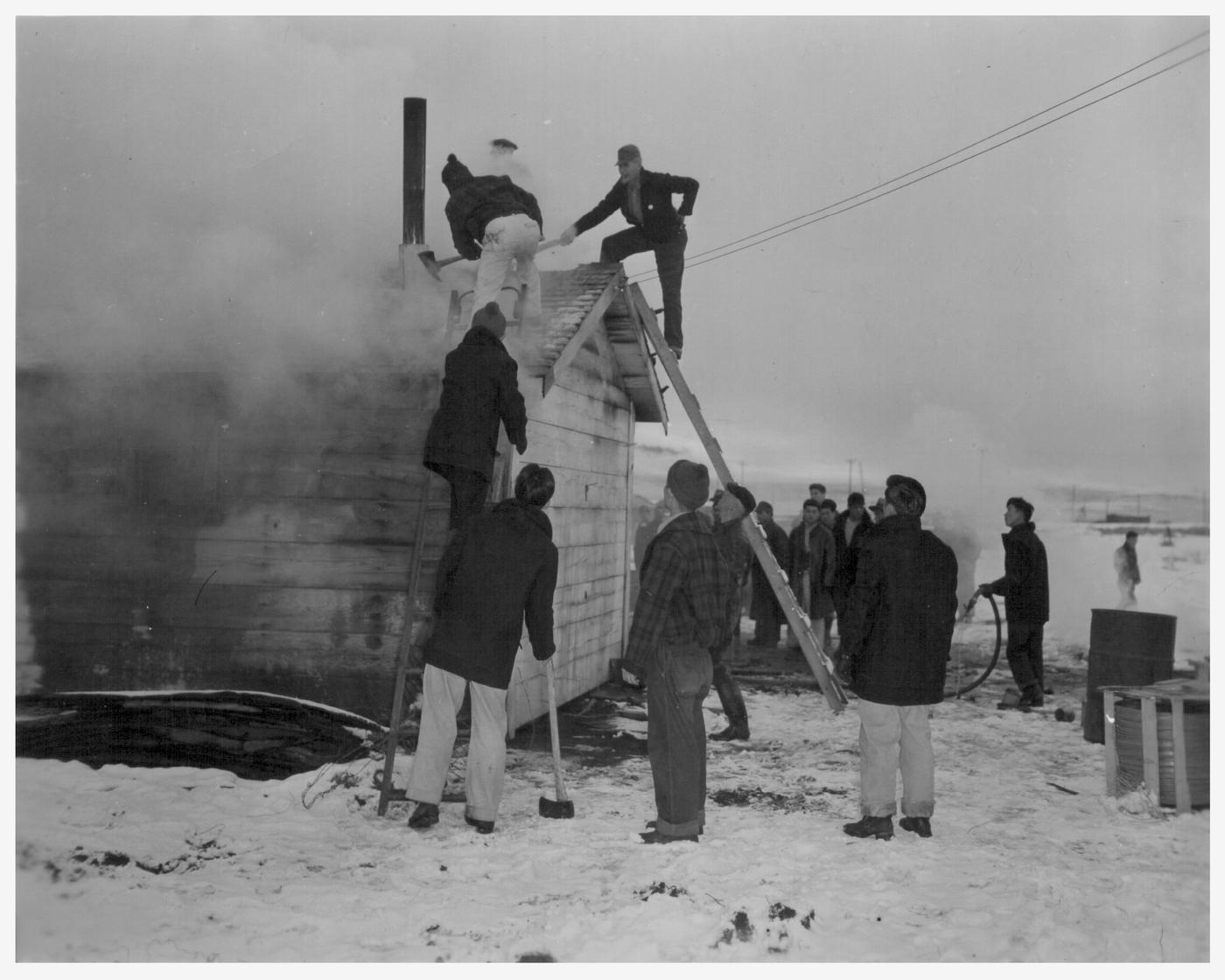
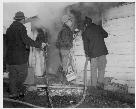 Quick work, by the evacuee fire department, kept the fire which broke out in the office located at the old hog farm from doing other than minor damage. |
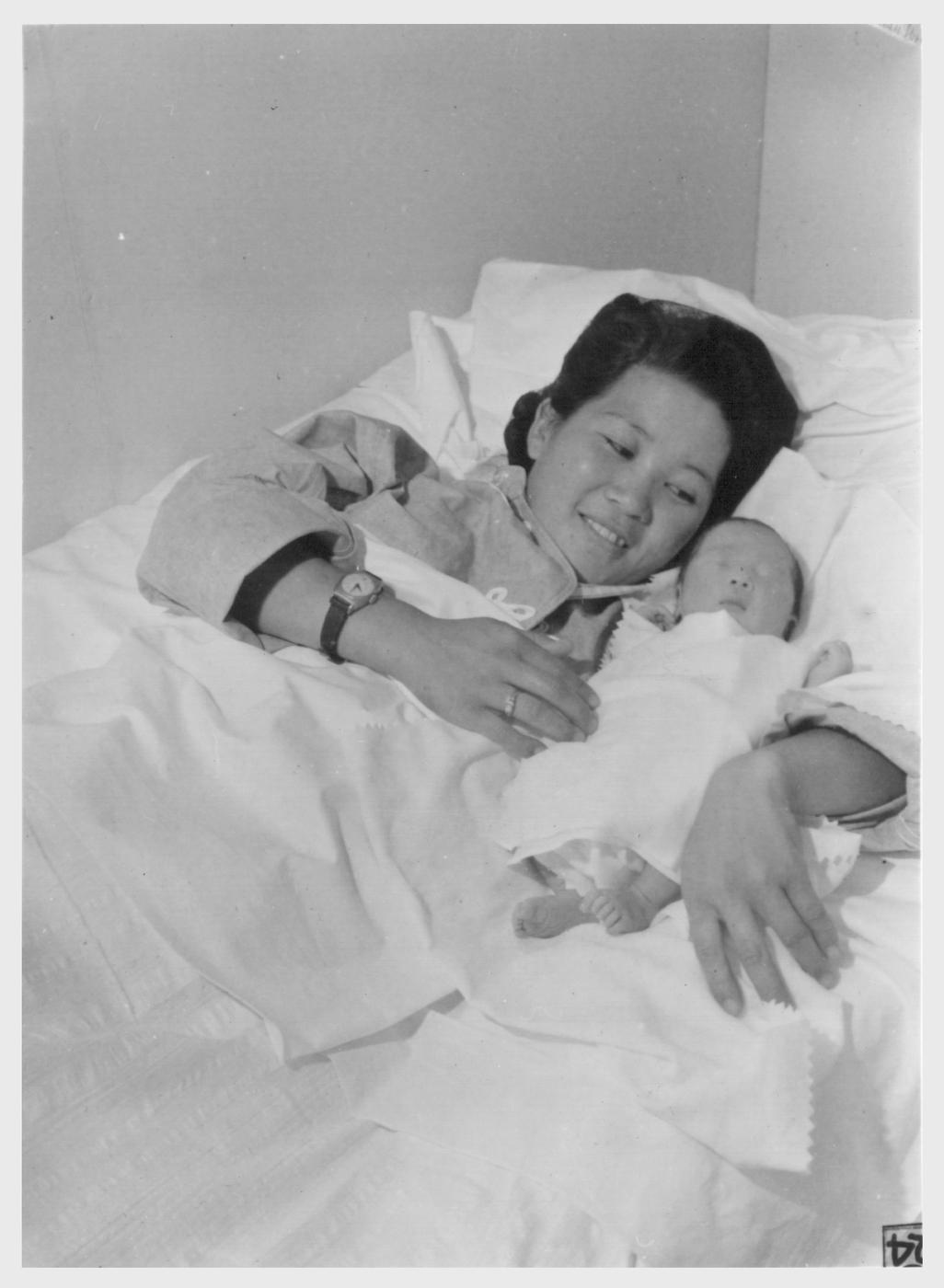
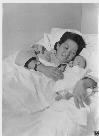 Proud Mrs. Kumiko Noda, 23, evacuee from Florin, California, holds her new son, Newell Kazuo Noda. Baby Newell arrived at 6:12 A.M., Sunday, June 12, and was the first child born at this War Relocation Authority center for evacuees of Japanese descent. 7/1/42
|
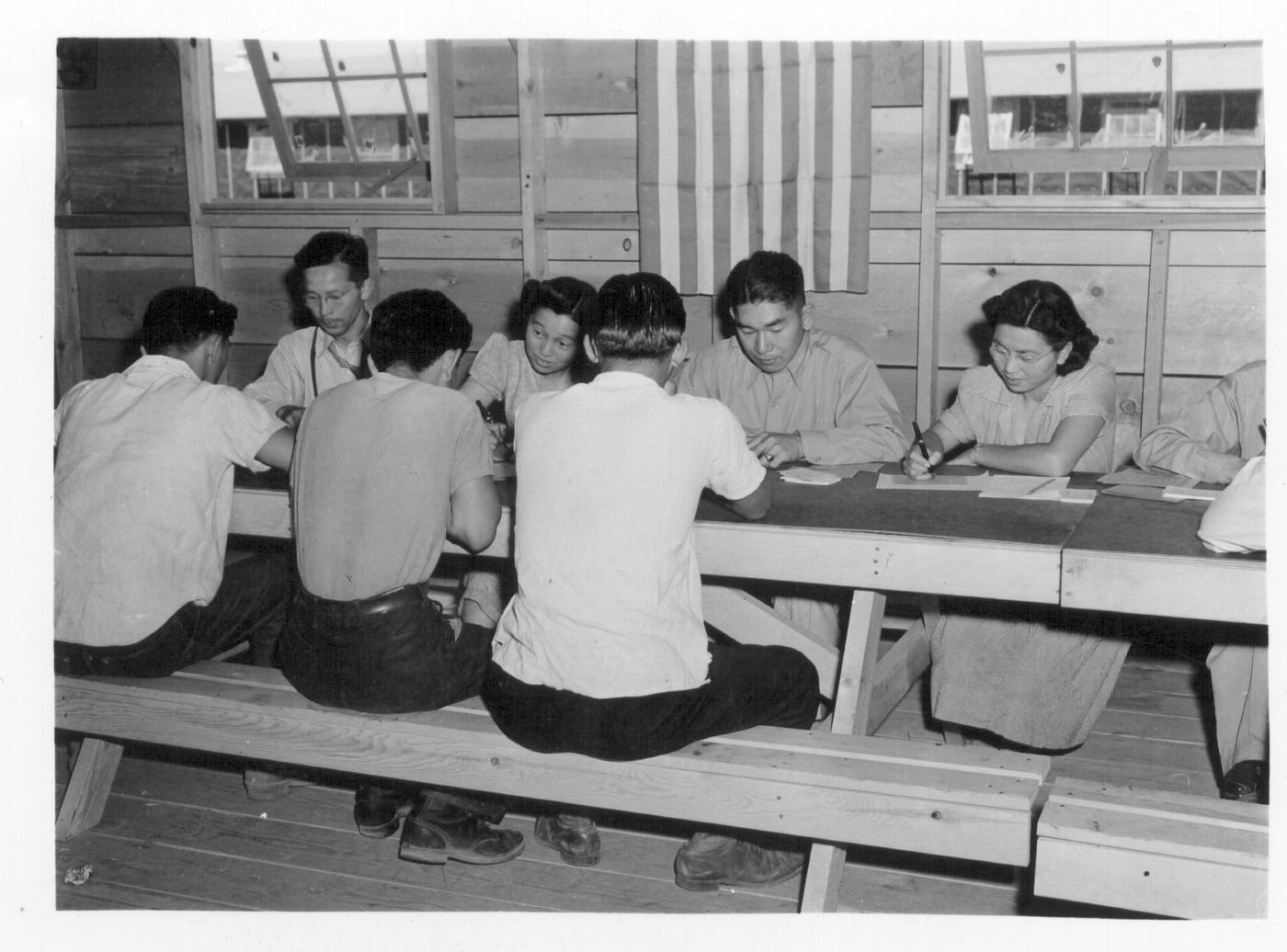
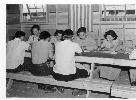 A view of Selective Service registration headquarters where 420 youths of 18 to 20 signed up in the latest draft registration. 6/30/42 |
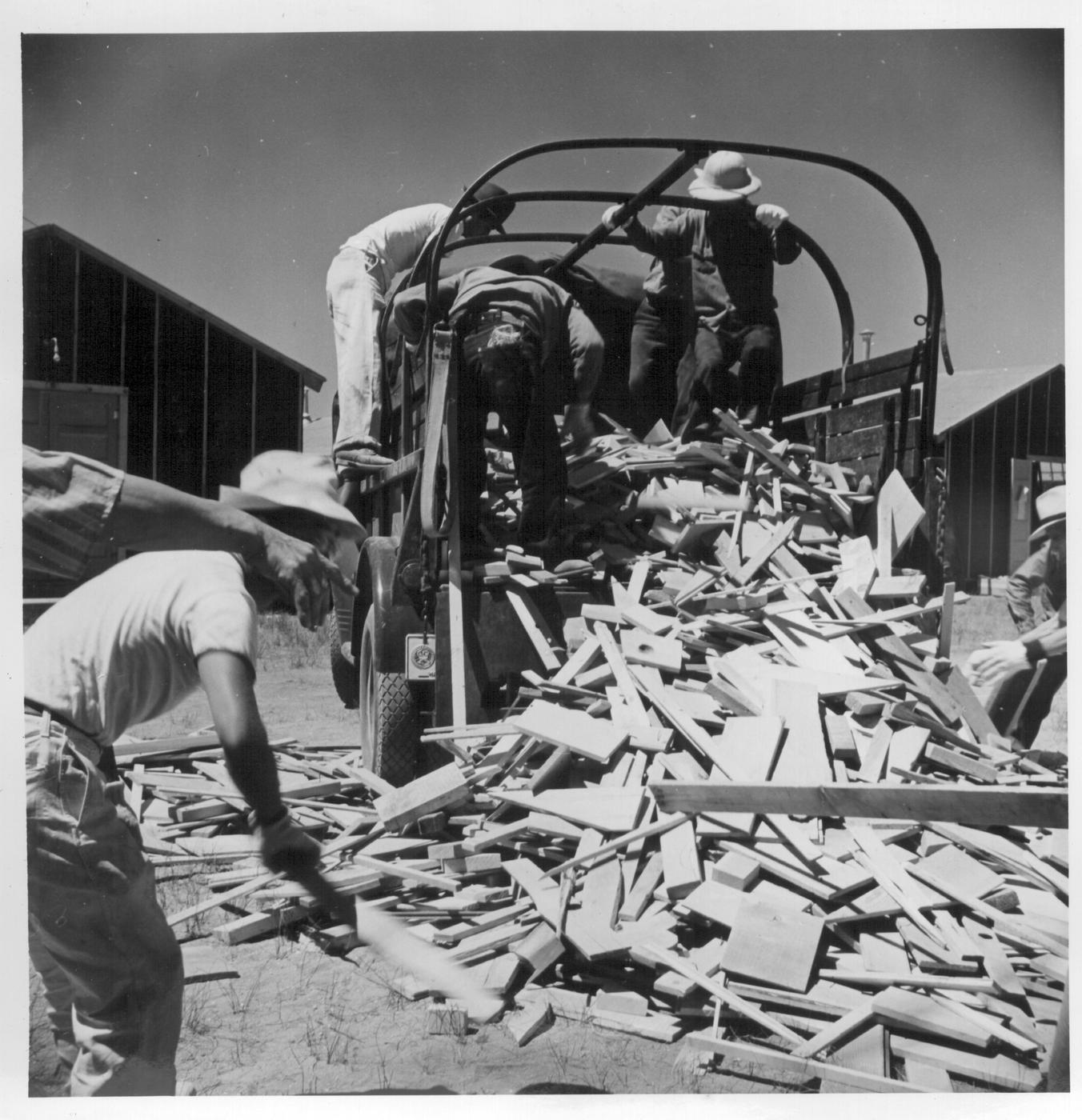
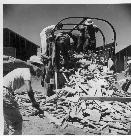 Evacuees distribute scrap lumber to each block. This scrap will be used by the residents to construct furniture for their apartments and also for firewood. 7/1/42
|
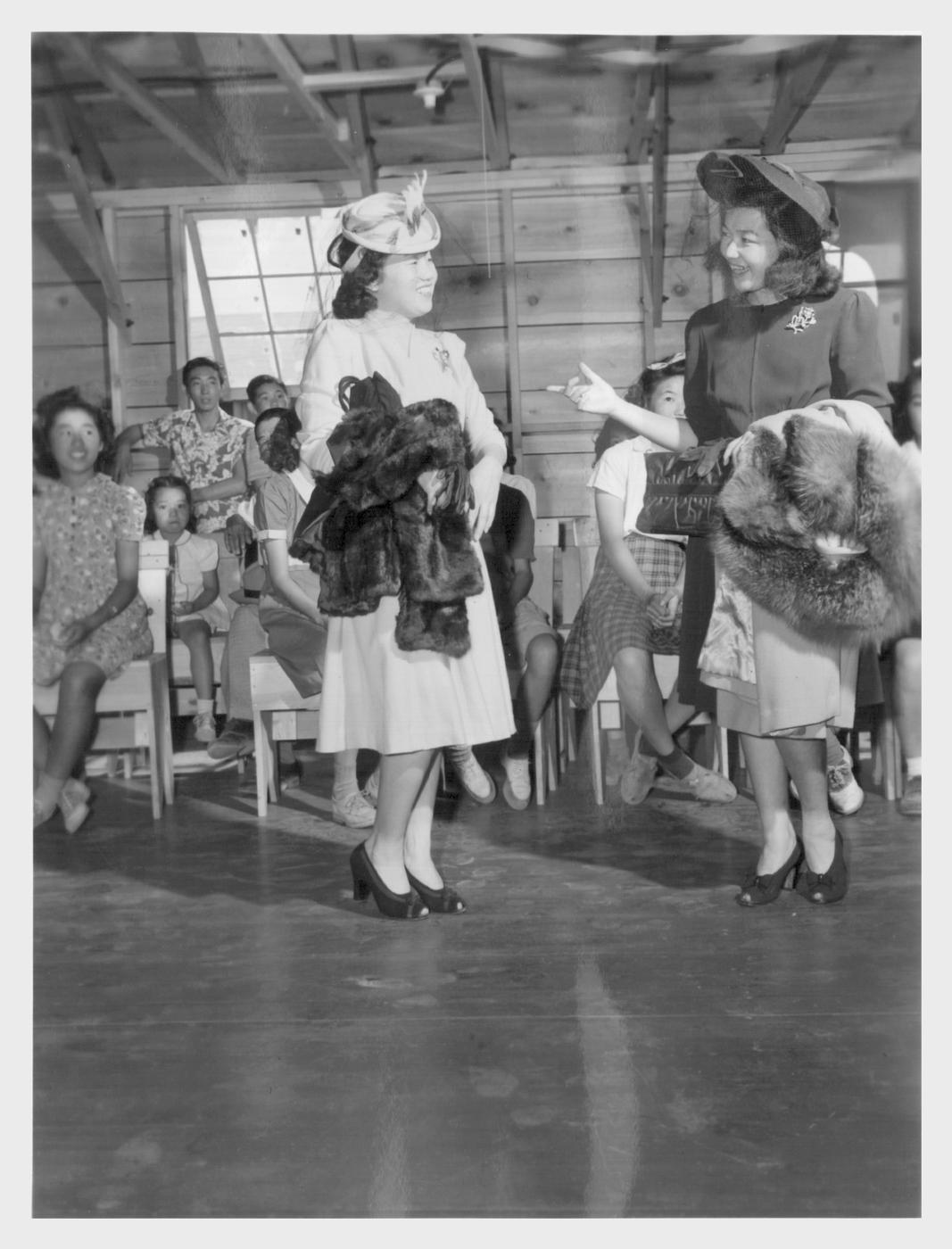
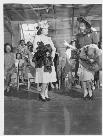 A fashion show was one of the many exhibits held at this relocation center on Labor Day. Great skill was shown in dressmaking and tailoring, and was thoroughly appreciated by the large audience which witnessed this display. 9/7/42 |
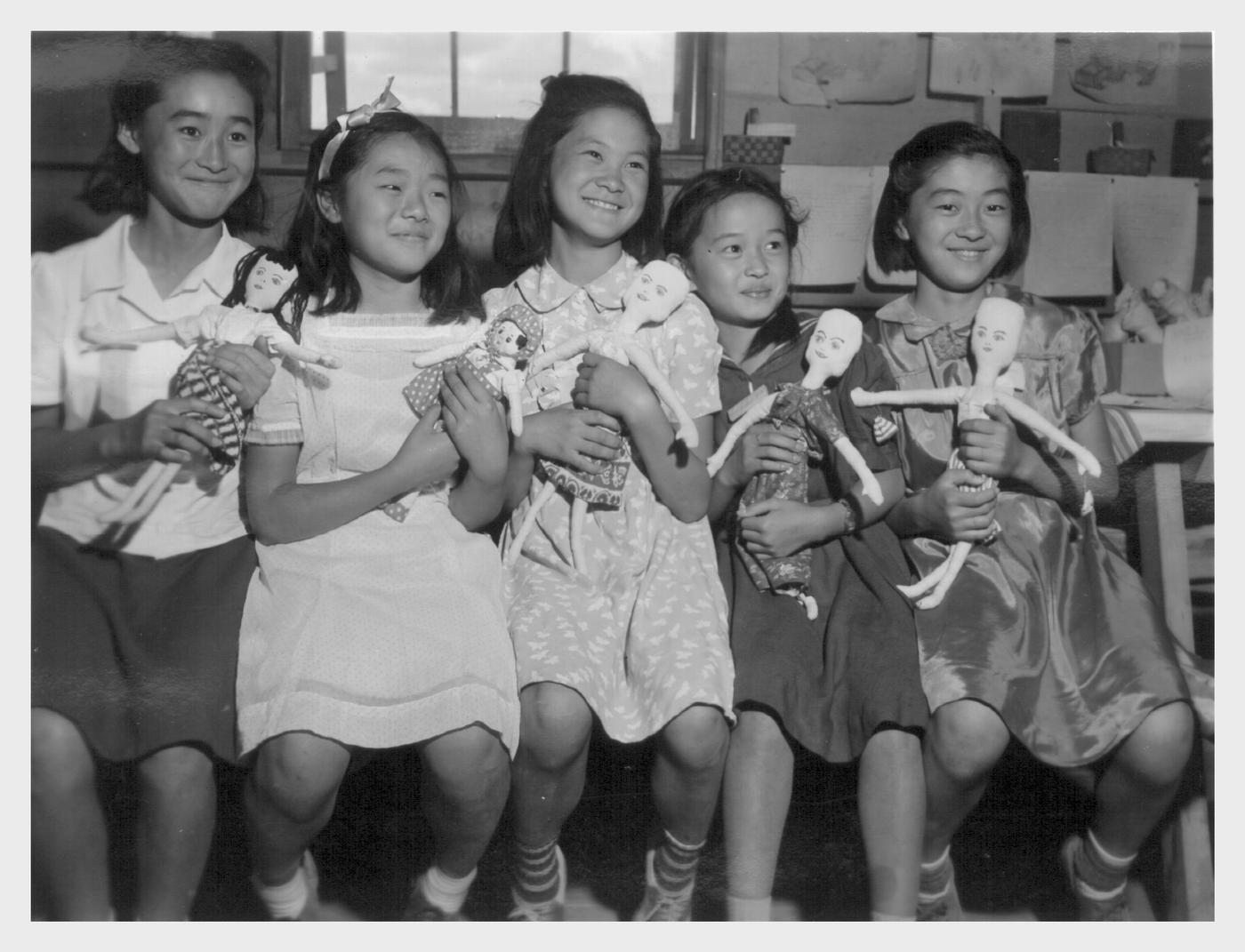
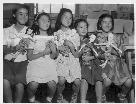 Five little school girls proudly hold the dolls they made in school. These dolls were on display in the exhibit of school handicraft which was held on Labor Day. 9/7/42
|
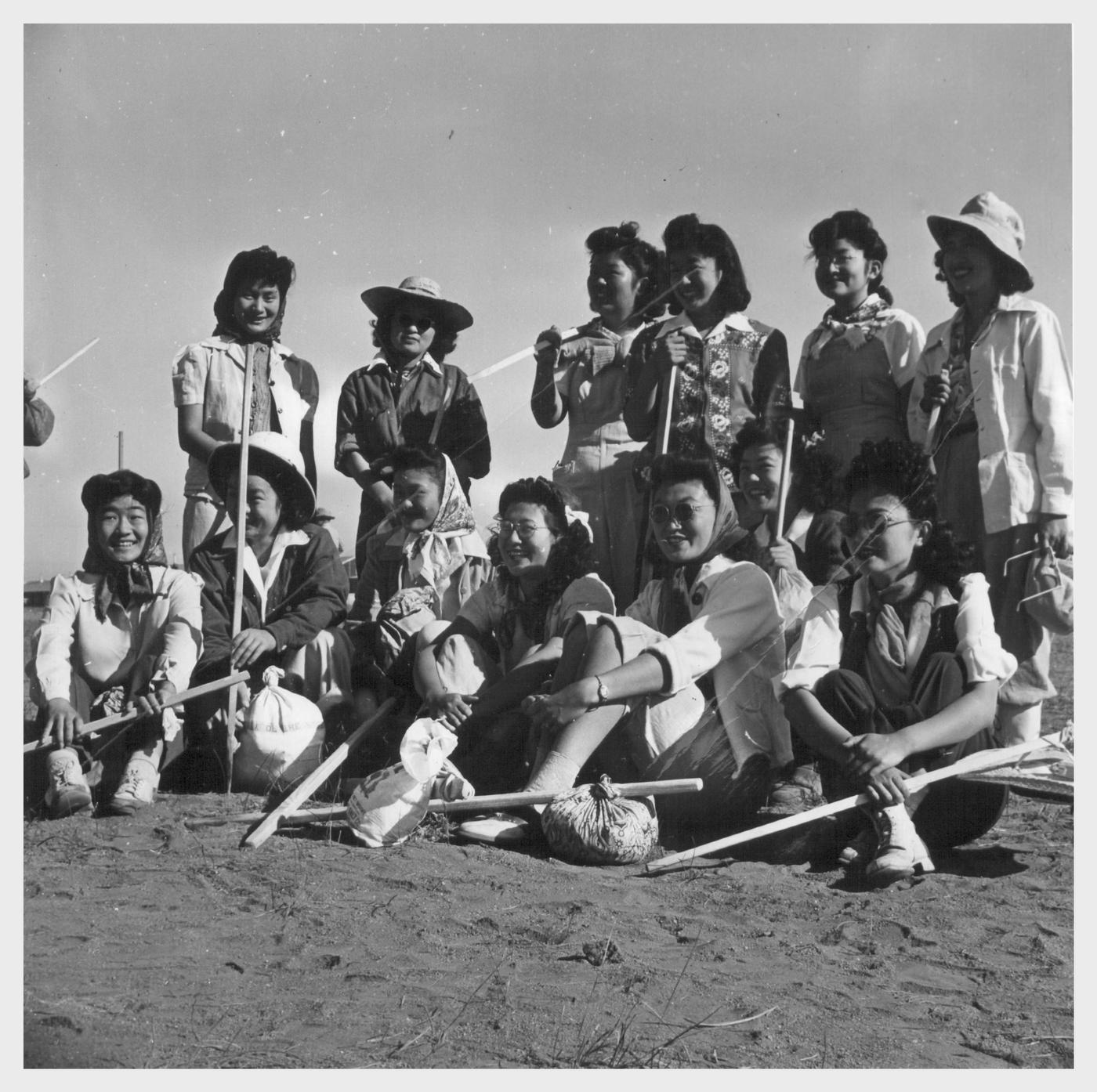
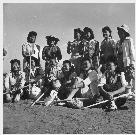 A group of pretty hikers shouldered their lunches and hiked into the foothills for a Labor Day picnic. 9/7/42 |
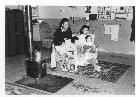 An evacuee family spends a quiet evening in their barracks. The decoration of this apartment is quite typical and shows the home made furniture, shelves, bookcases and other furniture. 9/10/42
|
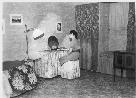 A view in one of the evacuee apartments. This apartment was very tastefully decorated and showed great originality in interior decoration. Blue was the dominant color in the room and was relieved by brightly colored couch covers and other spots of contrasting color. All of the material used in decorating this room was ordered by the evacuee through a mail order house. 9/10/42 |
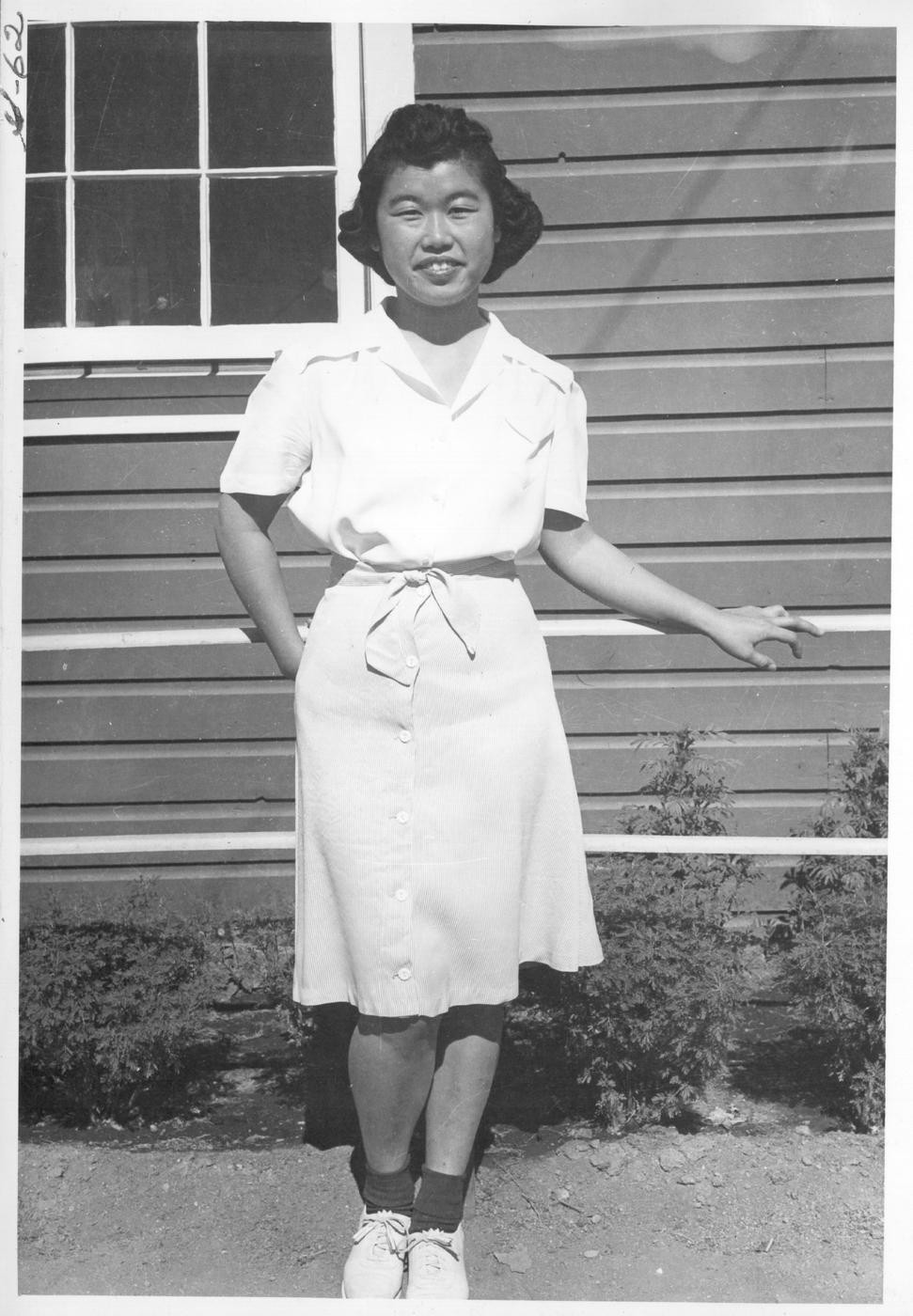
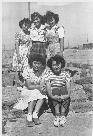 Typical high school girls
|
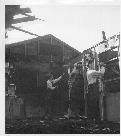 Fire which started from a defective flue destroyed the kitchen and part of the main mess hall in the administrative area of the Tule Lake Segregation Center. Evacuees in two companies responded to the alarm at 3 a.m. and brought the fire under control. Damage was estimated at $3,000. |
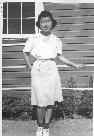 Katsumi Ogawa, first and only person to enlist from this center in Army Nurse Corps, August 28, 1943. [8/28/1943]
|
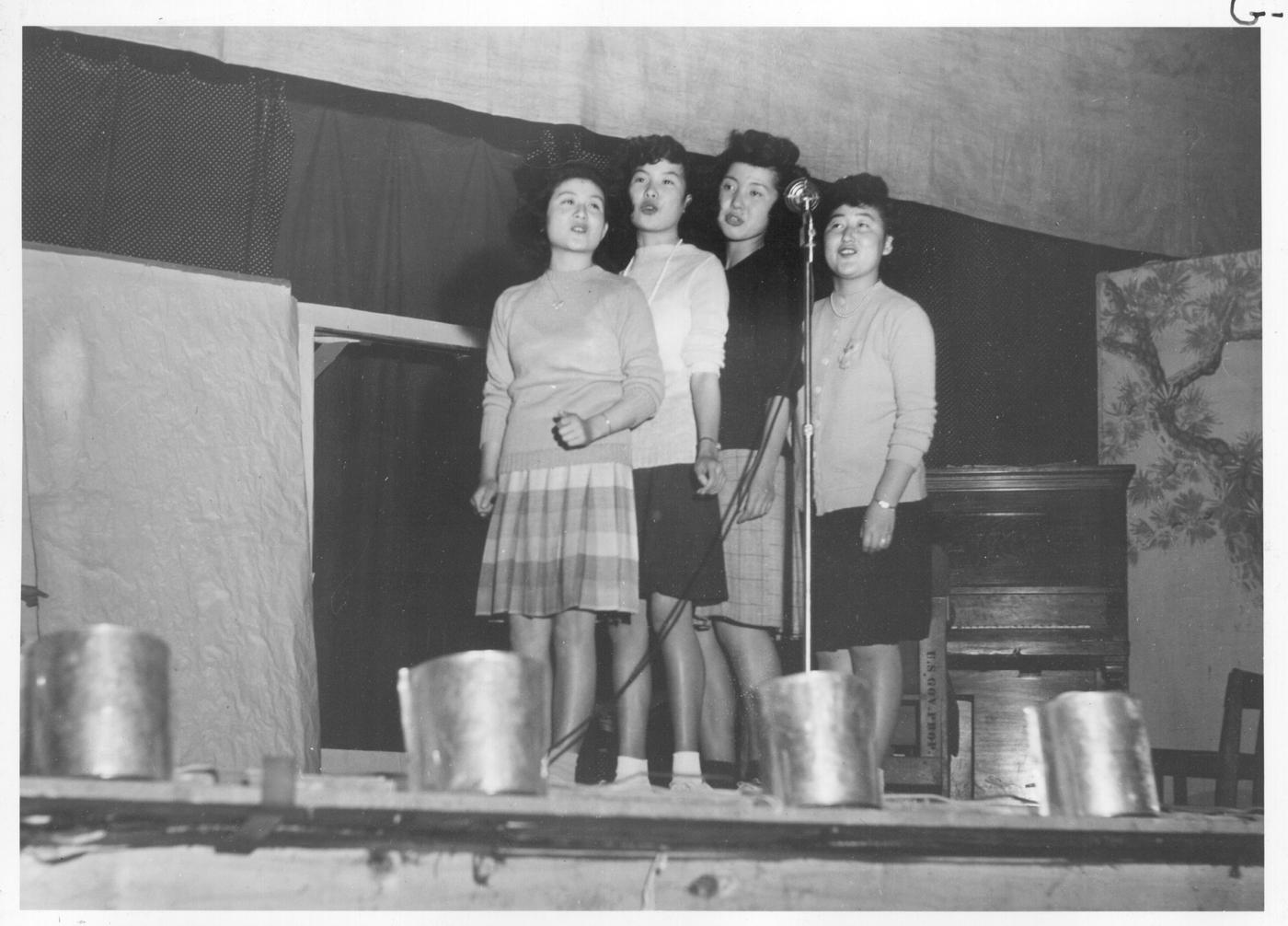
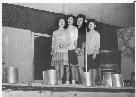 Girls quartet from the Talent Show sponsored by Tri-State High School student body June 9 at Tule Lake to help finance the annual. 6/9/44 |
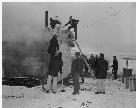 Quick work, by the evacuee Fire Department, kept the fire, which broke out in the office located at the old hog farm, from doing other than minor damage
|
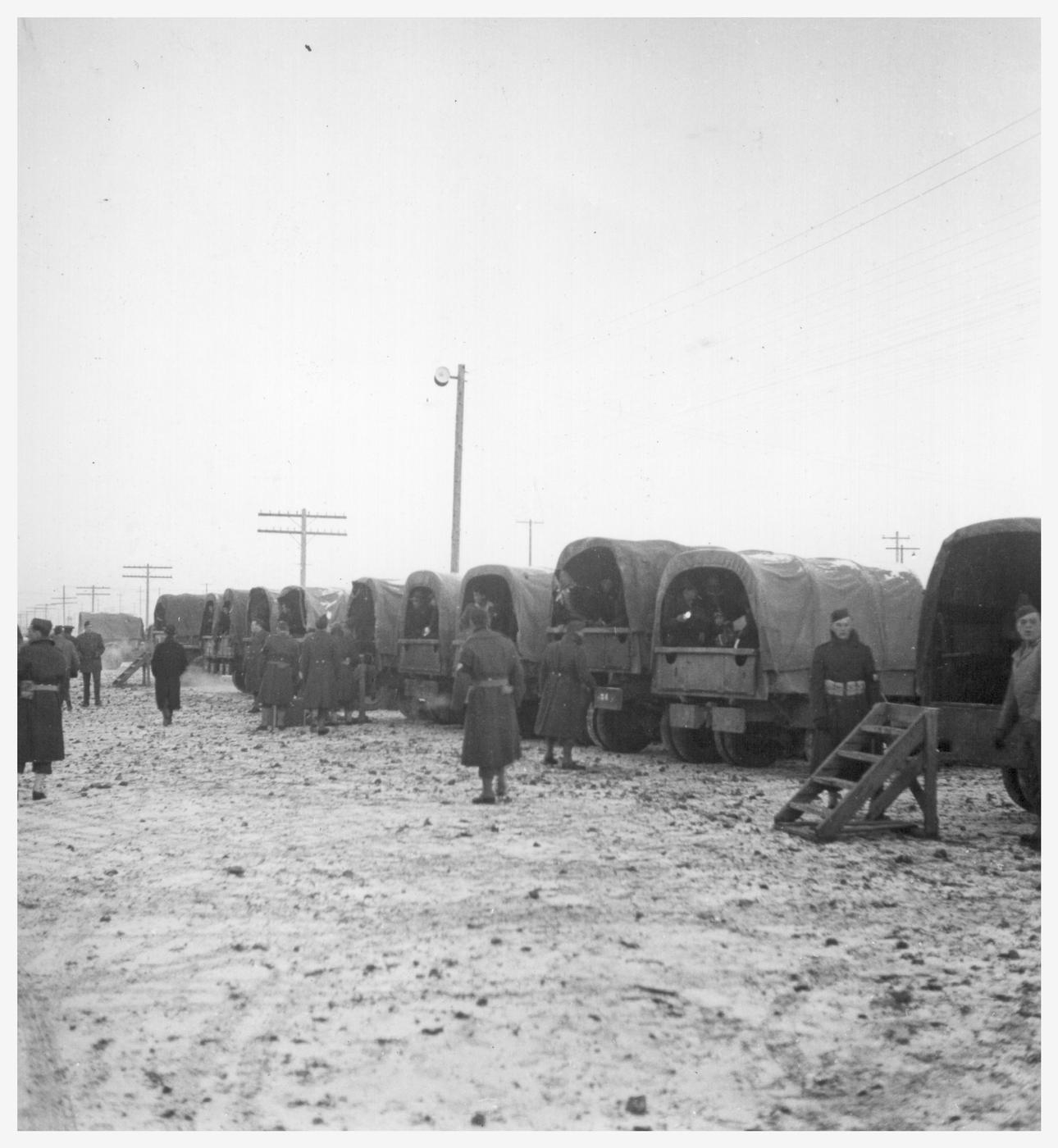
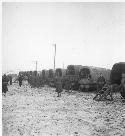 People from the Manzanar Relocation center were moved to the Tule Lake Segregation Center and quartered in the ten blocks which had been built as an addition at Tule Lake. They arrived in four special trains and were taken directly from the railroad to their new homes. A total of 1876 people came on the four trains. They were tired from their long train ride, but everything was done to make them comfortable and aid them in getting settled. |
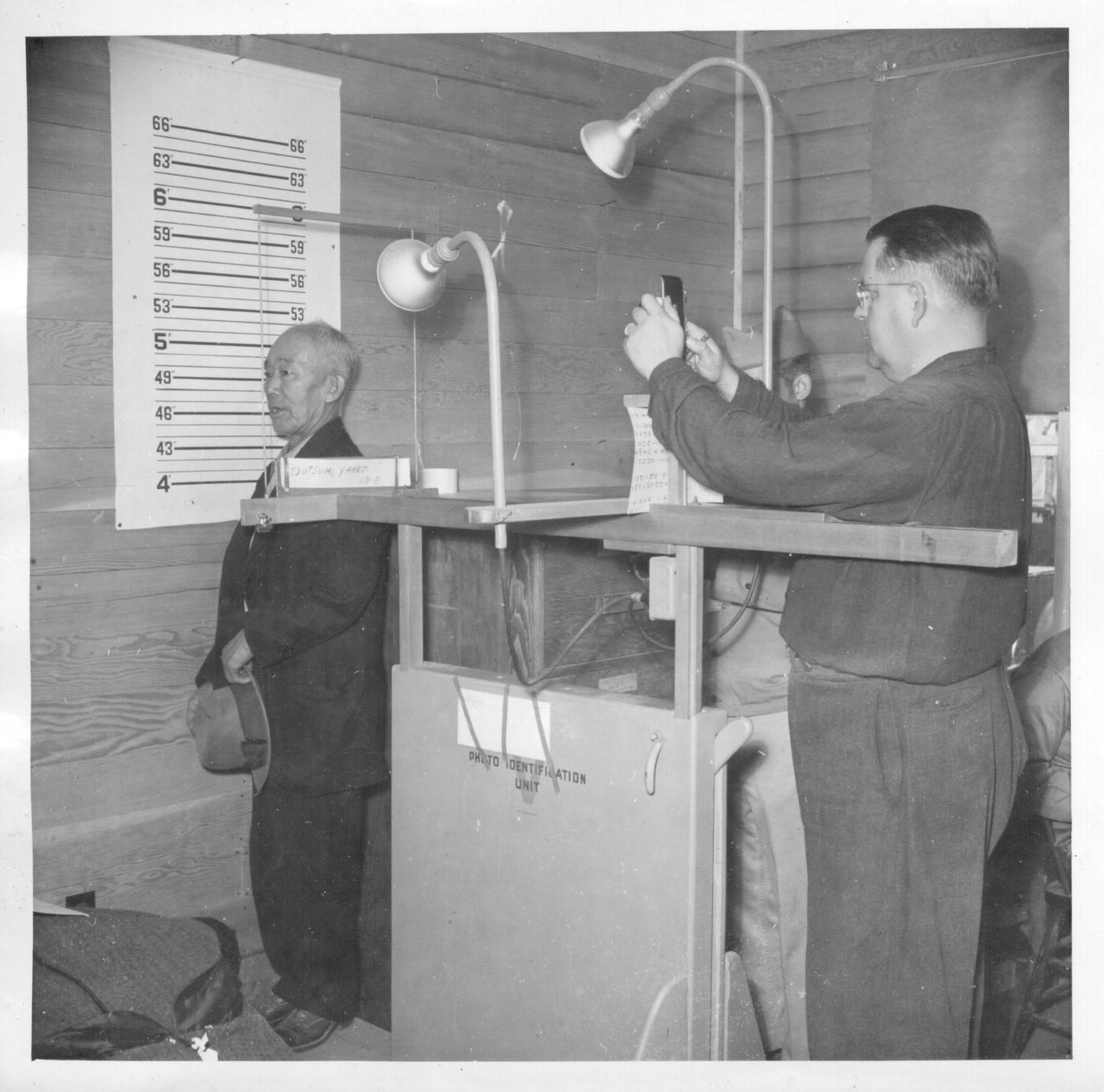
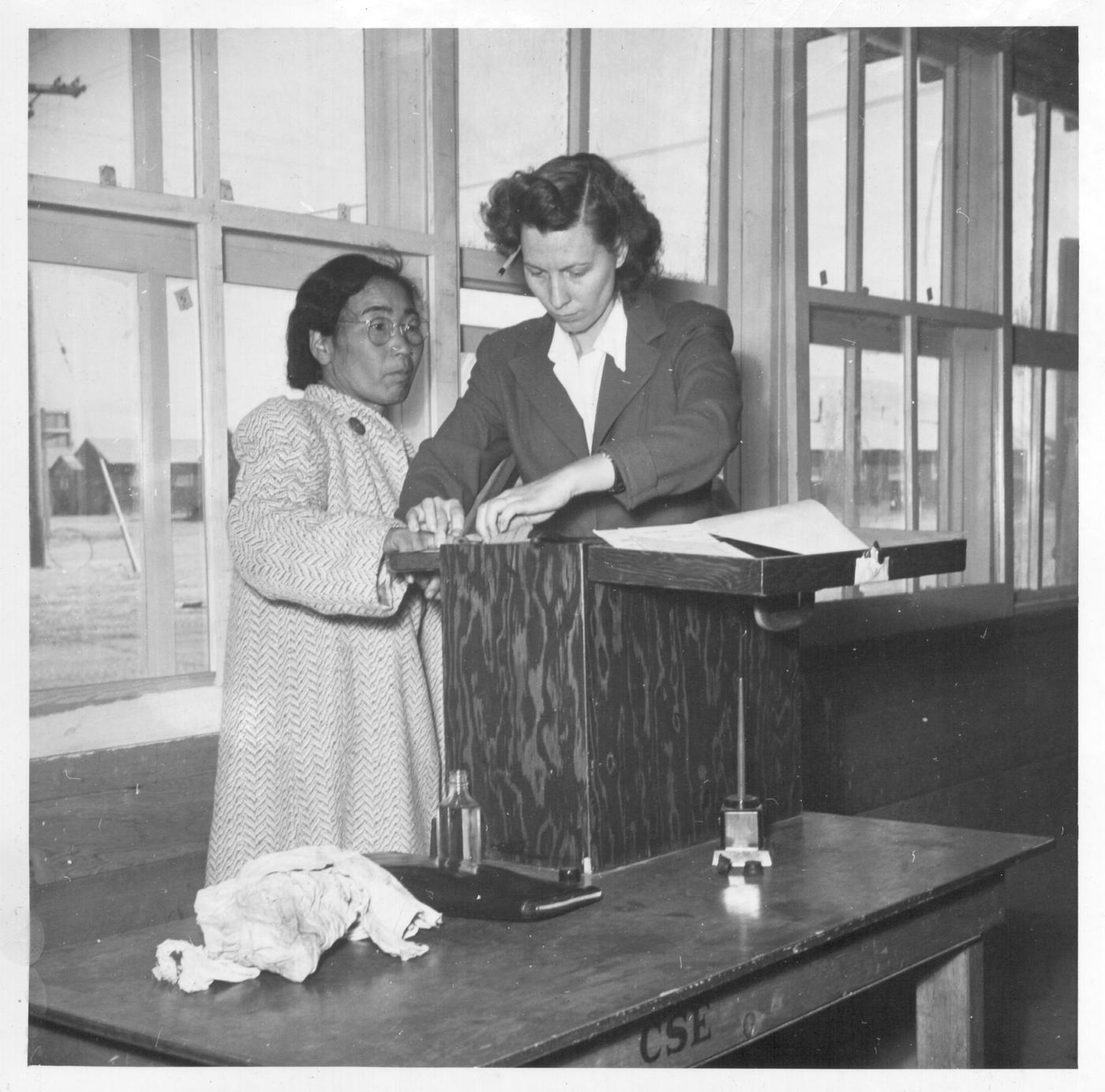
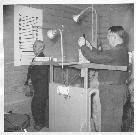 An elderly gentleman, newly arrived from the Topaz Center, is shown being photographed, front and side, as one of the requirements for all present residents of the Tule Lake Center. Everyone over 12 years of age was photographed and finger printed. 9/25/43
|
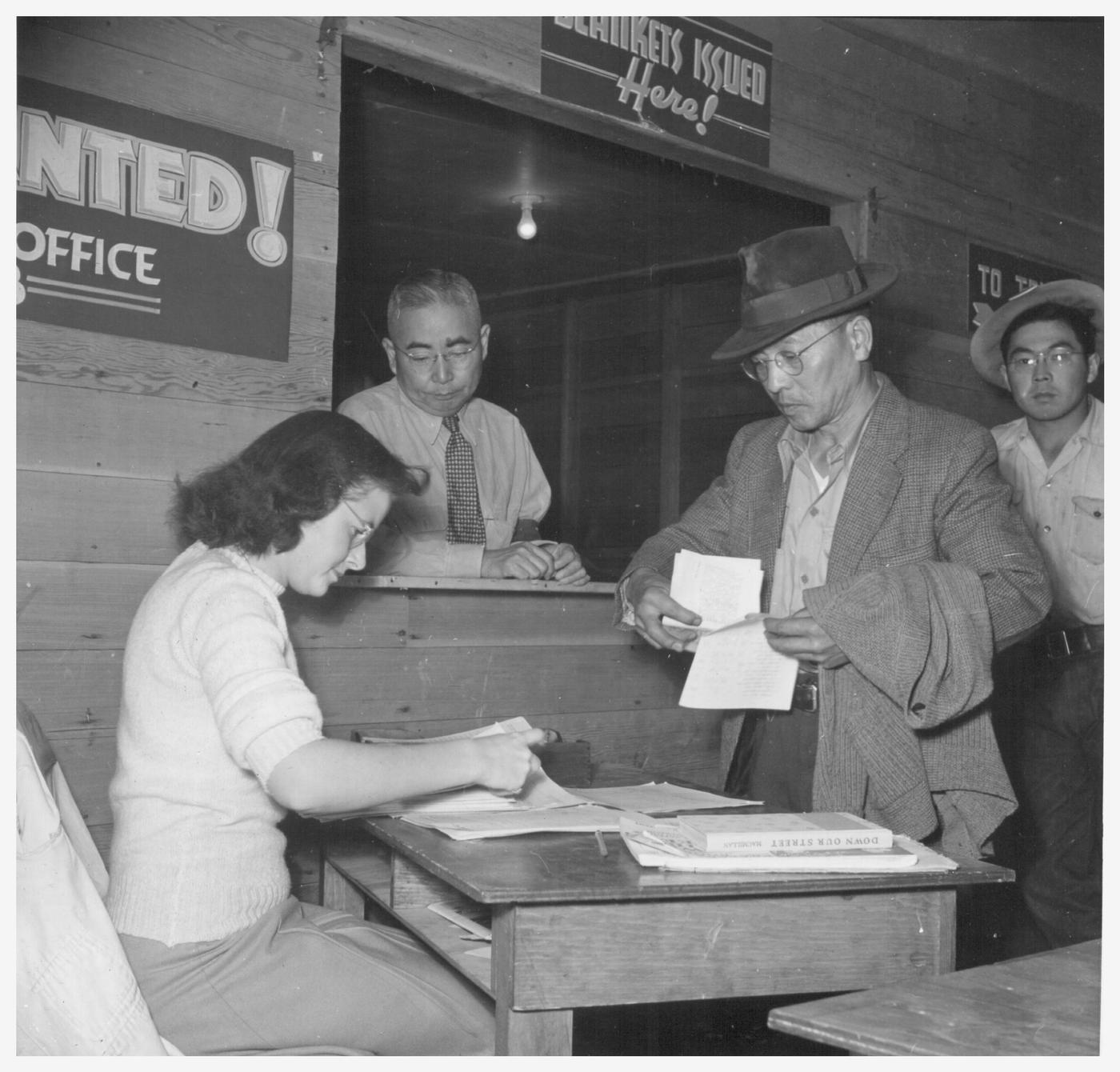
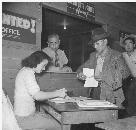 In the induction center at Tule Lake, one of the 489 arrivals on trip 15 from Topaz is seen receiving his new barracks number from one of the clerks before being issued his quota of blankets. 9/25/43 |
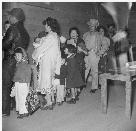 Many small children and babies were among the 489 arrivals at Tule Lake from Topaz. Some of them are here shown waiting in line to register at the induction center. 9/25/43
|
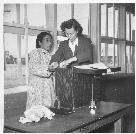 Scene in the finger printing department at the Tule Lake induction center as an elderly transferee has impressions made of the fingers on both hands. All Tule Lake residents, both new arrivals and those who chose to remain at the center, were compelled to be finger printed and photographed. 9/25/43 |
Construction of the camp began April 15, 1942. Within five months of opening there had been a mess hall strike to protest the food, a farm strike and a general strike. On the loyalty questionnaire, Tule had the hishest percentage of those termed "disloyals" based on their answers.
In the summer of 1943 the camp was converted to a maximum security segregation facility. It became the largest of the camps, with over 18,000 people there by the spring of 1944. In October of 1943 a farm worker was killed in a truck acident, sending the farm workers on strike. Strikebreakers were brought in and that itself led to more trouble. On Novembe 14 martial law was declared in the camp.
Arrests continued until 350 dissidents were put into the stockade and 1,200 Issei were sent to Dept. of Justice camps. The protest ended on January 11th and martial law was lifted on the 15th.
Trouble did not end, though. On May 24 an evacuee was shot and killed during an altercation with a guard. In June, the general manager of the Business Enterprise Association at the camp was found murdered.
The center operated until March 20, 1946. 400 evacuees were transferred to the Crystal City Internment Center. Some of the original buildings still existed but have been modified.
The government report "Riots, Strikes and Disturbances in Japanese Relocation Centers (1943), has this to say of Tule Lake:
"General allegations of a derogatory nature have been received regarding affairs in this camp. It was reported in January, 1943, that the Japanese agricultural workers had struck on several occasions, and that the administration treats these strikes as 'conferences.' A general feeling of unrest among th evacuees was caused chiefly because of improper administration, lack of clothing and salary payments. These allegations apparently had some basis in fact as a strike did occur among the agricultural workers in August, 1942. This trouble was concerned with certain grievances held by the workers. One of the leading factors was that there was no mess hall at the farm, althoug the War Relocation Authority had promised that one would be immediately built. Consequently, the workers were required to eat meals in the open without any protection from dust, insects, dirt, etc. The strike reportedly lasted for two or three days."
There was also some trouble in relation to the military registration process: "There was considerable opposition to the registration at Tule Lake and reportedly some Japanese had been told not to register. Out of three thousand eligible males, only two hundred had registered at Tule Lake as of February 17, 1943. Reportedly the Japanese aliens and Japanese educated American citizens were the ones carrying on most of the opposition. It was reported that the Kibei had formed small groups to intimidate individuals who were desirous of registering."
From Final Report: Japanese Evacuation from the West Coast 1942, dated June 5, 1963, description of Tule Lake area. "The Bureau of Reclamation formerly controlled the land which now constitutes the Tule Lake Relocation Project Site. Situated in Modoc County, California, approximately forty miles south of Klamath Falls, Oregon, the site was formerly the bed of the lake from which the Center derives its name. There are approximately 7,400 acres in the tract. The soil is a sandy loam interspersed with a layer of shells of resh water spiral mollusks. It is extremely fertile and raises bumper crops of garden vegetables and barley. Nearby is Tule Lake and the Game Refuge where wild life abounds."
Signs of Trouble
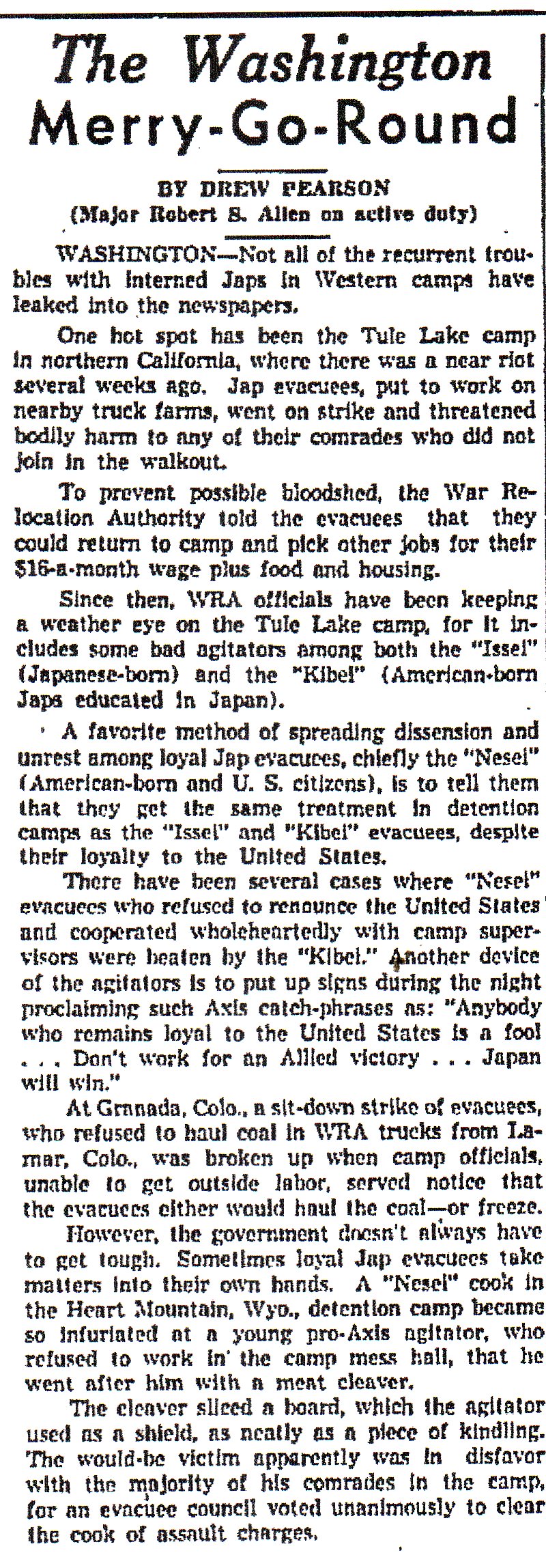
 Nevada State Journal, Jan. 13, 1943 |
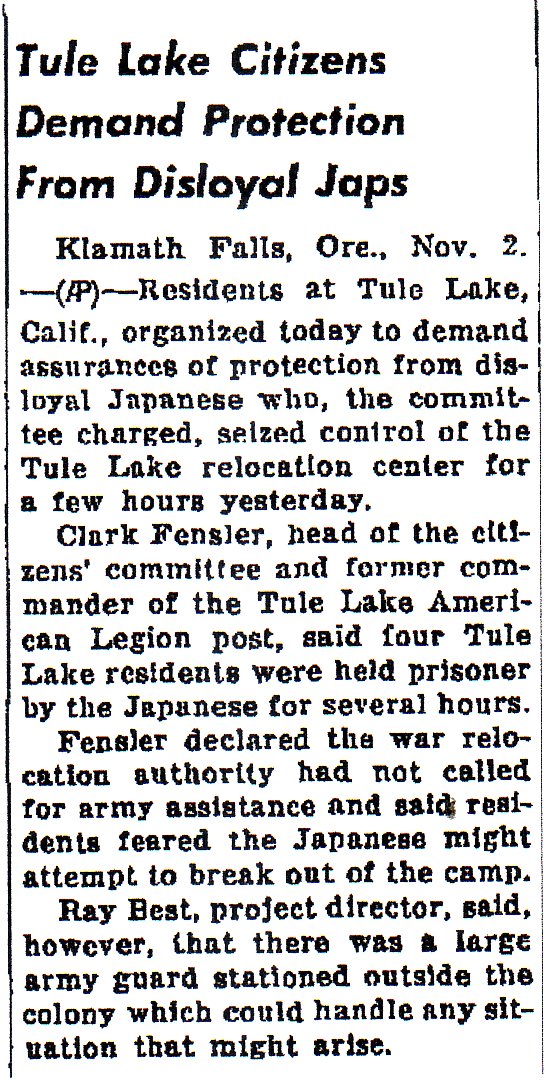
 The Independent Record, Nov. 3, 1943 |
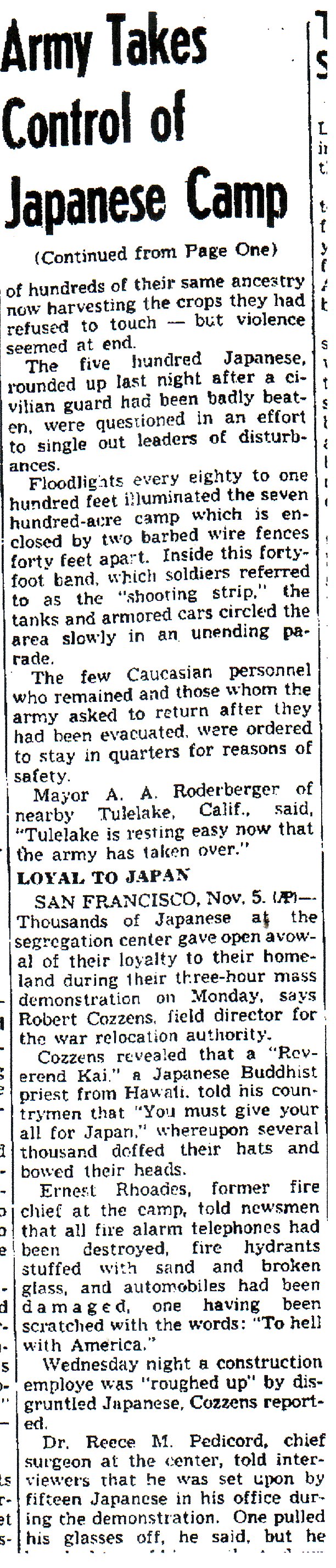
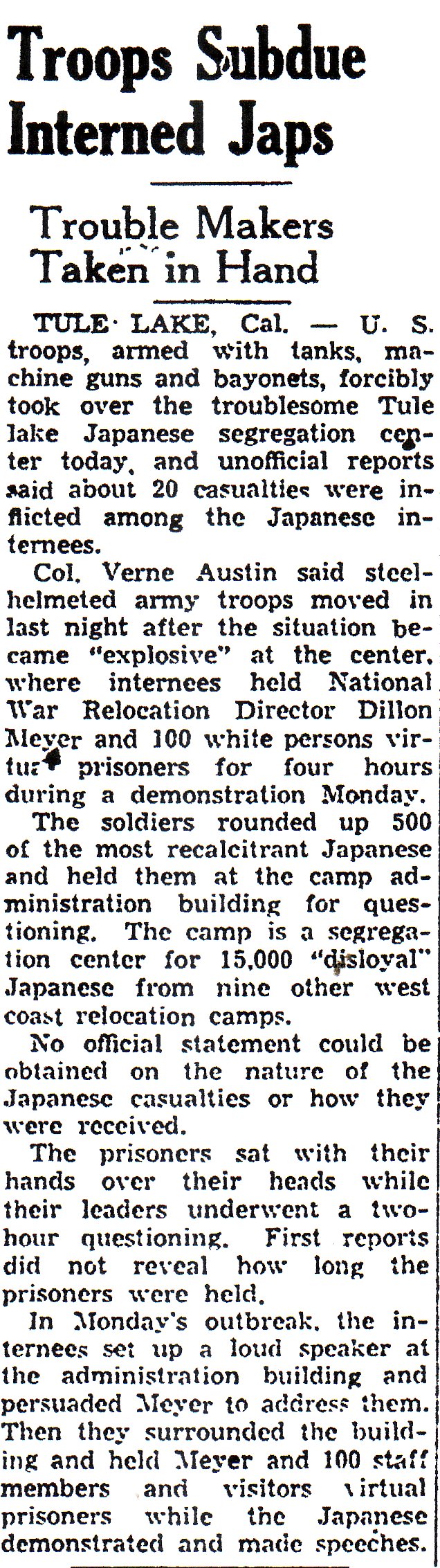
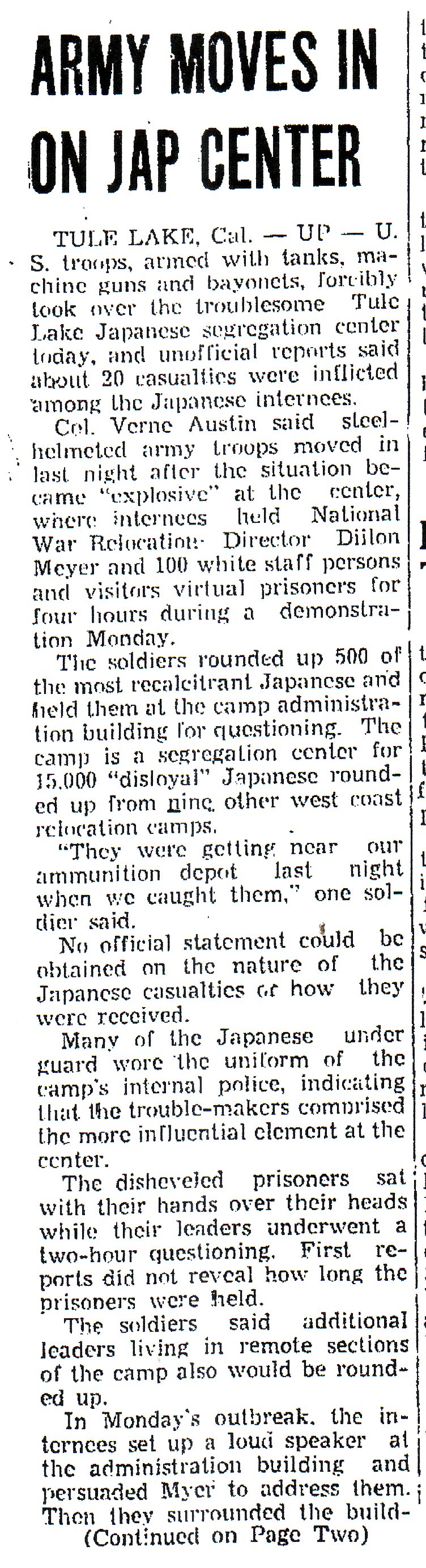
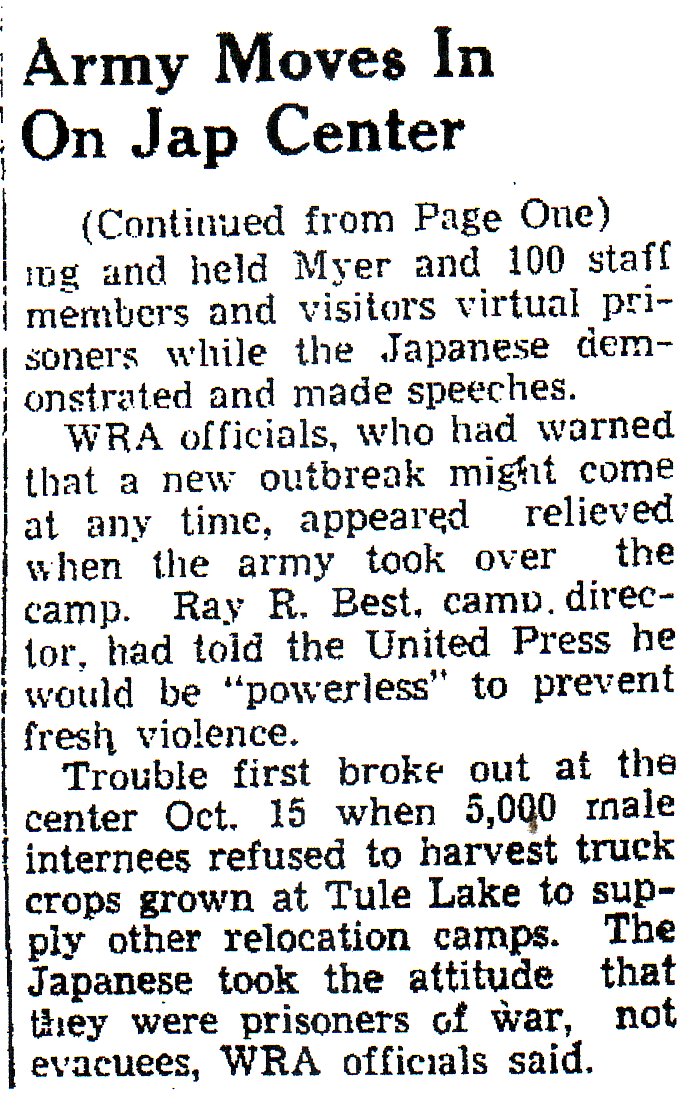
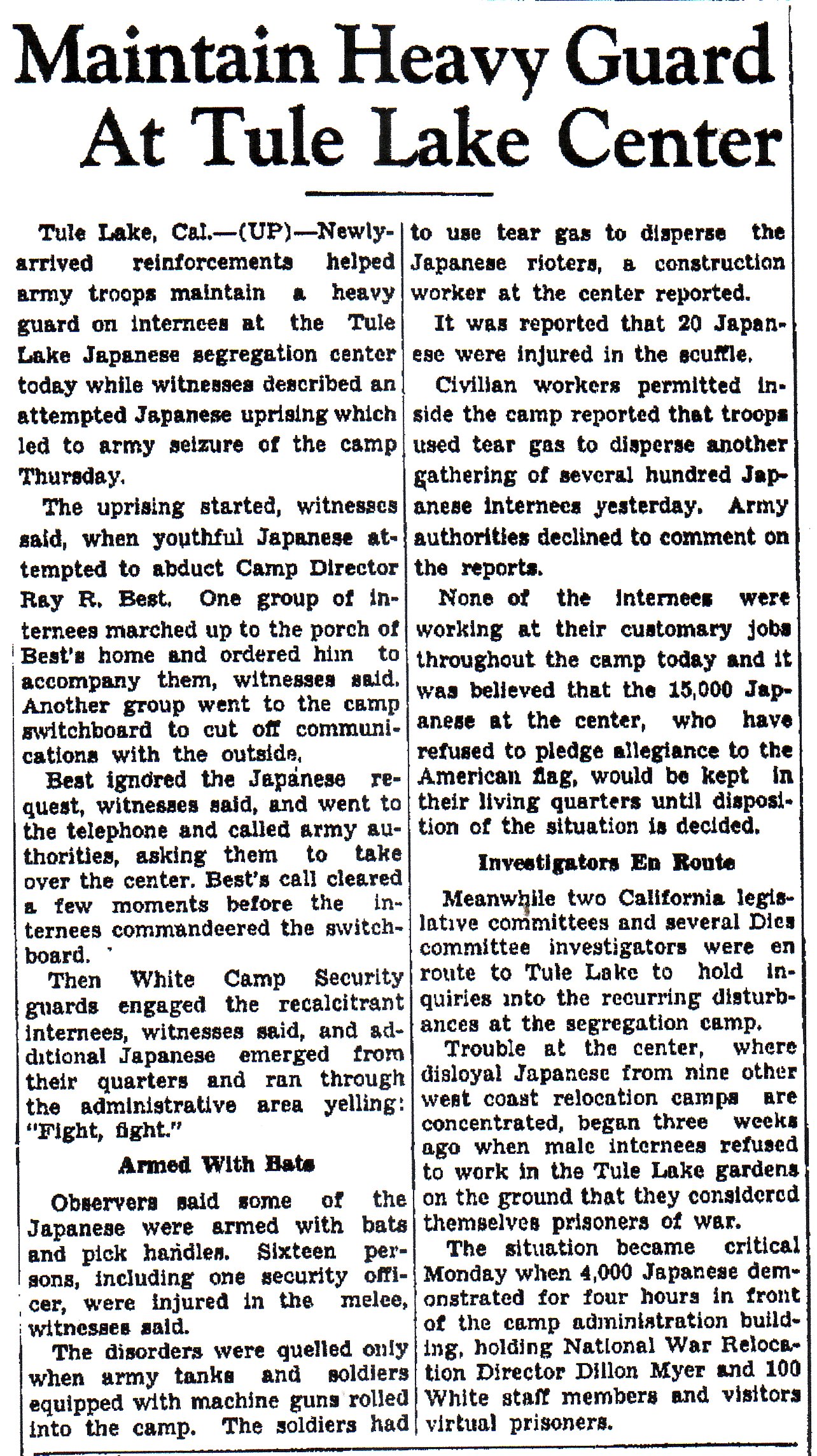
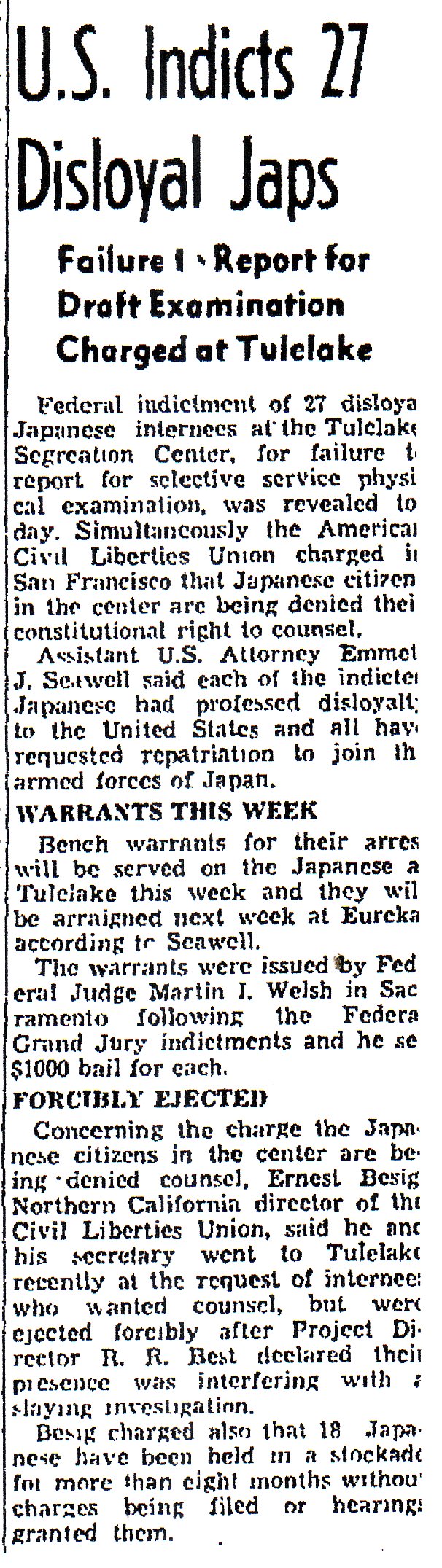
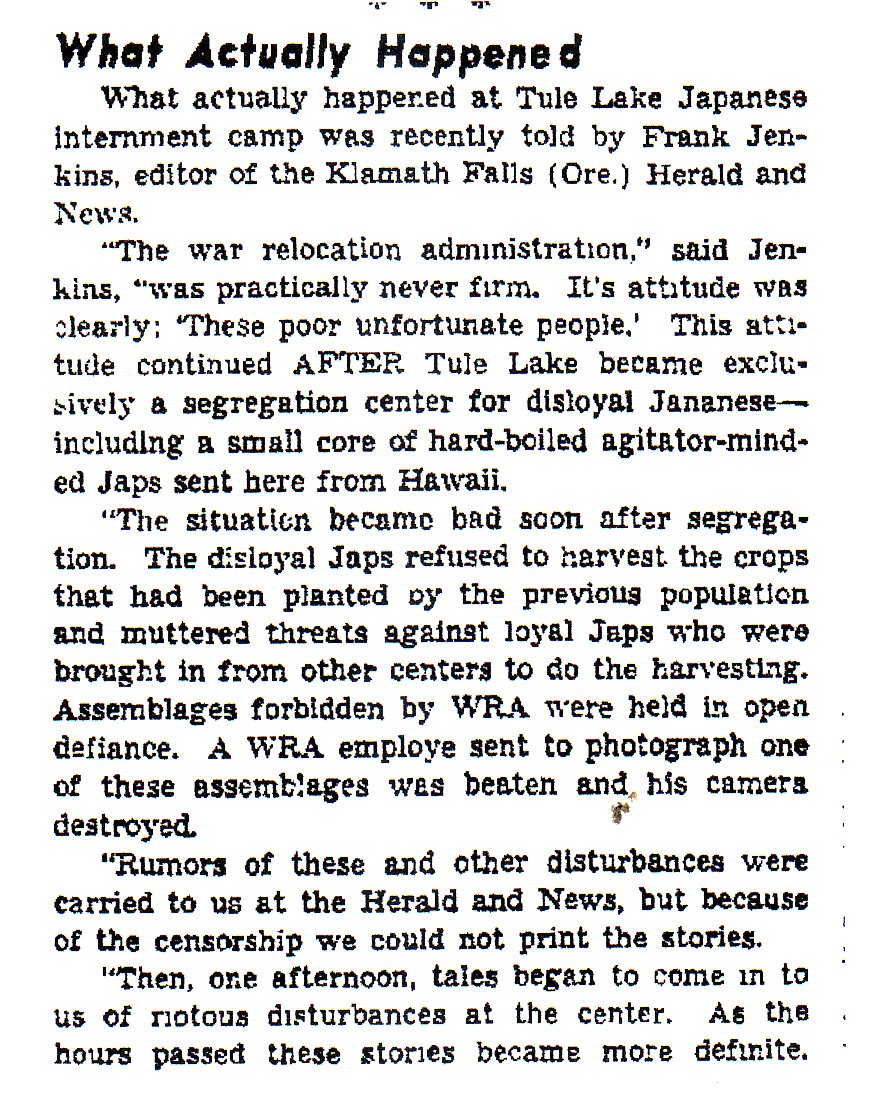
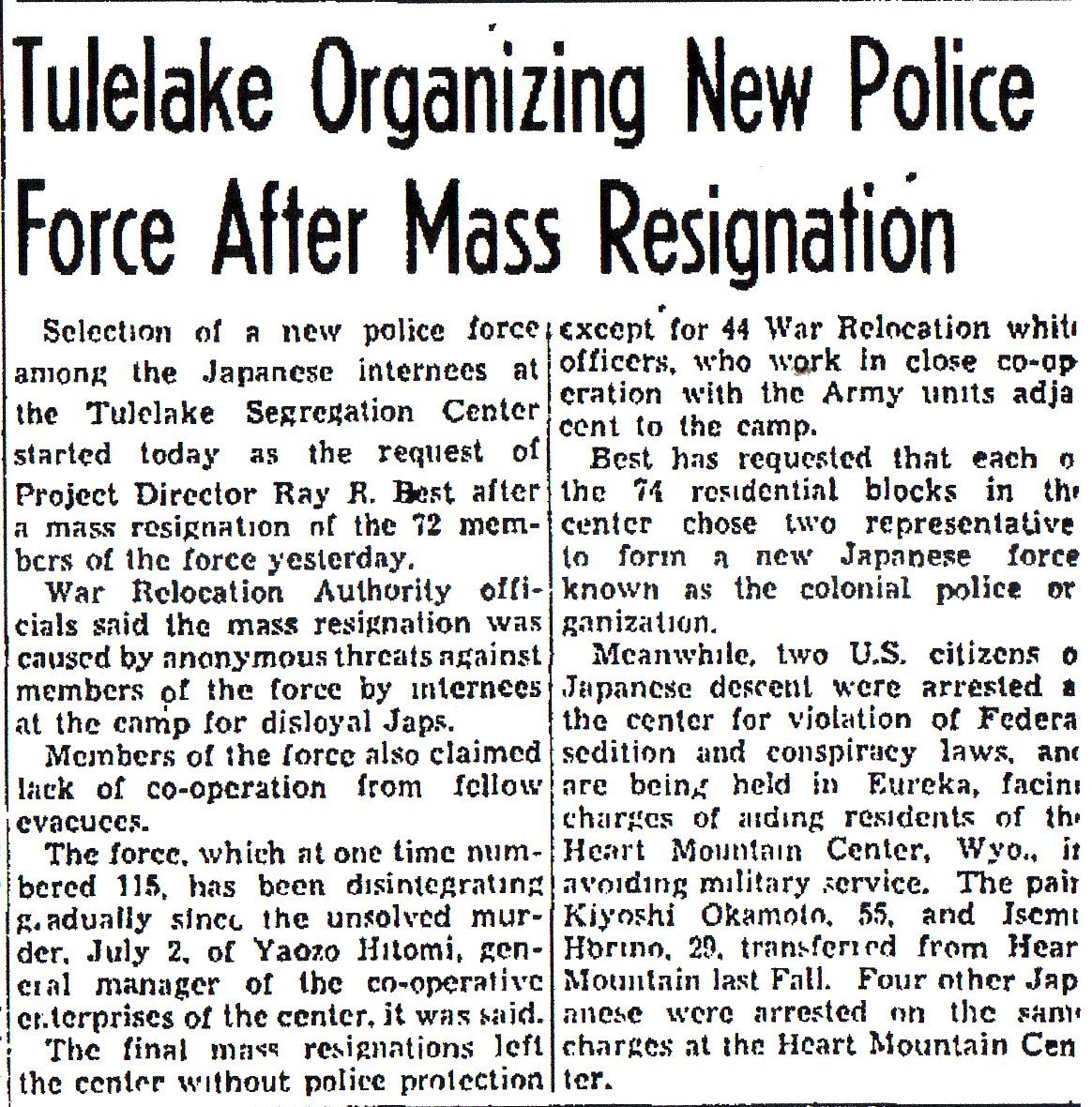
Both articles point out a major problem at the camp (and others, also), and that was the pro-Japan evacuees putting pressure on pro-U.S. evacuees. This pressure at times erupted into violence and there were signs of trouble brewing early on.
Trouble Happens
 Reno Evening Gazette, Nov. 5, 1943 |
 same |
 Coshocton Tribune, Nov. 4, 1943 |
 The Oelwein Daily, Nov. 5, 1943 |
 same |
 The Sheboygan Press, Nov. 6, 1943 |
 The Troy Record, Nov. 6, 1943 |
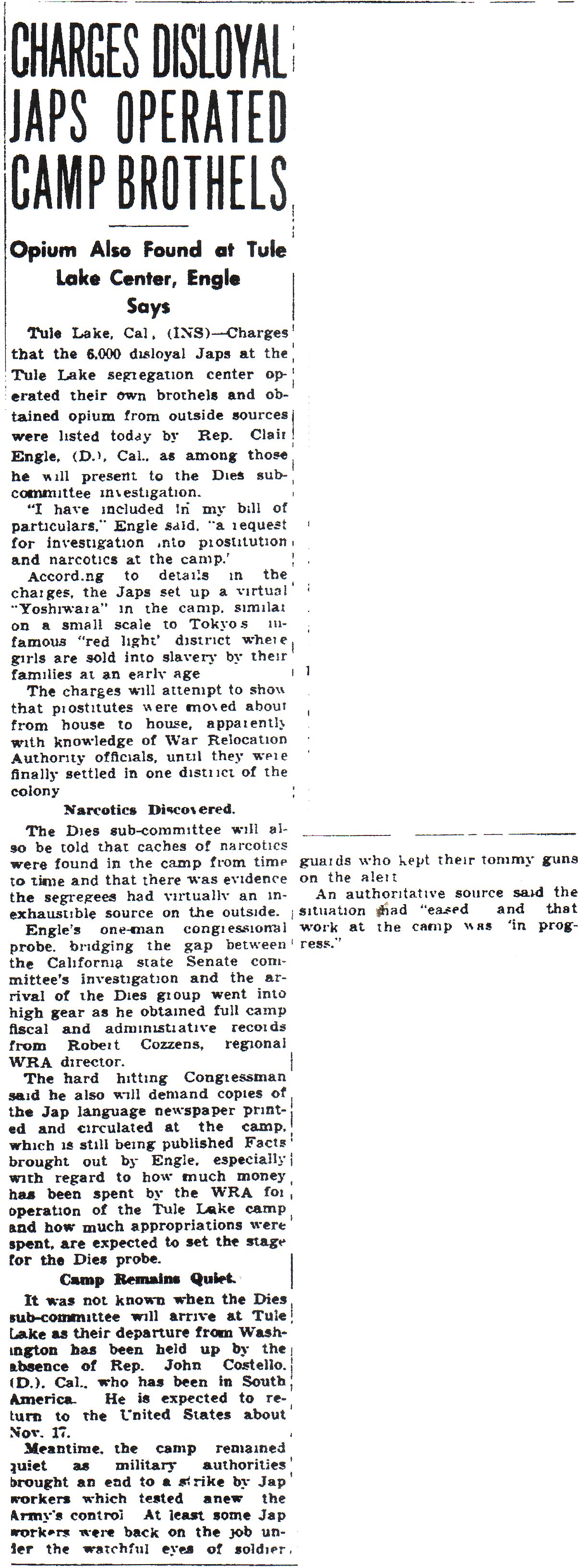
Camp brothels and Warren gets aroused
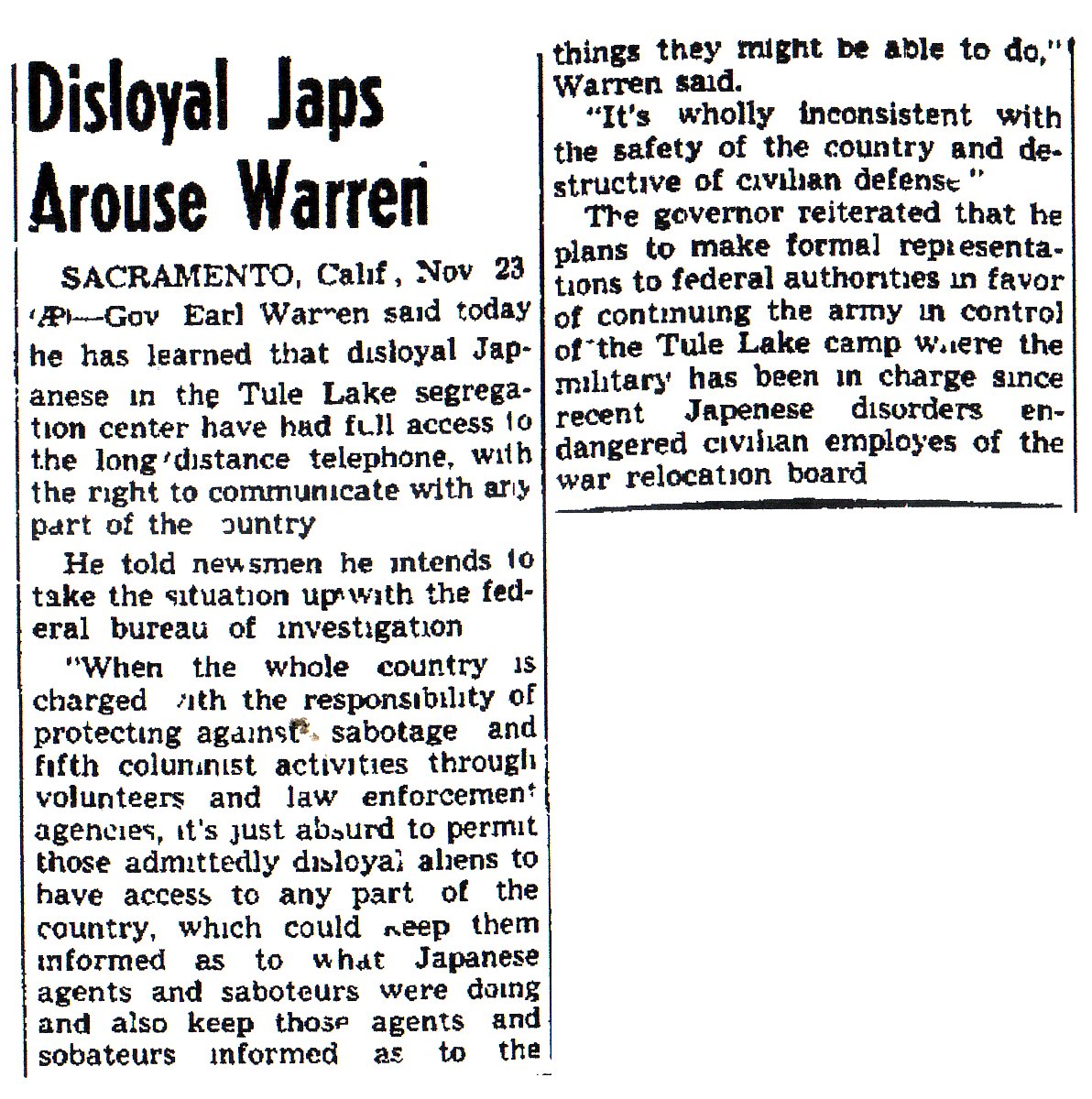
Anti-Japanese internee articles began appearing, the first one below charging that brothels had been established in the camp. This is something I hadn't found one single mention of anywhere else. Earl (later to be Chief Justice of the Supreme Court) Warren got "aroused" over the long-distance telephone calls by the internees.
 The Times Record, Nov. 12, 1943 |
 Reno Evening Gazette, Nov. 23, 1943 |
And the troubles keep on happening
Various other problems arose at the camp, according to these articles.
 Berkshire Evening eagle, Nov. 29, 1943 |
 same |
The Oakland Tribune, July 14, 1944 |
 Council Bluffs Nonpareil, Jan. 17, 1944 |
 same |
 The Oakland Tribune, July 21, 1944 |
Tule Lake Newsletters
Although there have been many books written about the Japanese-American internment, only some of them even mention the newsletters produced at the camps and, at most, they generally will have only one or two pages from one of the issues.
This is leaving out one of the most historically interesting and important aspects of the internment. The newsletters that were produced give the day-to-day news of interest to the community of those who were interned. I am sure that there were restraints on what the newsletters were allowed to print, but they still tend to contain a wealth of interesting material.
The various camp newsletters usually start out with Volume 1and work their way up, but not always. Granada, for example, started with Volume A. One camp started with a series of bulletins. Also, the numbering of the newsletters varied considerably. Some would run a set number of issues, like 30 or 52, before they changed volume number. Some had no understandable system of changing volume numbers, seemingly changing them at will. Further, at times, the numbering of the issues themselves were confused. Some papers would run numbers 4,5,6, like that. Sometimes there would be two or three issues with the same number, so volume and issue numbering can change suddenly and often.
The Tulean newsletter is one of these in particular. It started off as an information bulletin, then morphed into the Tulean Dispatch. There will also be a number of these issues that have the same issue number, or an issue will be missing, or there will be a magazine section.
I ran across one particularly valuable source, Densho . They have a vast number of the newsletters. I found a few elsewhere.
Information Bulletin 1-5
Information Bulletin 6-10
Tulean dispatch V.2 #1-5
V.2 #6-10
V.3 #1-5
V.3 #6-10
V.3 #11-15
V.3 #16-20
V.3 #21-25
V.3 #26-30
V.3 #31-35
V.3 #36-40
V.3 #41-45
V.3 #46-50
V.3 #51-55
V.3 #56-60
V.3 #61-65
V.3 #66-70
V.3 #71-75
V.3 #76-80
V.3 #81-85
V.3 #86-90
V.3 #91-95
V.3 #96-100
V.4 #1-5
V.4 #6-10
V.4 #11-15
V.4 #16-20
V.4 #21-25
V.4 #26-30
V.4 #31-35
V.4 #36-40
V.4 #41-45
V.4 #46-50
V.4 #51-55
V.4 #56-60
V.4 #61-65
V.4 #66-70
V.4 #71-75
V.4 #76-80
V.4 #81-85
V.4 #86-90
V.4 #91-95
V.4 #96-96
V.5 #1-5
V.5 #6-10
V.5 #11-15
V.5 #16-20
V.5 #26-30
V.5 #31-35
V.5 #36-40
V.5 #41-45
V.5 #46-50
V.5 #51-55
V.5 #56-60
V.5 #61-65
V.5 #66-70
V.5 #71-75
V.5 #76-80
V.5 #81-85
V.5 #86-90
V.5 #91-95
V.5 #96-100
V.6 #1-5
V.6 #6-10
V.6 #11-15
V.6 #16-20
V.6 #21-25
V.6 #26-30
V.6 #31-35
V.6 #36-40
V.6 #41-48
V.7 #1-5
V.7 #6-10
V.7 #11-15
V.7 #16-24
Boom Town 1943 booklet
Nisei and the Armed Forces booklet
Registration Notice
The Exodus booklet
The Life Nisei Knew booklet
The New Horizon booklet
The Nisei Mind booklet
Tule Lake 1943 Yearbook
Tulean Dispatch Farewell Issue, Sept. 9, 1943
Tulean Dispatch Magazine Vol. 1 #4, November, 1942
Tulean Dispatch Magazine Vol. 1 #5, December, 1942
Tulean Dispatch Magazine Holiday, January 1943
Tulean Dispatch Magazine Vol. 1 #7, February, 1943
Tulean Dispatch Magazine Vol. 1 #8, March, 1943
Tulean Dispatch Magazine Vol. 1 #9, April, 1943
Tulean Dispatch Magazine Vol. 1 #11, July, 1943
You Tube Videos
World War Two Tule Lake
Main Index
Japan main page
Japanese-American Internment Camps index page
Japan and World War II index page
|
|