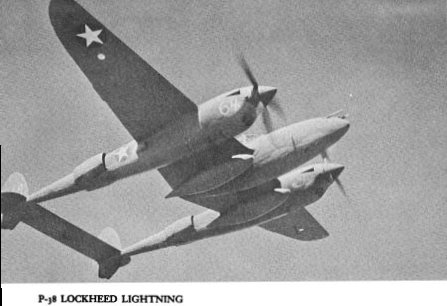
A P-38.
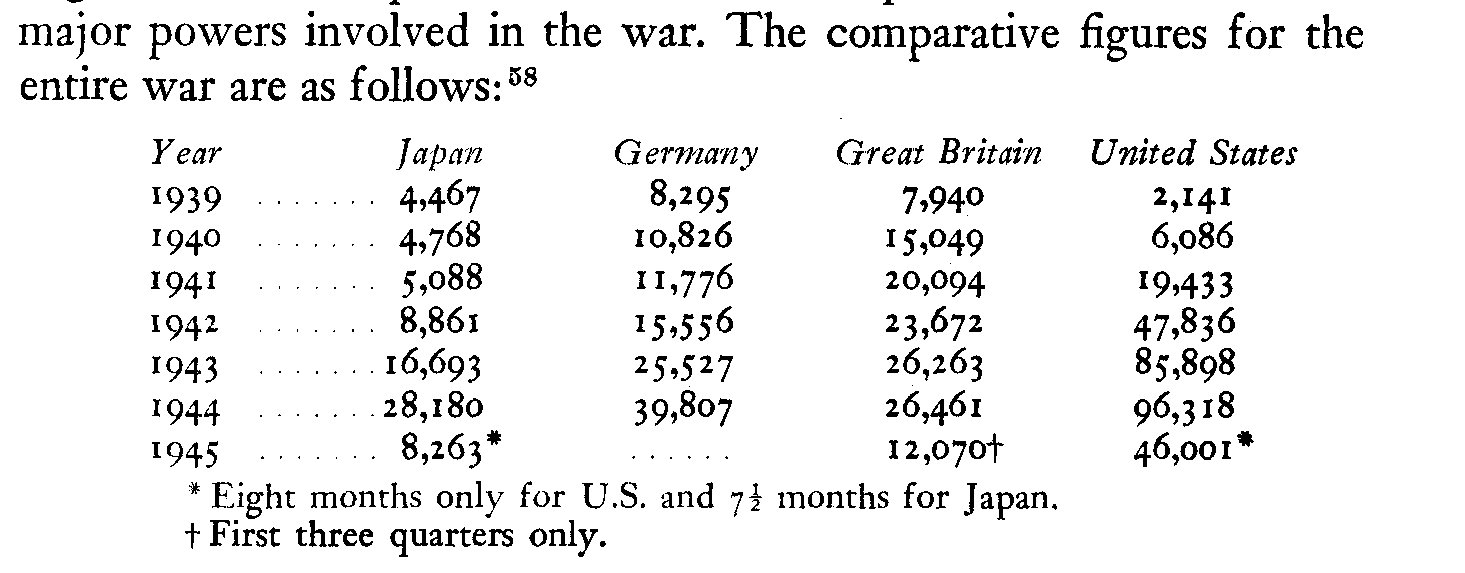
The total plane production of various countries. Note that the Japanese managed to increase their plane production every year, except for 1945, despite the bombing of their homeland by B-29s. The major thing to note is the difference between Japanese and American production. In 1939, the Japanese out-produced the U.S. by a better than 2:1 margin.
That was the only year (on this chart) that they were able to do so. In 1940, the U.S. outproduced Japan 1.28: 1, which is really pretty even. In 1941, the figure rose to 3.8:1. For 1942, the figure rose even higher, about 5.4:1. In 1943, the number fell a little, the U.S. outproducing Japan at a rate of 5.15:1. The number went back up to 5.4:1 for 1944. In the final year of the war, the difference was 5.6:1.
This ability to out-produce Japan was something Yamamoto and some other leaders realized, but no one listened to them.
The types of planes produced
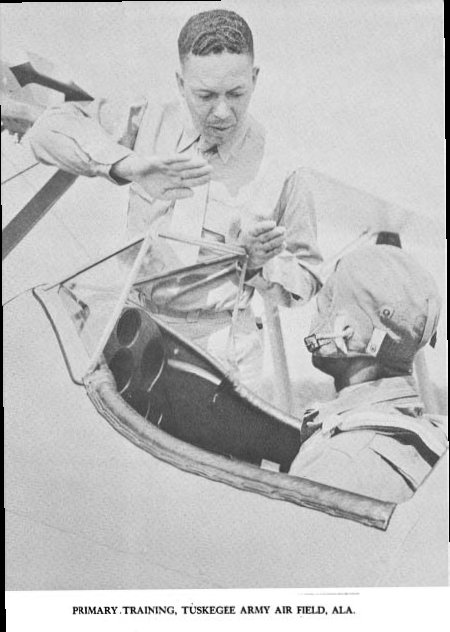
Training pilots at Tuskegee.
Main Index
Japan main page
Japanese-American Internment Camps index page
Japan and World War II index page