War Information and Censorship
The title. This is a 1943 book.
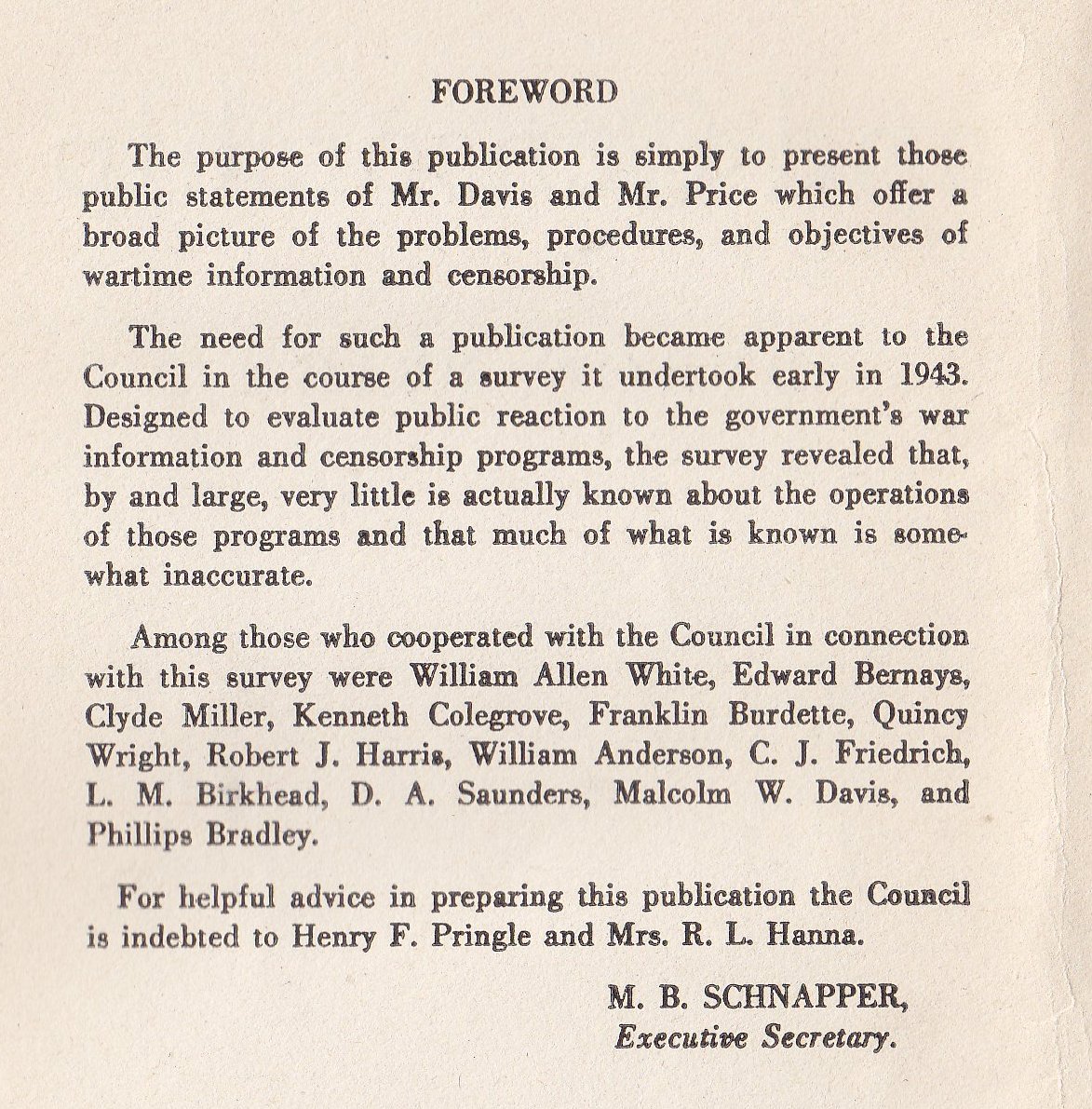
Foreward. Elmer Davis was the director of the Office of War Information.
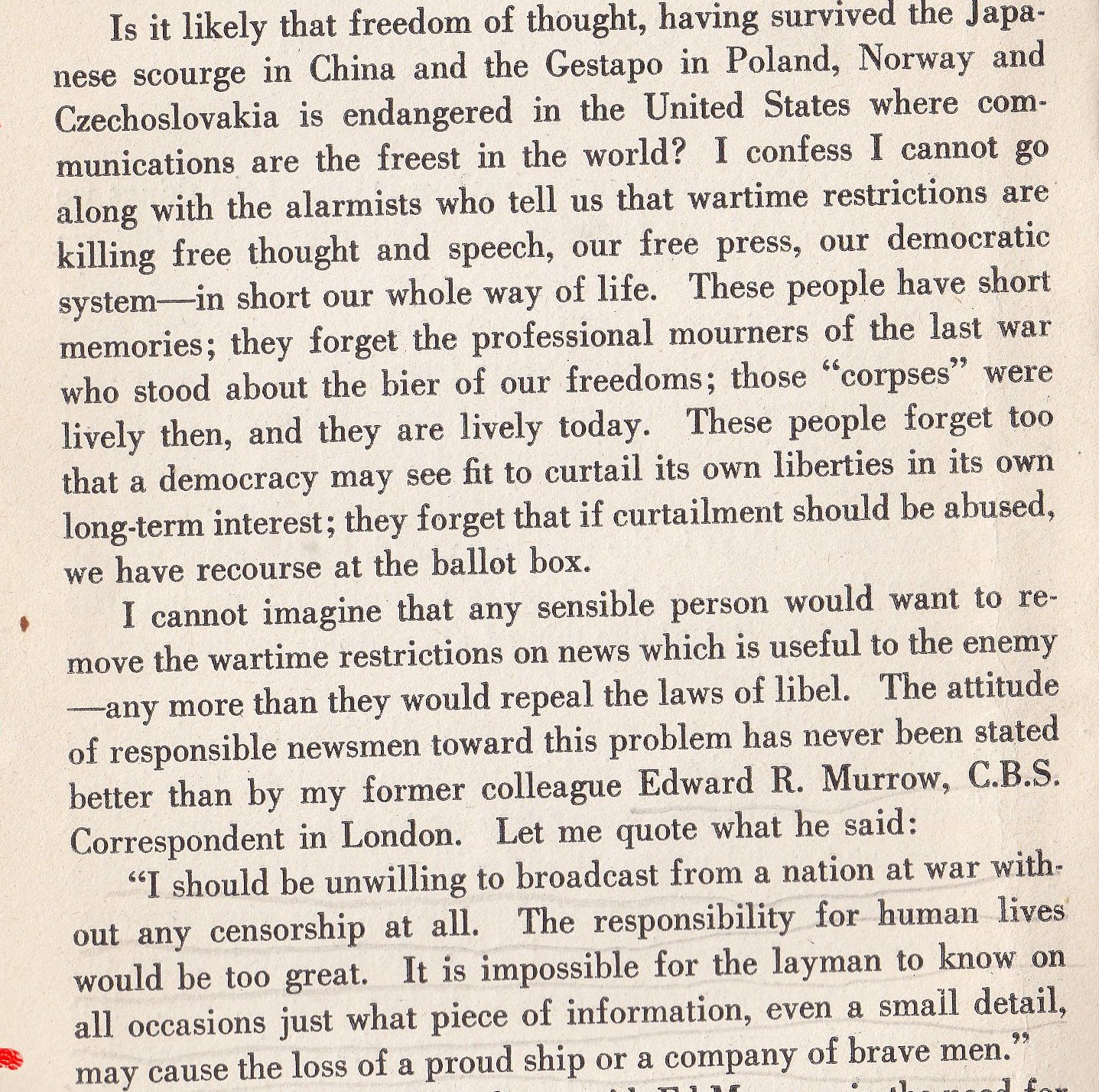
This is his response to critics of the censorship of information being given out to the mass media. Edward R. Murrow was possibly the most famous radio newscaster of the time.
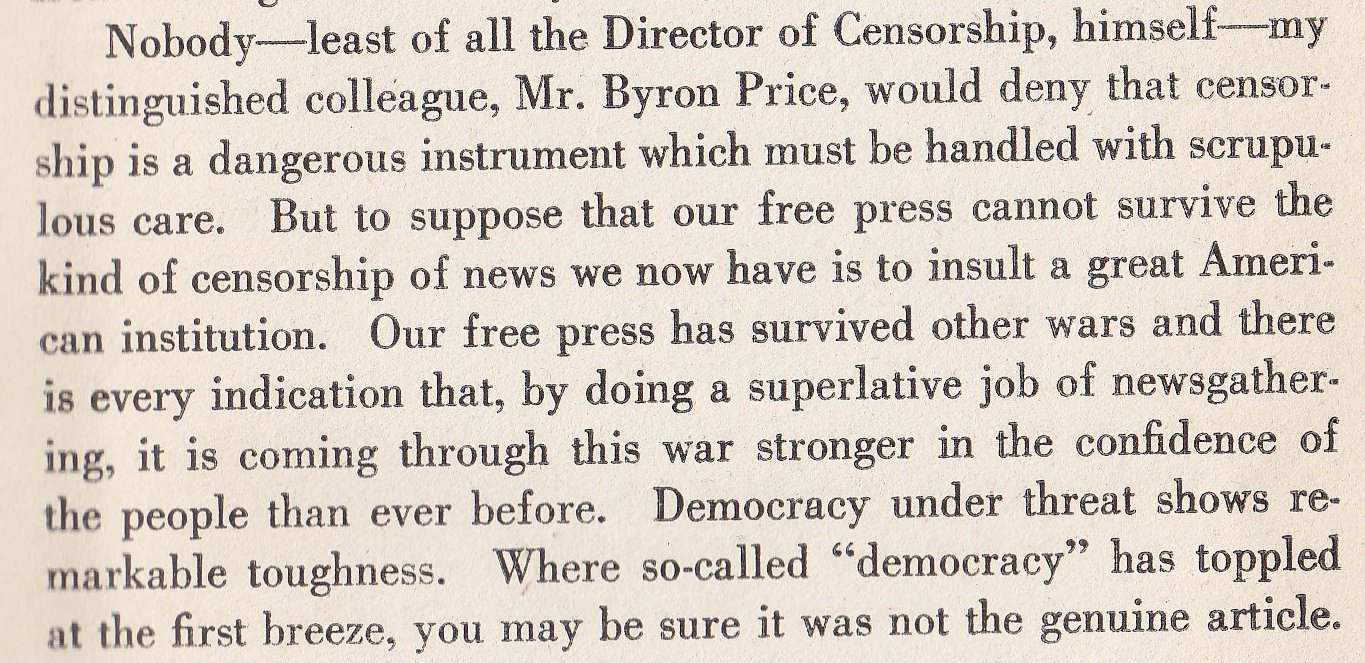
This sets up sort of a problem, since the term 'free press' generally implies access to all information, yet, since censorship is going on, the the press is not entirely 'free.' He's setting up justification for a limited control of what the press is told about what is happening in the war.
The people who are making those decisions, though, are politicians who, as we all know well, are not exactly the most objective and, in many cases, the most ethical of all people.
When the OWI was founded.
He says propaganda has been shown to be effective.
He says that they make sure that the information they send to the enemy (in radio broadcasts, basically, although there was also some use of pamphlets and leaflets) is accurate. This is one place where the Japanese people had a major problem since the Japanese censorship of their media was extremely tight, and the information given out to the people, especially later in the war, went from misleading to the outright totally false.
He then says that they want to make sure the American people know what the war is about. The series of Why We Fight films is a perfect example of this.
How the OWI plans to reach the public. Radio was a major carrier of news information in those days. Remember, this was before television, the Internet, satellite broadcasts, etc.
Another major function of the OWI is to combat enemy propaganda. Probably the best known example of that was the broadcasts of Tokyo Rose.
This notes the censorship of things like movies.
Apparently they also stopped publication of various written sources.
The job of their overseas branch.
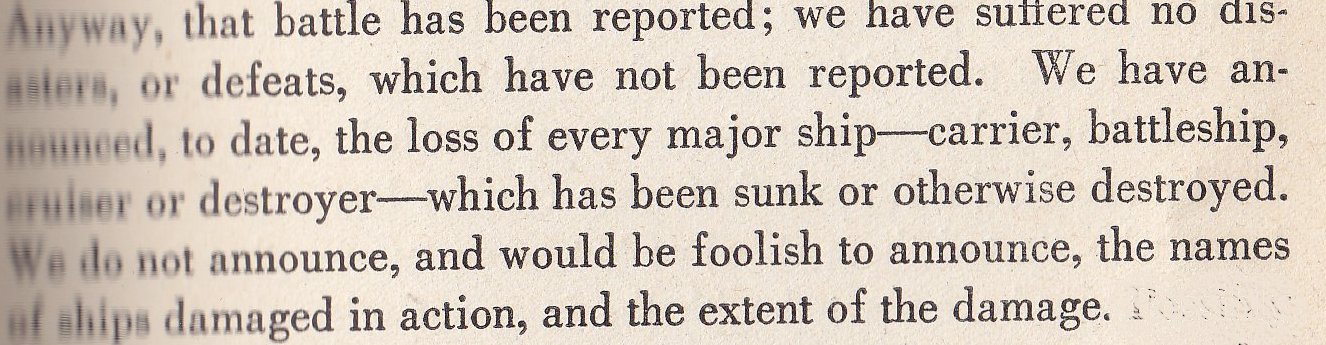
Announcing some of the information that has been released.
His advice to teachers.
The next part of the book is by Byron Price, the director of the Office of Censorship.
Why there is censorship in wartime.
The establishment of the Office of Censorship, and what FDR had to say about censorship.
The biggest job of the Office of Censorship. This has a modern-day parallel in all the discussions and controversy regarding the government keeping track of communications between people in the U.S. and in foreign areas that could possibly be tied in with terrorism.
The kind of information the censors are trying to stop.
What they do with questionable letters.
The founding of the Code of Wartime Practices.
The Code in relation to the Press.
The Code in relation to Radio.
Censorship of information about troops, and why it is censored.
Censorship of information about boats and ships.
The code and censorship about information on enemy attacks.
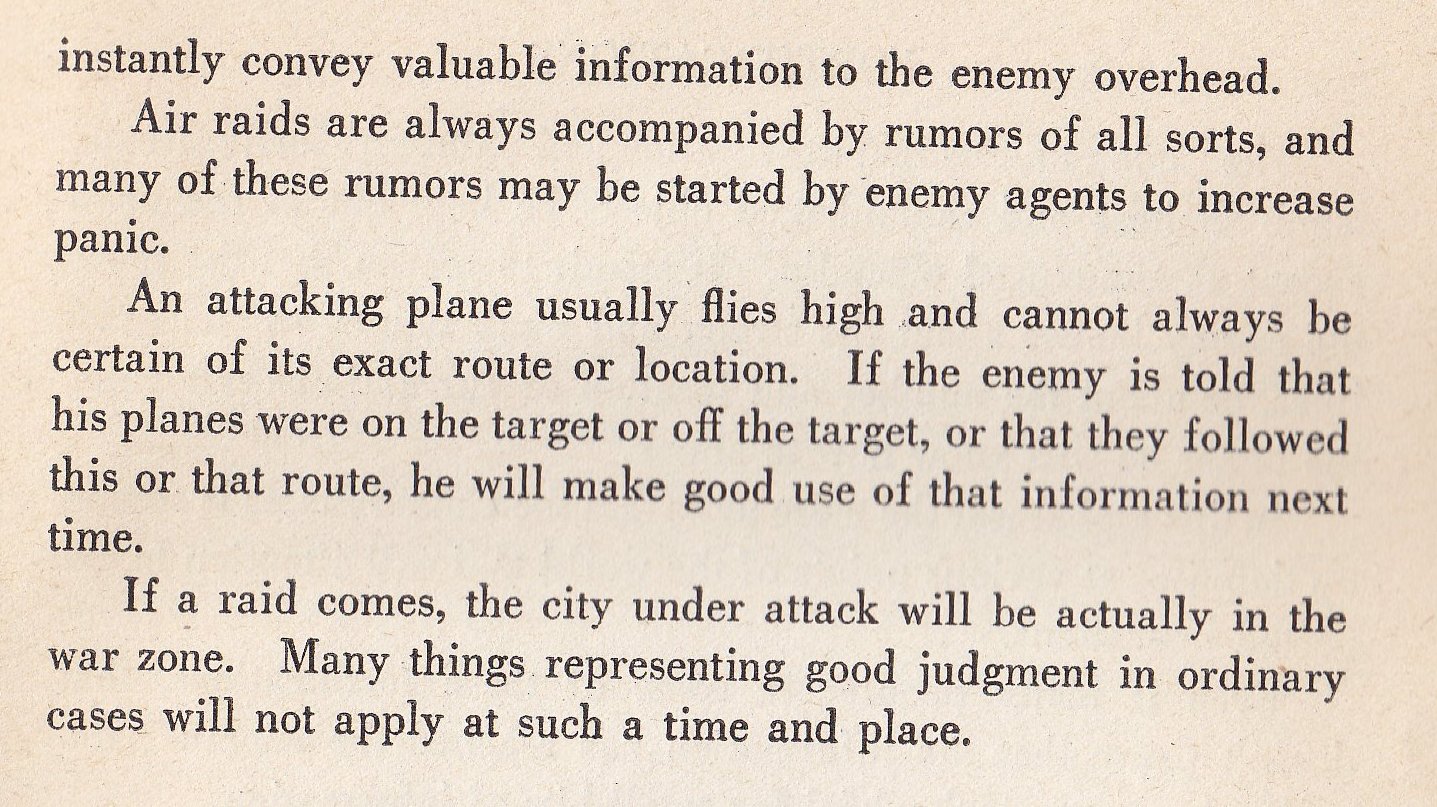
Censorship of information about air attacks.
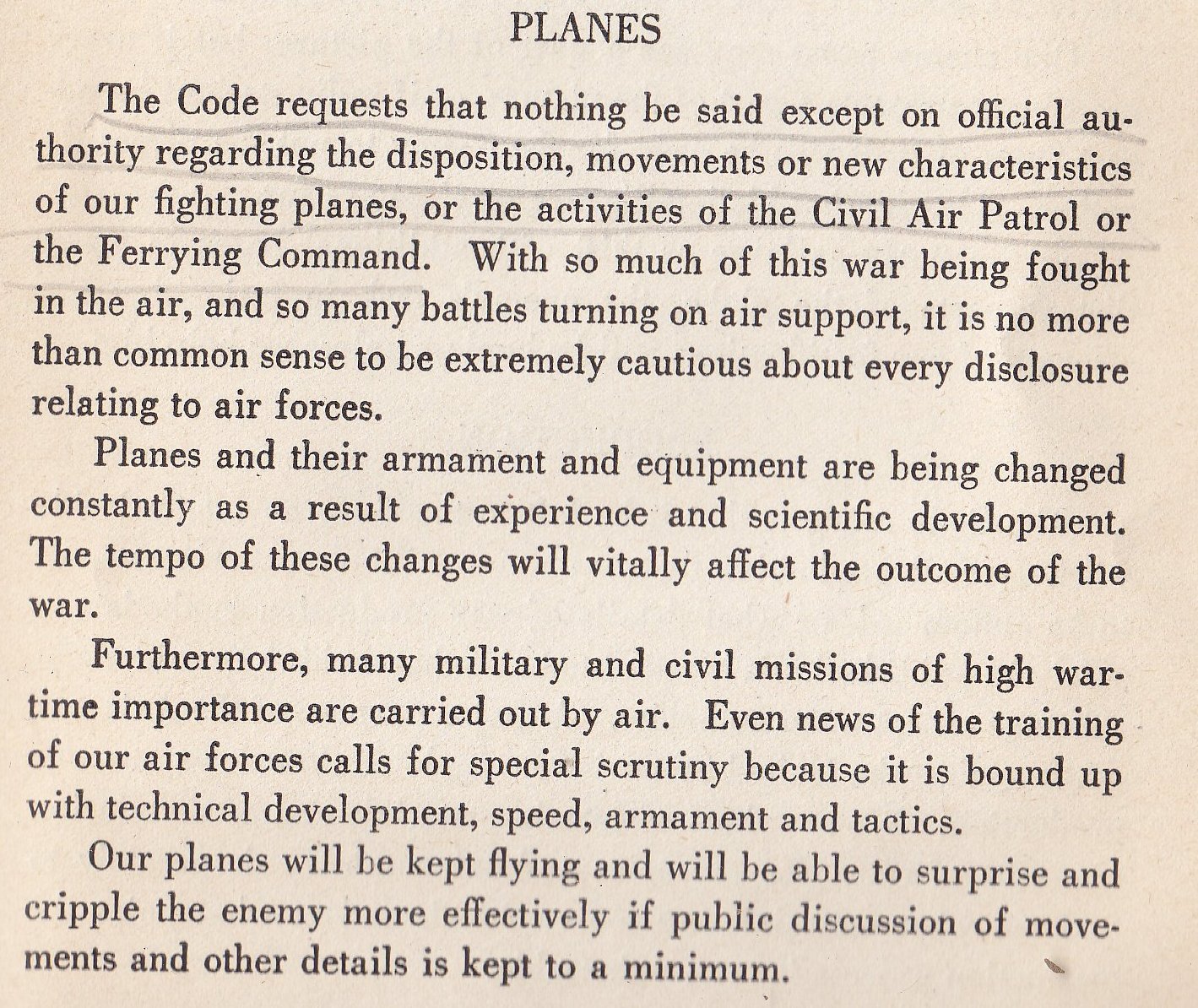
Censorship of information about planes.
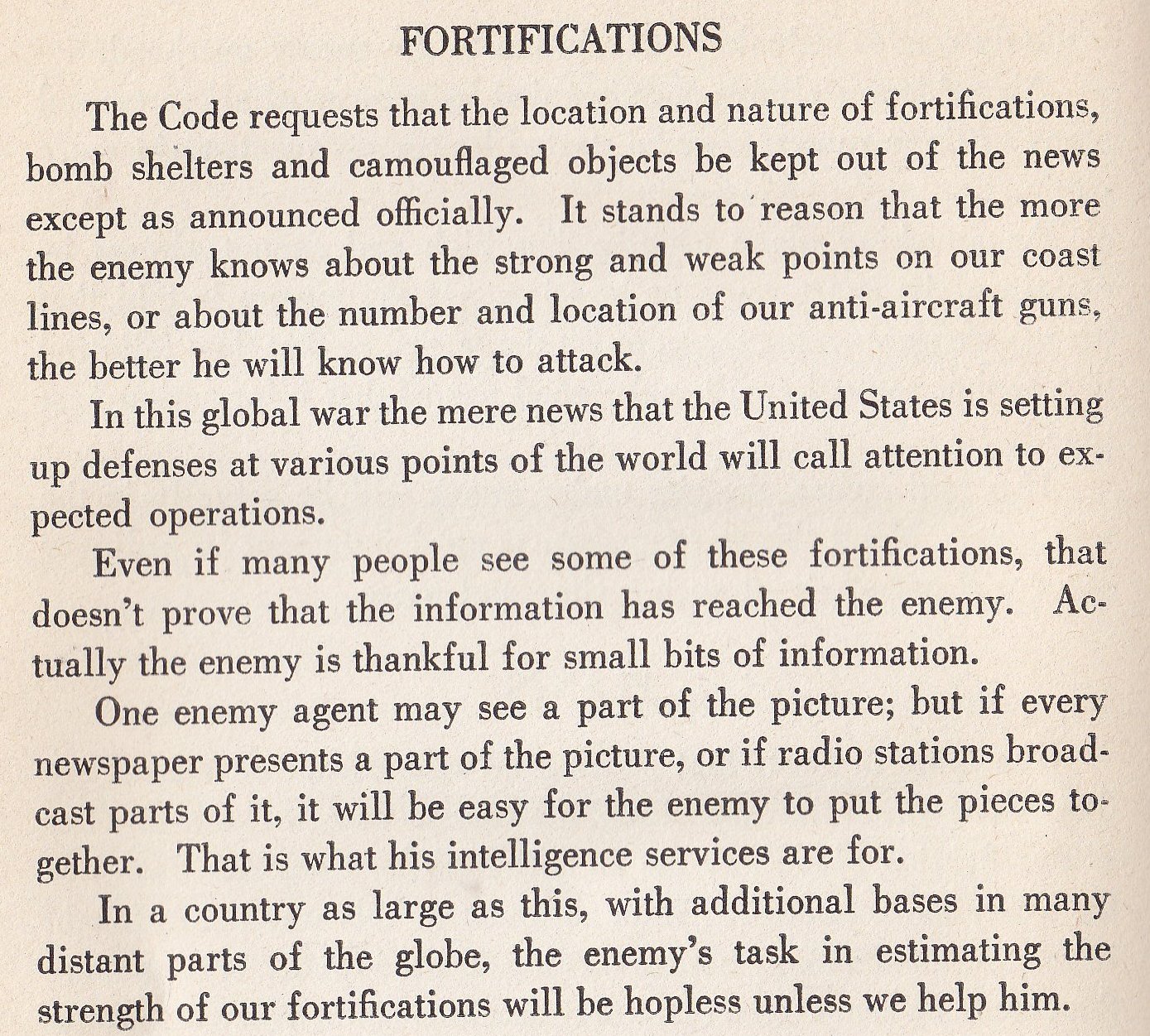
Censorship of information about fortifications.
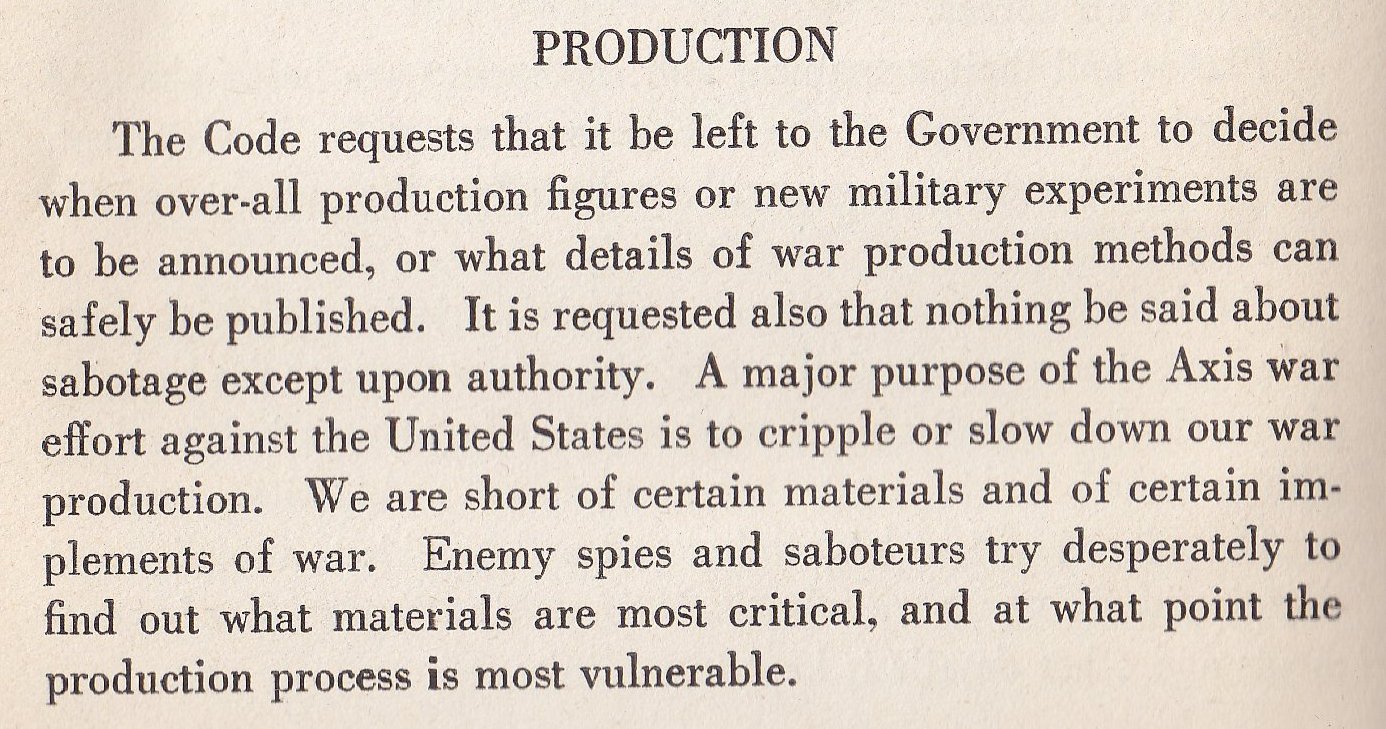
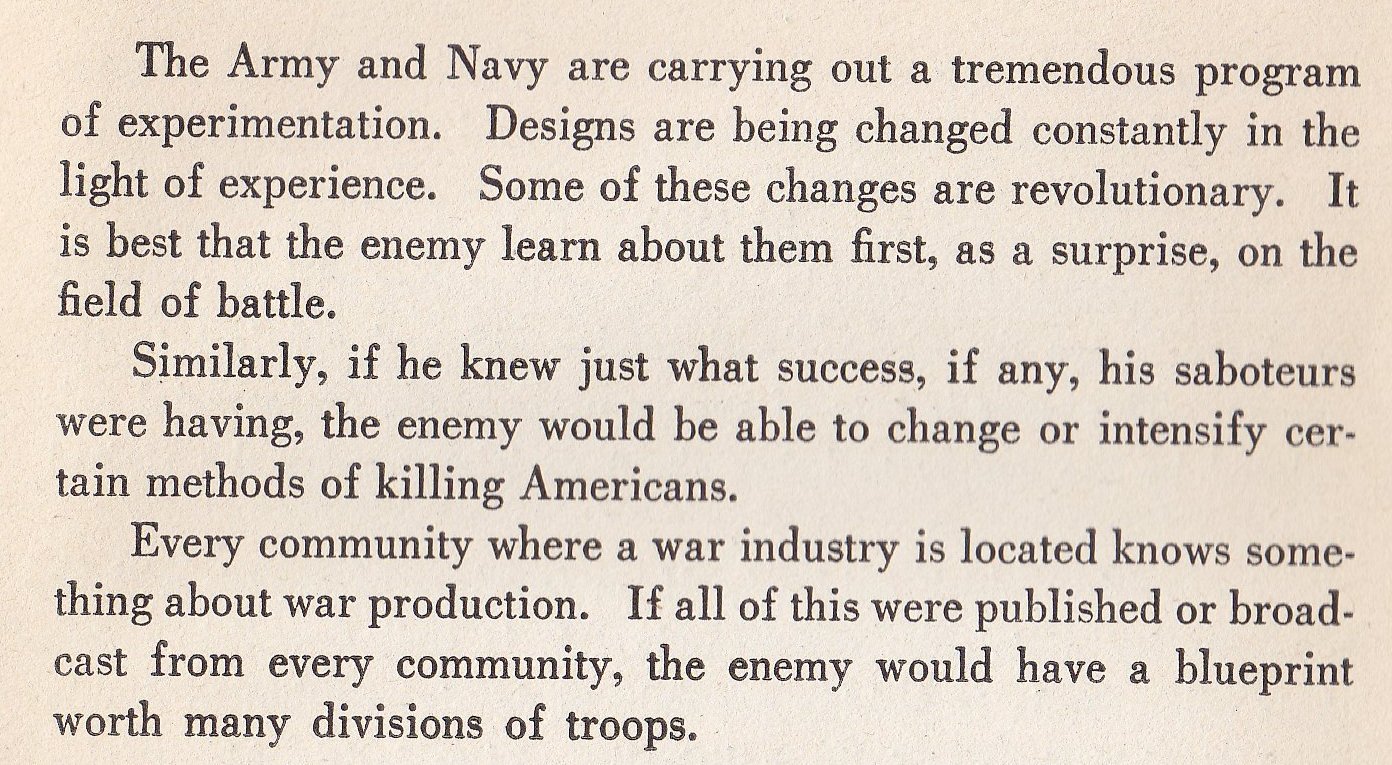
Censorship of information about production.
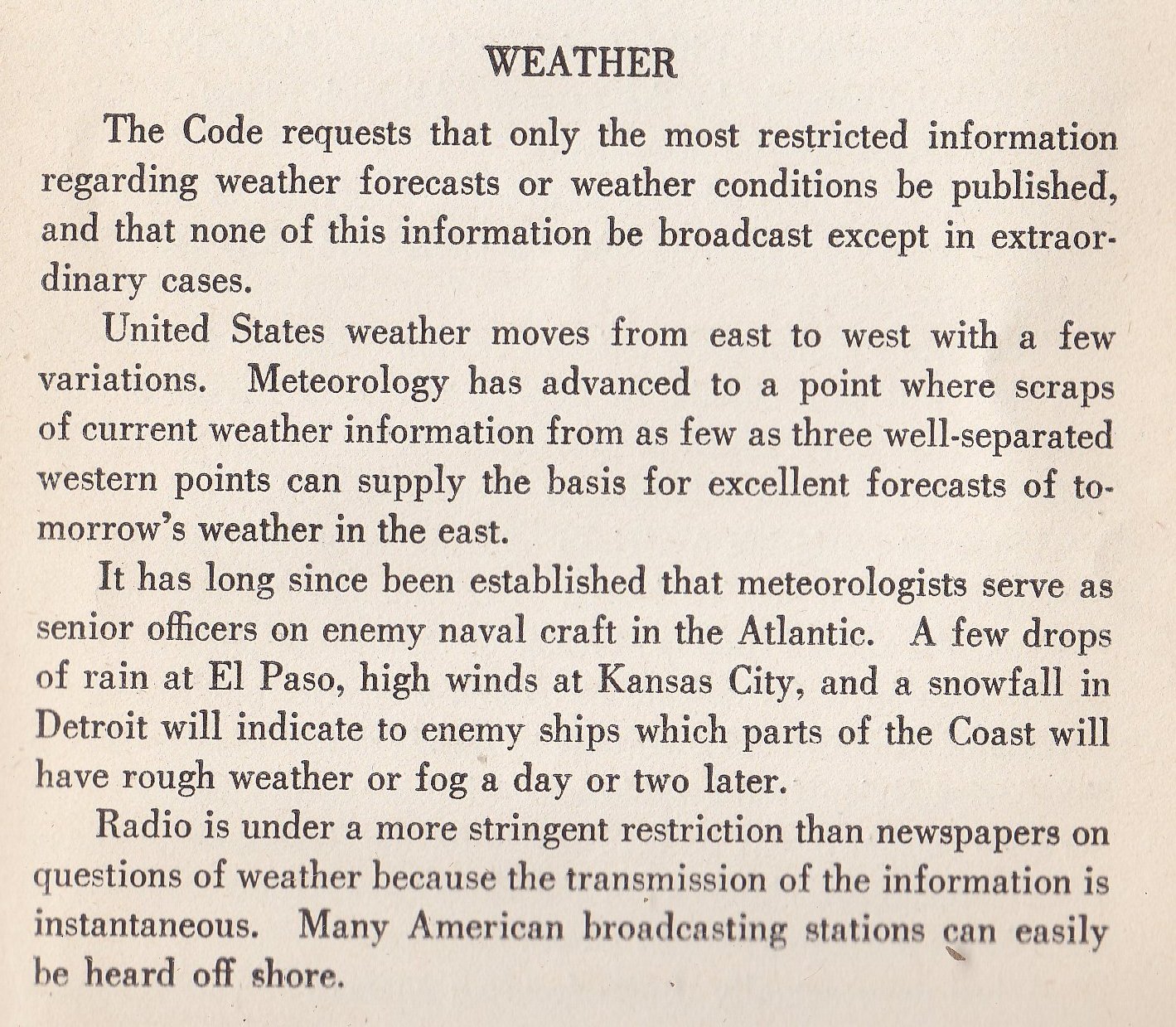
Censorship of information about the weather.
Dealing with rumors.
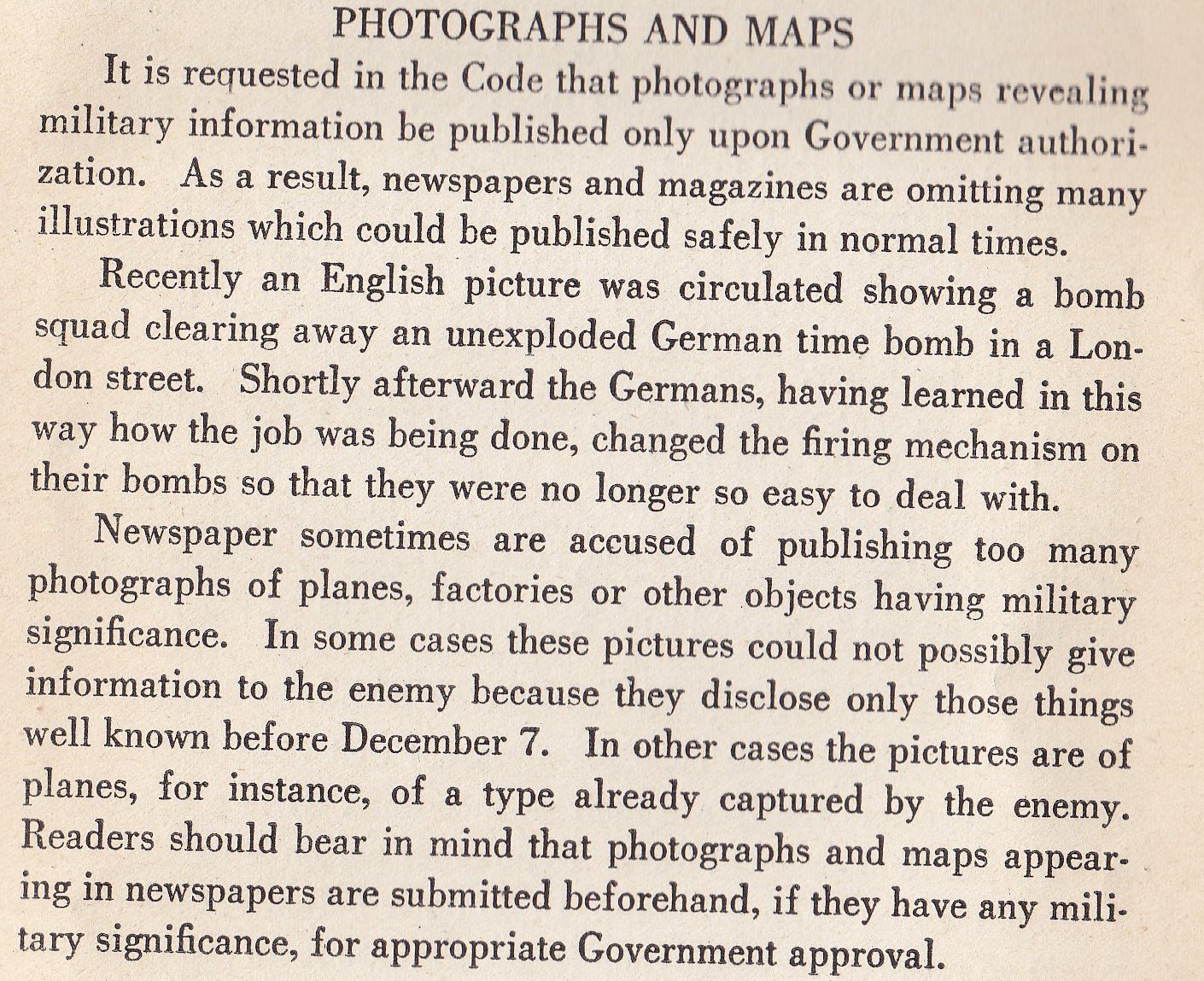
Censorship of photographs and maps.
Other things that are censored.
Main Index
Japan main page
Japanese-American Internment Camps index page
Japan and World War II index page
|
|